

AI Deepfake Legislation Gains Momentum: What the NO FAKES Act Could Mean for the Music Industry
The Music Industry Faces a New AI Challenge
Artificial intelligence has transformed the music industry faster than almost any technological innovation in recent history. From AI-assisted songwriting and mastering tools to synthetic voices capable of recreating famous artists, the opportunities appear limitless. However, with these opportunities come significant concerns about copyright, identity theft, and the unauthorized use of an artist's likeness.
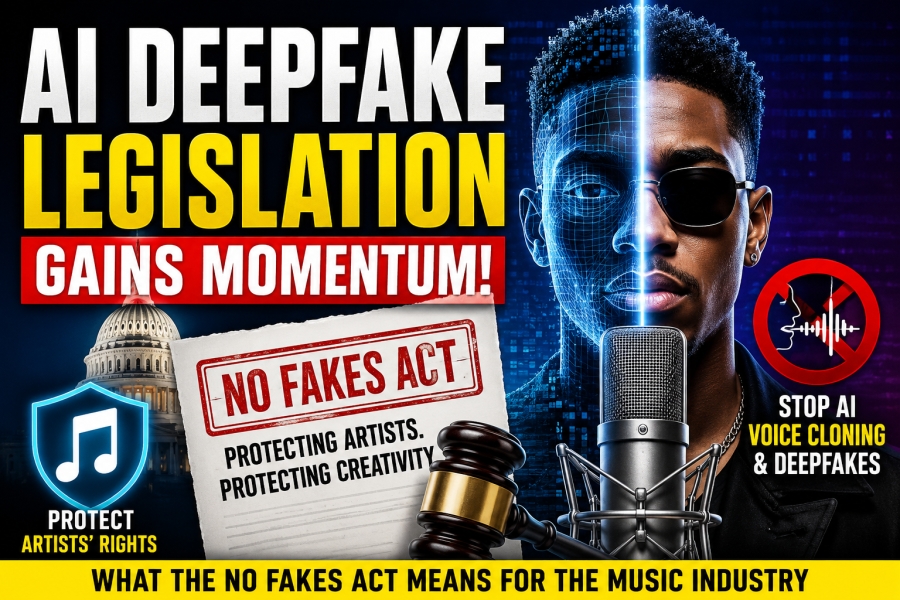
One of the most closely watched developments in music technology and entertainment law is the advancement of the NO FAKES Act in the United States Senate. The legislation aims to address growing concerns surrounding AI-generated deepfakes and unauthorized digital replicas of musicians, actors, public figures, and creators.
As AI-generated content becomes increasingly realistic, lawmakers, artists, record labels, and technology companies are engaged in a heated debate about how innovation should coexist with intellectual property rights and personal identity protections.
If enacted, the NO FAKES Act could reshape how AI companies, social media platforms, streaming services, and content creators operate in the digital era.
What Is the NO FAKES Act?
The NO FAKES Act, short for "Nurture Originals, Foster Art, and Keep Entertainment Safe," is proposed legislation designed to protect individuals from unauthorized AI-generated replicas of their voice, image, and likeness.
The bill seeks to establish clear legal protections against the creation and distribution of AI-generated content that imitates real people without their consent.
For musicians, this means unauthorized AI songs that mimic their voices could become significantly more difficult to distribute legally.
The legislation would provide individuals with stronger rights to challenge unauthorized digital reproductions and seek legal remedies against those responsible for creating or distributing them.
Why AI Deepfakes Have Become a Major Concern
Just a few years ago, AI-generated voices sounded robotic and easily identifiable. Today, advanced machine learning models can reproduce an artist's voice with astonishing accuracy.
This capability has led to an explosion of AI-generated songs featuring synthetic versions of famous artists.
Some examples include:
-
AI-generated tracks imitating major pop stars.
-
Fake interviews using cloned celebrity voices.
-
Synthetic performances from deceased musicians.
-
Unauthorized remixes featuring AI-generated vocals.
-
Social media content designed to mislead audiences.
While some creators view these technologies as artistic experimentation, many musicians see them as a direct threat to their careers, reputation, and earnings.
The problem extends beyond music.
Politicians, actors, athletes, influencers, and business leaders have all become targets of increasingly sophisticated AI-generated impersonations.
Why Artists Are Supporting the Legislation
Many of the world's largest music companies and artist organizations have voiced support for stronger protections against unauthorized AI replication.
Artists argue that their voice is one of their most valuable assets.
A singer may spend decades developing a unique vocal identity. If an AI model can reproduce that voice instantly without permission, artists fear losing control over both their brand and their creative output.
Supporters of the legislation argue that:
Artists Deserve Control
Musicians should have the right to decide how their voice and likeness are used.
Protection Against Exploitation
Bad actors could profit from fake recordings while artists receive no compensation.
Reputation Management
An AI-generated song could contain offensive or controversial content that damages an artist's reputation.
Protection for Future Generations
Emerging artists may be especially vulnerable to having their identity replicated without legal resources to fight back.
For many creators, the NO FAKES Act represents a necessary update to laws written long before AI-generated content became possible.
How Deepfake Music Is Changing the Industry
The rise of generative AI has introduced entirely new categories of music content.
Today, AI can:
-
Clone vocals.
-
Generate lyrics.
-
Compose melodies.
-
Produce instrumentals.
-
Create entire albums.
-
Simulate collaborations between artists.
In some cases, listeners cannot distinguish between real and AI-generated performances.
This creates several industry challenges.
Copyright Confusion
Who owns an AI-generated song that imitates a real artist?
Revenue Diversion
Fake recordings may attract streams that would otherwise belong to legitimate releases.
Consumer Deception
Fans may mistakenly believe AI-generated songs are official releases.
Marketplace Saturation
Streaming platforms could become flooded with synthetic content.
As AI capabilities improve, these concerns are expected to grow significantly.
What the NO FAKES Act Could Mean for Platforms
One of the most important aspects of the legislation is its potential impact on digital platforms.
If the bill becomes law, companies that host unauthorized AI-generated replicas could face legal consequences.
Platforms potentially affected include:
-
Social media networks.
-
Video-sharing websites.
-
Music streaming services.
-
AI content-generation platforms.
-
Digital marketplaces.
The legislation may require platforms to respond more aggressively to reports of unauthorized AI-generated content.
This could lead to:
-
Faster content removal systems.
-
Enhanced identity verification procedures.
-
New licensing requirements.
-
Greater moderation investments.
-
Increased compliance costs.
For technology companies, balancing user-generated creativity with legal compliance will become a major operational challenge.
The Debate Over Innovation Versus Protection
While many artists support the bill, not everyone agrees on the best approach.
Some technology advocates worry that overly restrictive regulations could slow innovation.
Critics argue that:
AI Is a Creative Tool
Many creators use AI responsibly to experiment with new forms of art.
Fair Use Questions Remain
Not every imitation is intended to deceive audiences.
Barriers for Independent Developers
Smaller AI startups may struggle to comply with complex legal requirements.
Impact on Free Expression
Some legal scholars worry that broad restrictions could affect parody, satire, and artistic commentary.
As a result, lawmakers must balance creator protections with technological innovation.
Finding that balance has become one of the central challenges of modern AI regulation.
Record Labels Are Taking AI Seriously
Major record labels are increasingly investing resources into combating unauthorized AI-generated content.
The music industry has already experienced multiple waves of technological disruption:
-
File sharing.
-
Digital downloads.
-
Streaming services.
-
Social media distribution.
AI represents the next major transformation.
Unlike previous disruptions, however, AI can directly imitate an artist's identity.
This makes the issue fundamentally different from debates over music distribution.
Labels are now exploring:
-
AI detection technologies.
-
Voice authentication systems.
-
Licensing frameworks.
-
Artist protection programs.
-
Legal enforcement mechanisms.
The advancement of the NO FAKES Act reflects growing pressure from rights holders seeking stronger legal tools.
Could Licensed AI Become the Future?
Not all AI-generated music is controversial.
Many industry experts believe licensed AI collaborations may become a significant business opportunity.
Imagine a future where:
-
Artists authorize AI versions of their voice.
-
Estates license digital recreations of legendary performers.
-
Fans purchase personalized performances.
-
Record labels monetize official AI experiences.
Under this model, AI becomes a revenue-generating asset rather than an unauthorized threat.
Some artists have already expressed interest in licensing their digital identity under controlled conditions.
The key distinction is consent.
The NO FAKES Act focuses primarily on preventing unauthorized replication while leaving room for legitimate licensing arrangements.
How Fans May Be Affected
Music fans may notice significant changes if the legislation becomes law.
Potential impacts include:
Greater Transparency
Platforms may label AI-generated content more clearly.
Fewer Unauthorized Releases
Deepfake songs could be removed more quickly.
More Official AI Projects
Artists may release licensed AI experiences.
Increased Trust
Listeners could have greater confidence in content authenticity.
Ultimately, the goal is to create a safer environment where audiences know whether they are hearing a real artist or an AI-generated imitation.
Global Implications Beyond the United States
Although the NO FAKES Act is a U.S. proposal, its influence could extend worldwide.
Major technology platforms operate internationally.
If U.S. regulations establish strong protections for digital likeness rights, other countries may adopt similar approaches.
Governments around the world are already examining:
-
AI transparency rules.
-
Deepfake regulations.
-
Copyright modernization.
-
Digital identity protections.
-
Platform accountability measures.
The outcome of the NO FAKES Act could help shape global standards for AI-generated content.
The Future of AI and Music
Artificial intelligence is not disappearing from the music industry.
In fact, AI adoption is accelerating across nearly every aspect of music creation and distribution.
Artists are using AI for:
-
Songwriting assistance.
-
Audio restoration.
-
Mixing and mastering.
-
Marketing campaigns.
-
Audience analytics.
The challenge is determining where innovation ends and unauthorized exploitation begins.
Most industry observers agree that AI itself is not the problem.
The concern lies in how AI is used.
Legislation like the NO FAKES Act seeks to establish guardrails that protect creators while allowing responsible innovation to continue.
Conclusion
The advancement of the NO FAKES Act marks a pivotal moment in the relationship between artificial intelligence and the music industry. As AI-generated voices, images, and digital replicas become increasingly realistic, lawmakers are moving to address concerns surrounding consent, ownership, and identity protection.
For musicians, the legislation could provide powerful tools to combat unauthorized voice cloning and deepfake content. For technology companies and platforms, it may introduce new responsibilities and compliance requirements. For fans, it could create a more transparent and trustworthy digital environment.
The debate surrounding AI-generated content is far from over, but one thing is clear: the music industry is entering a new era where protecting artistic identity is becoming just as important as protecting intellectual property.
Whether the NO FAKES Act ultimately becomes law or undergoes further revisions, its progress signals that governments are taking AI-generated impersonation seriously. The decisions made today will likely influence how artists, technology companies, and audiences interact with artificial intelligence for decades to come.
