


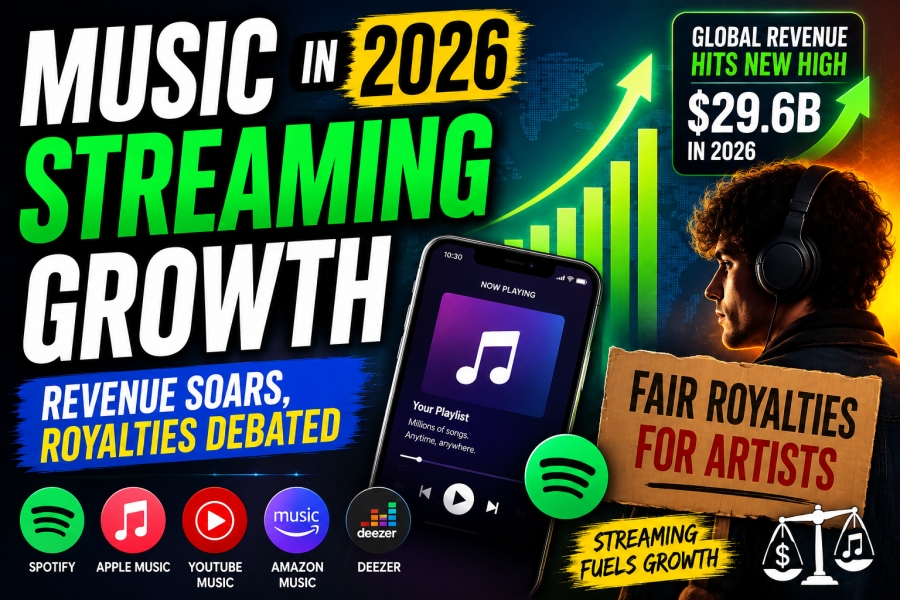
Streaming Growth in 2026: Why Global Music Revenue Is Rising While Artists Continue to Fight for Fair Royalties
The global music industry is experiencing another year of impressive growth, with streaming remaining the driving force behind rising recorded music revenue. Paid subscriptions continue to increase across major platforms like Spotify, Apple Music, YouTube Music, Amazon Music, and regional streaming services, demonstrating that consumers are more willing than ever to pay for convenient access to millions of songs.
While these numbers paint a positive picture for the industry, they also reveal a growing divide. Record labels, streaming platforms, and music publishers are reporting healthy financial performance, yet many musicians argue that the current royalty system fails to compensate creators fairly. For independent artists, songwriters, and even some established performers, generating sustainable income from streaming remains a significant challenge.
As streaming reshapes the music business, the conversation has shifted from whether digital platforms can generate revenue to whether that revenue is being distributed equitably. This article explores why streaming continues to fuel industry growth, how subscription models are evolving, the ongoing debate over royalties, and what the future may hold for artists and music streaming services.
The Rise of Streaming as the Music Industry's Largest Revenue Source
Streaming has fundamentally transformed the way people consume music. Over the last decade, digital streaming has replaced physical album sales and music downloads as the primary source of recorded music revenue worldwide.
Millions of listeners now pay monthly subscription fees for unlimited access to vast music catalogs, allowing them to discover new artists, create playlists, and enjoy personalized recommendations across multiple devices.
Unlike the era of CDs and digital downloads, where consumers purchased individual albums or tracks, streaming offers continuous access through subscription-based services. This recurring revenue model has proven highly successful for streaming companies and record labels because it creates predictable monthly income while reducing piracy.
The convenience of streaming has also expanded music consumption. Listeners can instantly access songs from virtually any genre, language, or country without purchasing physical media, making music more accessible than ever before.
As internet connectivity improves and smartphone adoption continues to grow in emerging markets, streaming subscriptions are expected to remain the primary engine of industry growth.
Paid Streaming Subscriptions Continue to Expand
One of the biggest contributors to the music industry's financial success is the steady increase in paid streaming subscribers.
Consumers are increasingly choosing premium plans because they offer benefits such as:
-
Ad-free listening
-
Offline downloads
-
Higher audio quality
-
Unlimited skips
-
Personalized recommendations
-
Multi-device synchronization
-
Family and student subscription plans
These premium features encourage users to move away from free, ad-supported listening experiences.
Streaming services have also introduced flexible pricing options that appeal to different audiences, including individual plans, family memberships, duo subscriptions, and discounted student pricing.
As affordability improves across international markets, streaming platforms continue attracting millions of new paying subscribers each year.
This steady growth provides a stable financial foundation for the music industry while supporting ongoing investments in technology, artificial intelligence, recommendation engines, and exclusive content.
Why Global Recorded Music Revenue Keeps Growing
The continued rise in recorded music revenue reflects several factors beyond subscriber growth alone.
Expanding Global Markets
Emerging markets in Asia, Africa, Latin America, and the Middle East are contributing significantly to streaming adoption. As internet infrastructure improves and mobile payment options become more accessible, millions of first-time subscribers are joining streaming platforms.
Better User Experience
Streaming platforms continue improving their services through AI-powered recommendations, personalized playlists, podcasts, audiobooks, and social sharing features. These enhancements increase user engagement and encourage long-term subscriptions.
Growing Catalogs
Music libraries continue expanding as independent artists, record labels, and distributors upload thousands of new songs every day. Larger catalogs attract diverse audiences while encouraging longer listening sessions.
Cross-Platform Accessibility
Modern listeners can enjoy music across smartphones, smart speakers, connected vehicles, gaming consoles, televisions, smartwatches, and desktop devices, making streaming an integral part of daily life.
Together, these factors contribute to higher subscription retention and sustained industry growth.
How Streaming Platforms Generate Revenue
Many consumers assume streaming platforms earn money only from subscriptions, but their revenue models are much broader.
Primary income sources include:
-
Premium subscriptions
-
Advertising on free-tier accounts
-
Podcast advertising
-
Audiobook subscriptions
-
Brand partnerships
-
Sponsored playlists
-
Data-driven marketing opportunities
-
Licensing agreements
These diversified revenue streams strengthen streaming platforms while creating additional opportunities for future expansion.
However, the way this revenue is shared among artists, labels, publishers, and rights holders remains one of the industry's most debated issues.
Understanding the Music Royalty Debate
Although streaming has increased total industry revenue, many artists argue that their personal earnings have not kept pace.
Streaming royalties are typically divided among multiple parties, including:
-
Streaming platforms
-
Record labels
-
Music publishers
-
Songwriters
-
Performing artists
-
Distribution companies
-
Collection societies
By the time revenue reaches the artist, the final payout may be significantly smaller than many listeners expect.
Independent musicians often face additional expenses such as recording, production, marketing, touring, and management costs, making streaming income alone insufficient to sustain a full-time career.
This has fueled growing calls for greater transparency and fairer royalty distribution models.
Why Independent Artists Feel Left Behind
Independent musicians have benefited from easier access to global audiences through streaming services.
Unlike previous decades, artists no longer need major record label contracts to distribute music internationally.
However, increased accessibility has also created unprecedented competition.
Thousands of new songs are uploaded to streaming platforms every day, making discoverability one of the biggest challenges facing independent artists.
Even when artists achieve respectable streaming numbers, royalty payments may still fall short of covering production and promotional expenses.
As a result, many musicians rely on additional income sources such as:
-
Live performances
-
Merchandise sales
-
Fan memberships
-
Crowdfunding
-
Brand partnerships
-
Music licensing
-
Teaching
-
Session work
Streaming often serves as a promotional tool rather than a primary source of income.
The Role of Algorithms in Artist Success
Recommendation algorithms have become increasingly influential in determining which songs listeners discover.
Platforms use artificial intelligence to analyze listening habits, user preferences, playlists, skips, saves, and engagement patterns.
When a song performs well within these systems, it can quickly reach millions of listeners.
Conversely, artists who fail to trigger algorithmic recommendations may struggle to gain visibility despite producing high-quality music.
This algorithm-driven ecosystem creates both opportunity and uncertainty.
While talented independent musicians can achieve viral success without major label backing, they also become increasingly dependent on recommendation systems they do not fully understand.
Transparency surrounding these algorithms remains a frequent topic of discussion throughout the music industry.
Can Royalty Models Become Fairer?
The growing royalty debate has inspired several proposals aimed at improving artist compensation.
User-Centric Payment Models
Some industry experts support user-centric payment systems, where each subscriber's monthly fee is distributed only among the artists they actually listen to.
Supporters argue this would better reward niche musicians with loyal audiences.
Greater Transparency
Artists increasingly call for clearer reporting regarding how streaming revenue is calculated and distributed.
Improved transparency could strengthen trust between creators and streaming platforms.
Higher Subscription Prices
Some analysts suggest modest subscription price increases could generate additional royalty income without significantly affecting subscriber growth.
Many consumers have already shown a willingness to pay more for premium entertainment services.
Direct Artist Support
Streaming platforms continue experimenting with fan engagement tools that allow listeners to purchase merchandise, concert tickets, or support creators directly through the platform.
These features diversify artist income beyond streaming alone.
Artificial Intelligence Is Reshaping Streaming
Artificial intelligence is becoming increasingly integrated into music streaming platforms.
AI enhances:
-
Personalized playlists
-
Music recommendations
-
Search functionality
-
Mood-based listening
-
Conversational music discovery
-
Fraud detection
-
Content moderation
These innovations improve user experiences while increasing listening time and subscription retention.
However, AI also raises concerns about AI-generated music entering streaming catalogs, increasing competition for human artists.
As platforms refine their AI strategies, balancing innovation with fairness will remain essential.
Challenges Facing the Streaming Industry
Despite impressive revenue growth, streaming services continue facing several challenges.
Royalty Pressure
Artists, advocacy groups, and industry organizations continue demanding improved compensation structures.
Content Saturation
With massive volumes of new music released daily, standing out has become increasingly difficult.
Regulatory Scrutiny
Governments worldwide continue evaluating copyright laws, licensing frameworks, and AI-generated content regulations.
Market Competition
Streaming platforms compete aggressively through exclusive content, improved recommendations, podcasts, audiobooks, and innovative features.
Maintaining subscriber growth requires constant innovation.
What the Future of Music Streaming Looks Like
The next phase of streaming will likely extend beyond simply delivering music.
Future developments may include:
-
More advanced AI recommendations
-
Personalized listening experiences based on mood and activity
-
Enhanced fan-to-artist interactions
-
Virtual concerts
-
Integrated merchandise purchasing
-
Blockchain-based royalty tracking
-
Improved royalty transparency
-
Greater support for independent musicians
Streaming platforms will increasingly position themselves as comprehensive entertainment ecosystems rather than simple music libraries.
At the same time, industry stakeholders must continue addressing the financial sustainability of music creation.
Healthy streaming growth ultimately depends on ensuring artists remain motivated and fairly compensated for their work.
Why Fair Royalties Matter for the Entire Industry
Supporting artists is not simply a moral issue—it is also an economic necessity.
Without sustainable income opportunities, fewer musicians may be able to dedicate themselves to creating new music.
Record labels, streaming services, publishers, and technology companies all depend on a thriving creative community.
Fair royalty systems encourage artistic innovation, improve long-term industry stability, and strengthen relationships between creators and platforms.
Consumers also benefit when artists have the resources to continue producing high-quality music.
Achieving this balance will require ongoing collaboration among streaming services, governments, industry organizations, record labels, publishers, and artists themselves.
Final Thoughts
The global music industry is enjoying remarkable growth, driven largely by the continued expansion of paid streaming subscriptions. Streaming has revolutionized how audiences discover, consume, and share music while creating a sustainable recurring revenue model that continues to fuel industry success.
Yet beneath these encouraging financial results lies a more complicated reality. Many artists—particularly independent musicians and songwriters—continue to question whether the current royalty system fairly rewards the people whose creativity powers the entire ecosystem.
The future of music streaming will depend not only on technological innovation but also on building a fairer and more transparent economic model. As subscription numbers rise, artificial intelligence evolves, and global audiences continue to grow, the industry has an opportunity to create a system where streaming platforms prosper while artists receive compensation that reflects the true value of their work.
Finding that balance will shape the next chapter of the global music business and determine whether streaming remains a sustainable model for creators, companies, and listeners alike.
