


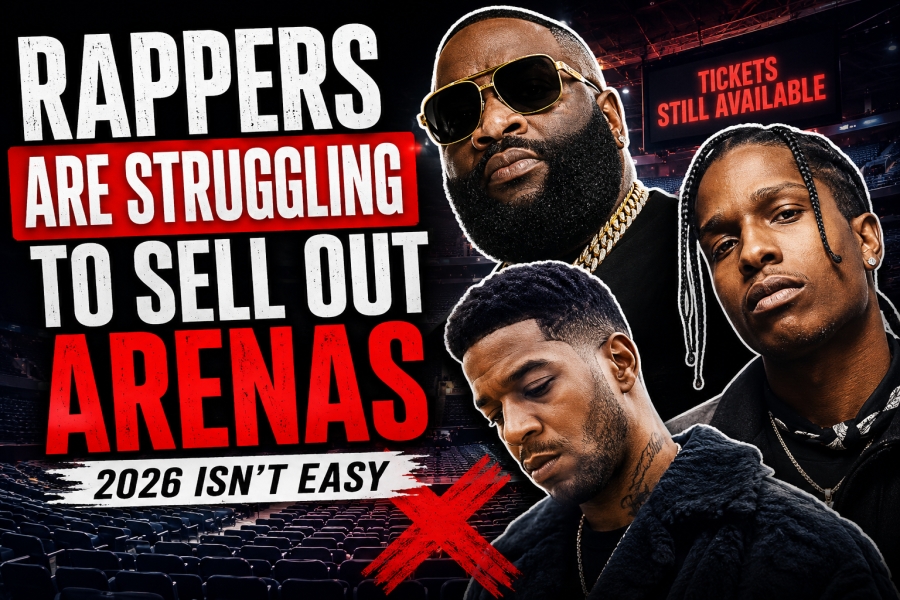
Why Rappers Are Struggling to Sell Out Arenas in 2026
The New Reality of Hip-Hop Touring
For decades, hip-hop has been one of the most dominant genres in the music industry. From sold-out stadiums to billion-stream artists, rap music has consistently shaped popular culture and generated massive revenue for artists, labels, and promoters alike.
However, 2026 has revealed an uncomfortable truth for many major rap artists: selling out arenas is becoming increasingly difficult.
From Rick Ross and A$AP Rocky to Kid Cudi and several other well-known names, many rappers are finding it harder than ever to fill large venues. Tours are seeing discounted tickets, venue changes, postponed dates, and in some cases, outright cancellations.
The question is simple: Why are rappers struggling to sell out arenas in 2026?
The answer is far more complex than declining popularity. Instead, it reflects a major shift in consumer behavior, ticket pricing, streaming culture, and the changing relationship between artists and fans.
The Arena Touring Model Is Becoming Harder to Sustain
The traditional arena model was built around one core principle: massive demand.
Artists would release a hit album, build anticipation, and then capitalize on that momentum through large-scale tours. Fans had fewer entertainment options and were often willing to spend significant money to see their favorite performers live.
Today, that formula is breaking down.
Fans are facing economic pressures worldwide, including rising living costs, housing expenses, and inflation. Concert tickets are no longer viewed as affordable entertainment for many households.
A single arena concert can easily cost:
- $100–$300 for standard tickets
- $50–$100 for parking
- $20–$50 for food and drinks
- Additional travel and accommodation costs
For many fans, attending one concert can cost several hundred dollars.
As a result, consumers are becoming more selective about which artists they are willing to spend money on.
Streaming Success Does Not Equal Ticket Sales
One of the biggest misconceptions in today's music industry is that streaming numbers automatically translate into concert demand.
This simply isn't true.
An artist may generate hundreds of millions of streams while maintaining a relatively passive audience. Many listeners consume music through playlists, algorithmic recommendations, and social media snippets without developing a deep connection to the artist.
In previous generations, fans often purchased full albums and followed artists closely throughout their careers.
Today's listeners frequently engage with individual songs rather than entire artist brands.
This creates a major problem for arena tours.
Just because a rapper has a viral hit on Spotify, TikTok, or YouTube does not mean thousands of people are willing to spend hundreds of dollars to see them perform live.
The gap between digital popularity and real-world demand has never been wider.
The Rise of Festival Culture
Another major challenge facing rappers is the growing popularity of music festivals.
Many fans now prefer festivals over standalone arena shows because they offer greater value.
Instead of paying premium prices to watch one artist perform for 90 minutes, consumers can attend a festival and see dozens of artists across multiple stages.
Major festivals continue to attract huge audiences because they provide:
- Multiple headliners
- Diverse music genres
- Social experiences
- Better perceived value
- Unique content for social media
For younger audiences, festivals often feel more exciting than traditional arena concerts.
This trend is especially affecting mid-tier rap artists who previously relied on arena touring revenue.
Oversaturation Is Hurting Demand
The music industry is more crowded than ever.
Every day, thousands of new songs are uploaded to streaming platforms.
Social media has created an environment where artists can achieve viral success almost overnight.
While this has created opportunities, it has also led to oversaturation.
Fans have more choices than ever before.
Instead of focusing on a handful of superstar artists, audiences now divide their attention across hundreds of musicians, influencers, content creators, gamers, and entertainers.
The competition for attention is relentless.
As a result, maintaining long-term fan loyalty has become significantly harder.
Arena Ticket Prices Have Reached a Breaking Point
Perhaps the biggest factor impacting arena attendance is ticket pricing.
Many fans simply believe concerts have become too expensive.
Dynamic pricing systems have pushed ticket costs to unprecedented levels.
While these systems help maximize revenue, they often alienate core fans.
When consumers see ticket prices fluctuating dramatically or reaching premium levels, many choose not to attend at all.
Fans increasingly ask themselves:
"Do I really want to spend $300 to see this artist?"
For many rappers, the answer from consumers is becoming "no."
Artists who were capable of selling out arenas five years ago may no longer generate enough demand to justify those ticket prices.
Social Media Has Changed Fan Relationships
Social media was once considered a powerful promotional tool for artists.
While it still plays an important role, it has also created unexpected challenges.
Fans now have unprecedented access to artists through:
- TikTok
- YouTube
- Twitch
- Podcasts
- Livestreams
As a result, the exclusivity that once surrounded celebrities has diminished.
In previous decades, attending a concert was one of the few opportunities fans had to experience their favorite artist.
Today, fans can watch hours of content from artists without ever purchasing a ticket.
This constant accessibility has reduced some of the urgency surrounding live events.
Hip-Hop Is Facing Increased Competition
Although hip-hop remains one of the world's most influential genres, it is no longer the uncontested leader it once appeared to be.
Several genres are experiencing significant growth, including:
Country Music
Country artists continue to dominate touring revenues and frequently sell out stadiums and arenas.
Fans of country music often demonstrate exceptionally high loyalty and stronger ticket-buying habits.
Electronic Dance Music (EDM)
EDM festivals and events continue to thrive globally.
The community aspect of electronic music creates highly engaged audiences willing to travel long distances for live experiences.
Latin Music
Latin artists are experiencing unprecedented international growth.
Their concerts often attract passionate fan bases that consistently support live performances.
K-Pop
K-pop remains one of the strongest touring genres in the world.
Fan communities are highly organized and extremely committed to supporting artists both online and offline.
As competition intensifies, rap artists must work harder to attract consumer spending.
Some Artists Have Outgrown Their Peak Commercial Momentum
This is often the most uncomfortable reality.
Not every artist maintains the same level of demand throughout their career.
Artists such as Rick Ross, Kid Cudi, and others have built legendary catalogs and contributed enormously to hip-hop culture.
However, commercial demand naturally evolves.
New generations of listeners emerge.
Musical trends shift.
Consumer interests change.
While legacy artists can still generate significant audiences, filling a 15,000–20,000-seat arena requires extraordinary demand.
Sometimes the market simply no longer supports venues of that size.
This does not diminish an artist's impact or legacy.
It simply reflects changing consumer behavior.
Fans Are Prioritizing Experiences Differently
Younger consumers are spending money differently from previous generations.
Many prioritize:
- Travel
- Experiences
- Gaming
- Technology
- Subscription services
- Fitness memberships
- Content creation equipment
Concerts now compete with countless other entertainment options.
The average consumer's entertainment budget is being divided among multiple platforms and experiences.
This means artists must provide compelling reasons for fans to choose a concert over everything else.
The Future of Hip-Hop Touring
Despite current challenges, hip-hop touring is far from dead.
Instead, the industry is entering a new phase.
Successful artists are adapting by:
Choosing Smaller Venues
Many artists are discovering that smaller venues create:
- Better atmosphere
- Higher demand
- Stronger fan engagement
- Easier sell-outs
A sold-out 5,000-capacity venue often generates more excitement than a half-empty arena.
Creating Premium Experiences
VIP packages, meet-and-greets, exclusive merchandise, and immersive fan experiences are becoming increasingly important revenue streams.
Building Stronger Communities
Artists who actively engage with fans throughout the year tend to maintain stronger touring performances.
Community-building is becoming just as important as releasing music.
Leveraging Direct-to-Fan Marketing
Email lists, fan clubs, membership platforms, and exclusive content are helping artists reduce dependence on algorithms and strengthen relationships with supporters.
The Arena Era Isn't Over, But It's Changing
The struggles faced by artists such as Rick Ross, A$AP Rocky, Kid Cudi, and others do not indicate that hip-hop is declining.
Instead, they reveal a changing music industry.
Streaming has transformed consumption habits.
Ticket prices have reached uncomfortable levels.
Fans have more entertainment choices than ever before.
Social media has altered artist-fan relationships.
And economic realities are forcing consumers to spend more carefully.
Arena tours remain possible, but they increasingly require exceptional demand, strategic pricing, powerful fan engagement, and a compelling live experience.
The artists who adapt to these new realities will continue to thrive.
Those relying on outdated touring models may find that selling out arenas in 2026 is far more difficult than it was just a few years ago.
As the music business evolves, one thing is becoming clear: popularity on a screen does not always translate into people filling seats inside an arena.
