


Spotify Expands Its “Superfan” Strategy: The Future of Music Streaming and Fan Engagement
The music streaming industry is entering a new era, and Spotify is leading the charge. As competition intensifies and streaming growth begins to mature in many markets, the company is shifting its focus toward a highly valuable audience segment: superfans.
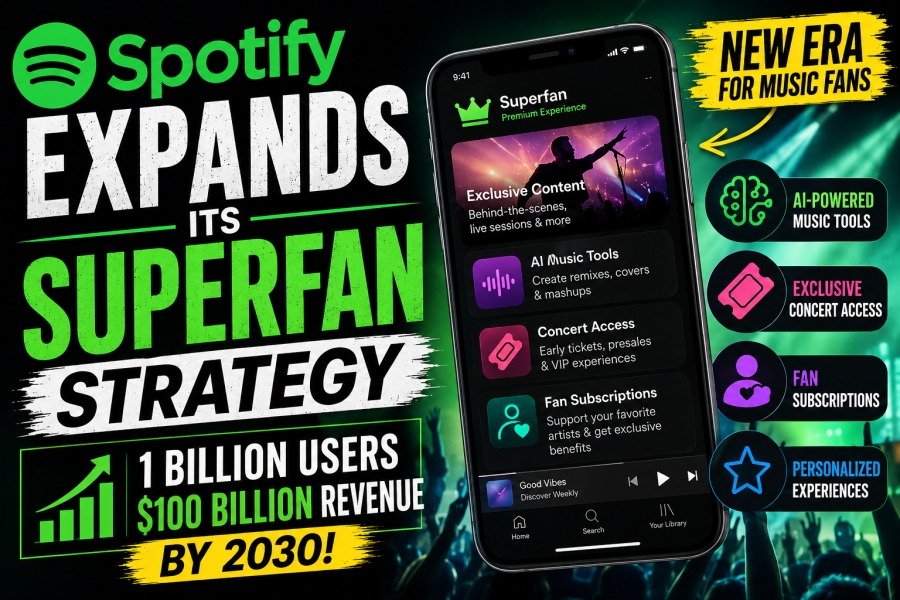
Spotify's latest strategy revolves around creating premium experiences designed specifically for music's most dedicated listeners. From AI-powered music tools and personalized content to exclusive concert ticket access and fan subscription products, the streaming giant is aggressively expanding its superfan ecosystem.
The move is part of Spotify’s ambitious long-term vision to reach 1 billion users and generate $100 billion in annual revenue by 2030. While traditional streaming subscriptions remain the foundation of the business, Spotify believes the future lies in deeper fan engagement and premium monetization opportunities.
For artists, labels, and fans alike, this strategy could fundamentally reshape the future of music consumption.
What Is Spotify’s Superfan Strategy?
A superfan is more than just a casual listener.
Superfans are highly engaged supporters who:
- Stream music frequently
- Purchase merchandise
- Attend concerts
- Follow artists on social media
- Join fan communities
- Support exclusive content
- Spend significantly more money than average listeners
Research across the music industry consistently shows that a relatively small percentage of fans generate a disproportionately large share of artist revenue.
Spotify’s new strategy aims to capture more value from these dedicated users by offering experiences that go beyond standard music streaming.
Instead of competing solely on access to music, Spotify is increasingly focusing on creating a richer entertainment ecosystem centered around fan engagement.
Why Spotify Is Focusing on Superfans
The global music streaming market has grown tremendously over the past decade.
Millions of listeners worldwide now subscribe to streaming platforms, making music more accessible than ever before. However, as subscription growth begins to mature in developed markets, companies are looking for new ways to increase revenue without simply raising prices.
Spotify sees superfans as the answer.
These listeners already demonstrate a willingness to spend money on:
- Concert tickets
- Merchandise
- Vinyl records
- Fan club memberships
- Exclusive experiences
- Limited-edition releases
By integrating these opportunities directly into the Spotify platform, the company hopes to become more than just a streaming service.
Spotify wants to become the central hub for music fandom.
AI Music Tools Play a Major Role
One of the most talked-about developments in Spotify’s superfan strategy is its investment in AI-powered music experiences.
Recent licensing agreements with major record labels have paved the way for new AI features that allow users to interact with music in entirely new ways.
Potential AI-powered offerings include:
- AI-generated covers
- Personalized remixes
- Custom mashups
- Alternate song versions
- Interactive music creation tools
Spotify believes these experiences could create entirely new forms of fan engagement while generating additional revenue opportunities for artists and rights holders.
Supporters argue that AI tools allow fans to participate more actively in music culture.
Critics, however, worry about the long-term implications for artistic authenticity and the growing presence of AI-generated content in the music ecosystem.
Regardless of the debate, AI appears set to become a major component of Spotify’s future strategy.
Exclusive Concert Ticket Access Could Become a Game-Changer
Live music remains one of the most valuable sectors of the entertainment industry.
Concert attendance continues growing globally, and fans are increasingly willing to pay premium prices for exclusive experiences.
Spotify is now exploring ways to leverage its platform to provide:
- Early ticket access
- Exclusive presales
- VIP experiences
- Artist meet-and-greet opportunities
- Premium event packages
This approach benefits both fans and artists.
Dedicated listeners gain access to experiences that may otherwise sell out quickly, while artists can connect directly with their most engaged audiences.
Spotify’s vast listener data also allows the company to identify fans who are most likely to attend specific concerts, creating highly targeted ticketing opportunities.
The integration of streaming and live events could become one of Spotify’s most powerful growth drivers over the coming years.
Personalized Content Is Becoming More Important
Spotify has long been known for its recommendation algorithms.
Features like Discover Weekly, Release Radar, and personalized playlists have helped differentiate the platform from competitors.
Now, Spotify is taking personalization even further.
Future superfan experiences may include:
- Exclusive artist messages
- Personalized video content
- Behind-the-scenes access
- Custom fan experiences
- Tailored recommendations
- Interactive artist engagement
The goal is to make each user feel more connected to the artists they love.
In an increasingly crowded entertainment landscape, personalization has become one of the most effective tools for maintaining user loyalty.
Spotify’s extensive listening data provides a unique advantage in delivering these experiences.
Fan Subscription Products Open New Revenue Streams
Another major component of Spotify’s superfan strategy involves fan subscription products.
These offerings could allow artists to monetize their most dedicated supporters through premium memberships that provide exclusive access to content and experiences.
Potential features may include:
- Exclusive tracks
- Early releases
- Private livestreams
- Fan communities
- Bonus content
- Virtual events
- Direct artist interaction
For artists, this represents an opportunity to diversify income beyond traditional streaming royalties.
Many musicians have expressed concerns about low streaming payouts, particularly independent artists who rely heavily on digital revenue.
Fan subscription models offer a way to build more sustainable relationships with supporters while generating recurring income.
Spotify hopes to position itself as the platform that facilitates these connections.
The Company’s Ambitious Growth Targets
Spotify’s superfan strategy is closely tied to its broader corporate goals.
The company has publicly outlined a vision of reaching:
- 1 billion users
- $100 billion in annual revenue
- Deeper artist relationships
- Expanded monetization opportunities
Achieving these targets will require Spotify to evolve beyond its traditional streaming model.
Music subscriptions alone are unlikely to generate the scale of revenue needed to reach these ambitious goals.
By creating a multi-layered ecosystem that includes streaming, ticketing, subscriptions, merchandise, AI experiences, and exclusive content, Spotify hopes to unlock entirely new sources of growth.
The superfan strategy sits at the center of this vision.
Artists Could Benefit Significantly
If executed effectively, Spotify’s superfan ecosystem could provide meaningful benefits for artists.
Potential advantages include:
- Increased revenue opportunities
- Stronger fan relationships
- Better audience insights
- Direct-to-fan communication
- Enhanced discoverability
- Improved monetization tools
Historically, artists have relied on a combination of streaming, touring, merchandise, and sponsorships to generate income.
Spotify’s strategy aims to integrate many of these revenue streams into a single platform.
This could simplify fan engagement while helping creators build more sustainable careers.
Independent artists may be particularly well-positioned to benefit from these tools.
The Challenges Facing the Superfan Model
Despite its potential, Spotify’s strategy is not without challenges.
Some concerns include:
Fan Fatigue
As more platforms introduce premium tiers, subscriptions, and exclusive content, consumers may become overwhelmed by the number of paid services competing for attention.
Artist Participation
The success of the superfan ecosystem depends heavily on artists actively participating in exclusive content and engagement opportunities.
Without strong artist involvement, premium offerings may struggle to attract users.
AI Controversies
Spotify’s investment in AI-generated music experiences remains highly controversial.
Many artists and industry professionals worry that AI tools could eventually undermine human creativity or flood the market with synthetic content.
Competition
Spotify is not alone in recognizing the value of superfans.
Other companies, including major social media platforms and streaming services, are exploring similar strategies aimed at monetizing dedicated audiences.
How Superfans Are Reshaping the Music Business
The rise of superfans reflects a broader shift occurring throughout the entertainment industry.
Across music, gaming, sports, and content creation, businesses are increasingly focusing on their most engaged audiences rather than relying solely on mass-market appeal.
Superfans offer:
- Higher spending potential
- Greater loyalty
- Stronger engagement
- Increased advocacy
- Long-term value
For Spotify, this represents an opportunity to strengthen its competitive position while creating deeper relationships between artists and listeners.
The strategy also aligns with changing consumer expectations.
Modern fans increasingly want more than passive entertainment. They want interaction, exclusivity, personalization, and community.
Spotify’s superfan ecosystem is designed to deliver exactly that.
The Future of Music Streaming
The expansion of Spotify’s superfan strategy signals a broader transformation within the music industry.
Streaming platforms are evolving from simple music libraries into comprehensive entertainment ecosystems.
Future music platforms may combine:
- Streaming
- Ticketing
- Merchandise
- AI experiences
- Creator subscriptions
- Social interaction
- Fan communities
- Virtual events
Spotify appears determined to lead this transformation.
If successful, the company could redefine how artists monetize their work and how fans engage with music.
Final Thoughts
Spotify’s expansion into the superfan economy represents one of the most significant strategic shifts in the company’s history.
By targeting highly engaged music fans with premium experiences, AI-powered tools, exclusive ticket access, personalized content, and subscription products, Spotify is positioning itself for the next phase of growth.
The company’s ambitious goals of reaching 1 billion users and generating $100 billion in annual revenue reflect its confidence in the power of fan engagement.
For artists, the strategy offers new monetization opportunities and deeper audience connections.
For fans, it promises richer, more personalized experiences.
And for the music industry as a whole, Spotify’s superfan initiative may mark the beginning of a new era where engagement matters just as much as streams.
As the streaming landscape continues evolving, one thing is becoming increasingly clear: the future of music may belong to the superfans.
