


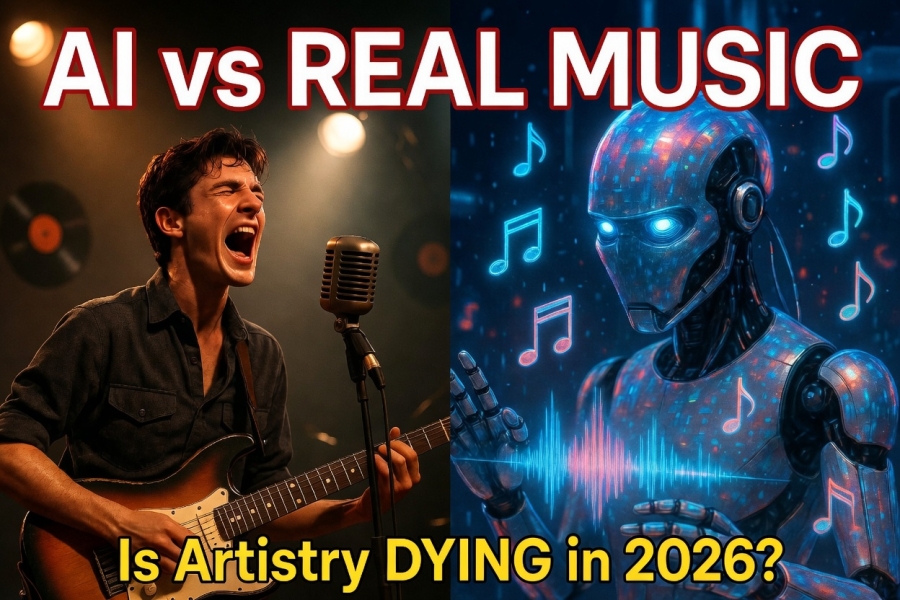
🤖 AI vs Authenticity in Music: Is Real Artistry Being Lost in the Algorithm Era?
🎧 Introduction: A Turning Point for the Music Industry
The music industry is entering one of its most defining moments in decades. With artificial intelligence rapidly reshaping how music is created, distributed, and consumed, a critical question is emerging: Is authenticity being sacrificed for automation?
Artists, fans, and industry leaders are now openly debating the long-term impact of AI on creativity. Even global superstars like Billie Eilish have voiced concerns about whether a new artist can rise organically in a landscape dominated by algorithms, viral loops, and machine-generated content.
This isn’t just a passing conversation; it’s a fundamental shift in how music is valued.
🎼 The Rise of AI in Music Creation
Artificial intelligence is no longer a futuristic concept in music—it’s already here, deeply embedded in the creative process.
AI tools can now:
- Generate full songs in seconds
- Mimic artist voices and styles
- Produce beats, melodies, and lyrics automatically
- Master and mix tracks without human engineers
Platforms like OpenAI and Google DeepMind are pushing the boundaries of what machines can create. Meanwhile, AI-powered tools such as Suno AI and Udio are making music production accessible to anyone with an internet connection.
🚀 Democratization or Dilution?
On one hand, this democratization is revolutionary. Independent artists no longer need expensive studios or years of technical training to produce high-quality tracks.
On the other hand, the barrier to entry has dropped so low that the market is becoming oversaturated with content—much of it lacking originality or emotional depth.
⚖️ Authenticity vs Automation: The Core Debate
At the heart of the discussion lies a simple but powerful question:
What makes music “real”?
Traditionally, authenticity in music has been tied to:
- Personal storytelling
- Emotional expression
- Unique artistic identity
- Human imperfections
AI challenges all of these.
When a machine can generate a song that sounds like a chart-topping artist, listeners are left wondering:
- Is this a genuine expression or a calculated output?
- Does the artist still matter, or just the sound?
Billie Eilish has hinted at this exact concern—suggesting that the organic rise she experienced may become increasingly rare in a system driven by data rather than discovery.
📱 The Algorithm Effect: Who Controls What We Hear?
Beyond creation, AI is also reshaping how music is discovered.
Streaming platforms like Spotify and YouTube rely heavily on algorithms to recommend songs to users.
These algorithms prioritize:
- Engagement metrics (likes, skips, shares)
- Listening habits and behavior
- Viral potential
🔁 The Feedback Loop Problem
This creates a feedback loop:
- AI promotes certain sounds and trends
- Artists replicate those trends to gain visibility
- The algorithm further amplifies similar content
The result?
A homogenized music landscape where originality often takes a back seat to what “works.”
🎤 Can New Artists Still Break Through?
One of the biggest concerns is whether new artists can still rise without conforming to algorithmic expectations.
In the past, breakthroughs were driven by:
- Unique sound
- Cultural movements
- Word-of-mouth and grassroots support
Today, success often depends on:
- Viral TikTok moments
- Playlist placements
- Data-driven strategies
This shift makes it harder for unconventional artists to gain traction—unless they adapt to the system.
🔥 The Pushback Against AI Saturation
As AI-generated content floods the market, a counter-movement is beginning to emerge.
🎶 1. Fans Craving Realness
Listeners are becoming more aware of AI’s presence in music. Many are now actively seeking:
- Raw, unfiltered performances
- Live recordings
- Behind-the-scenes content
Authenticity is becoming a selling point again.
🏷️ 2. AI Transparency and Labeling
There is growing pressure on platforms to disclose when music is AI-generated.
Industry discussions are leaning toward:
- AI disclosure tags on tracks
- Clear crediting of human vs machine contributions
- Ethical guidelines for AI usage
This could redefine how music is categorized and consumed.
🎛️ 3. Artists Reclaiming Control
Many artists are pushing back by:
- Producing music independently
- Building direct relationships with fans
- Prioritizing storytelling over trends
This aligns with the rise of artist-owned ecosystems, where creators control their distribution, branding, and monetization.
💰 The Business Impact: Who Wins?
AI isn’t just a creative tool—it’s a business disruptor.
📈 Winners:
- Tech companies developing AI tools
- Platforms benefiting from increased content volume
- Artists who leverage AI strategically
⚠️ Risks:
- Devaluation of music due to oversupply
- Reduced earnings for human creators
- Loss of artistic identity
The industry is now balancing efficiency vs originality.
🌍 Cultural Implications: More Than Just Music
This debate goes beyond the industry—it touches on culture itself.
Music has always been a reflection of:
- Society
- Emotion
- Human experience
If AI begins to dominate creation, we risk losing:
- Cultural authenticity
- Regional sounds and diversity
- The human stories behind music
🧠 The Future: Coexistence or Conflict?
So where do we go from here?
The most likely outcome isn’t AI replacing artists—but AI and humans coexisting.
🤝 A Hybrid Future
- AI as a tool, not a creator
- Artists using AI to enhance—not replace—their vision
- Fans valuing both innovation and authenticity
The challenge will be maintaining balance.
🎯 What This Means for Artists Today
If you’re an artist in 2026, here’s the reality:
✅ What Works Now:
- Building a strong personal brand
- Connecting directly with fans
- Creating authentic, relatable content
- Using AI strategically (not relying on it completely)
❌ What Doesn’t:
- Chasing trends blindly
- Over-automating creativity
- Ignoring audience connection
Authenticity is no longer optional—it’s your biggest competitive advantage.
🚀 Conclusion: The Return of Real Music?
The AI vs authenticity debate is far from over, but one thing is clear:
The industry is starting to push back.
As technology continues to evolve, the value of human creativity is being re-evaluated. Listeners are becoming more conscious, artists are reclaiming control, and the demand for real, meaningful music is growing.
The future of music won’t be defined by AI alone—it will be shaped by how we choose to use it.
And in a world flooded with content, one thing still stands out above all:
👉 Real artistry.
