


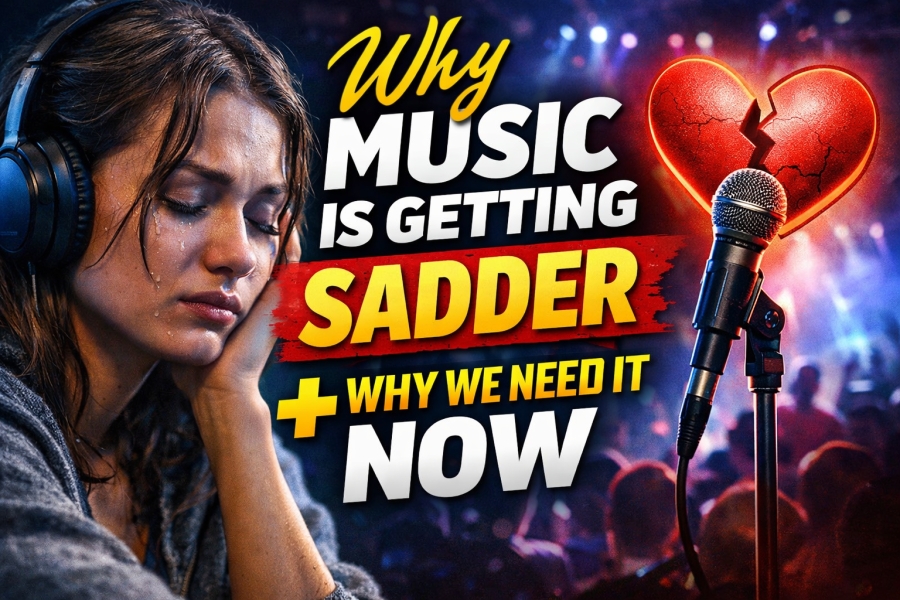
Why Music Lyrics Are Getting Sadder in 2026: Mental Health, Introspection, and Music as Emotional Release
Music has always reflected the times we live in.
But in recent years, something undeniable has happened.
Lyrics are getting sadder. More introspective. More emotionally raw.
From pop and hip-hop to indie, electronic, and alternative, today’s songs are filled with themes of loneliness, anxiety, burnout, heartbreak, and self-reflection. Mental health is no longer hidden between metaphors — it’s spoken about directly.
This isn’t a coincidence.
It’s a cultural shift.
And it matters more than ever.
Music and Mental Health: A Cultural Turning Point
For decades, mainstream music focused on escapism — partying, success, romance, and fantasy. Pain was often masked or glamorized rather than explored.
Today’s listeners want something different.
They want truth.
As conversations around mental health become more open globally, music has followed. Artists are no longer afraid to talk about depression, anxiety, trauma, or emotional exhaustion — and audiences are responding in record numbers.
Search trends show growing interest in phrases like:
-
music and mental health
-
sad songs that heal
-
introspective lyrics meaning
-
why music is getting sadder
People aren’t just listening to music anymore.
They’re using it to process life.
The Data Behind Sadder Lyrics
Multiple studies analyzing popular song lyrics over the last 20–30 years reveal a clear trend:
-
Increased use of negative emotional language
-
Higher frequency of words related to sadness, fear, loneliness, and introspection
-
Decline in purely celebratory or materialistic themes
Streaming platforms also confirm this shift.
Playlists focused on emotional depth — such as sad music, late night vibes, or healing songs — consistently outperform upbeat playlists in repeat listens and total playtime.
Why?
Because sad music doesn’t push people away anymore.
It pulls them closer.
Why Are Lyrics Becoming More Introspective?
1. A Generation Under Pressure
Modern life is emotionally overwhelming.
Economic uncertainty, social media comparison, global instability, digital burnout — these pressures shape how people feel every day. Artists aren’t separate from this reality; they live inside it.
Songwriting has become a place to process:
-
Anxiety about the future
-
Feelings of disconnection
-
Identity struggles
-
Emotional fatigue
Music is no longer pretending everything is okay.
It’s admitting that it isn’t.
2. Mental Health Is No Longer a Taboo
In the past, discussing mental health openly could damage an artist’s image.
Now, it strengthens it.
Listeners trust artists who are vulnerable. Songs about therapy, panic attacks, self-doubt, or emotional numbness feel relatable — not weak.
This openness has changed songwriting forever.
Music is no longer just a performance.
It’s a conversation.
3. Social Media Demands Authenticity
Artists today exist in public 24/7.
Fans see behind the scenes — the struggles, the doubts, the creative blocks. That transparency carries into the music.
Audiences can sense when emotions are fake.
And they reward honesty.
Sad Music Isn’t Negative — It’s Healing
There’s a common misunderstanding that sad music makes people feel worse.
Psychology says the opposite.
Listening to emotionally resonant music can activate empathy, facilitate emotional processing, and promote reflection. It helps listeners feel understood, which reduces emotional isolation.
In simple terms:
Sad music helps people release emotions they’ve been holding in.
That release is powerful.
Music as Emotional Release in a Hyperconnected World
We live in a culture obsessed with productivity and positivity.
“Stay strong.”
“Keep grinding.”
“Don’t complain.”
Music has become one of the few spaces where people are allowed to feel without judgment.
A single lyric can express what someone has been unable to say out loud for years.
That’s not entertainment.
That’s emotional survival.
The Rise of Minimalism and Quiet Emotion
Another major trend shaping modern music is minimal production.
-
Softer vocals
-
Slower tempos
-
Sparse arrangements
-
More silence
This allows lyrics to breathe.
In a loud digital world, quiet songs feel intimate. They invite reflection rather than distraction.
This isn’t accidental — it’s a response to overstimulation.
Why This Shift Matters for Artists
For musicians, this cultural change is liberating.
You no longer need to pretend to be invincible.
You don’t need constant hype.
You don’t need to hide vulnerability.
Artists who write honestly build deeper fan relationships and longer-lasting careers.
People may forget how catchy a song was.
They never forget how it helped them feel less alone.
Why This Shift Matters for Listeners
For listeners, introspective music does something essential:
It gives language to emotions they can’t explain.
Not everyone knows how to talk about mental health.
Not everyone has support.
Not everyone feels safe being vulnerable.
Music fills that gap.
It becomes a companion during loneliness, healing, and self-discovery.
Music Is No Longer Escaping Reality — It’s Facing It
In earlier eras, music was used as an escape.
Today’s music faces reality head-on.
Artists are asking real questions:
-
Why do I feel empty even when I succeed?
-
Why am I exhausted all the time?
-
Why do I feel disconnected in a connected world?
Listeners are asking the same things.
That’s why these songs resonate so deeply.
The Bigger Cultural Shift
This trend isn’t about sadness.
It’s about depth, honesty, and emotional intelligence.
A generation tired of surface-level living is craving meaning.
A culture overwhelmed by noise is seeking stillness.
A world addicted to speed is learning to pause.
Music is leading that transformation.
Quietly.
Honestly.
Powerfully.
Final Thoughts: Sad Lyrics Are a Sign of Growth
Music didn’t get sadder because the world got worse.
Music got sadder because people got braver.
Braver about telling the truth.
Braver about feeling deeply.
Braver about turning emotion into art.
In an era where so many feel unseen or unheard, emotionally honest music isn’t a weakness.
It’s a lifeline.
