


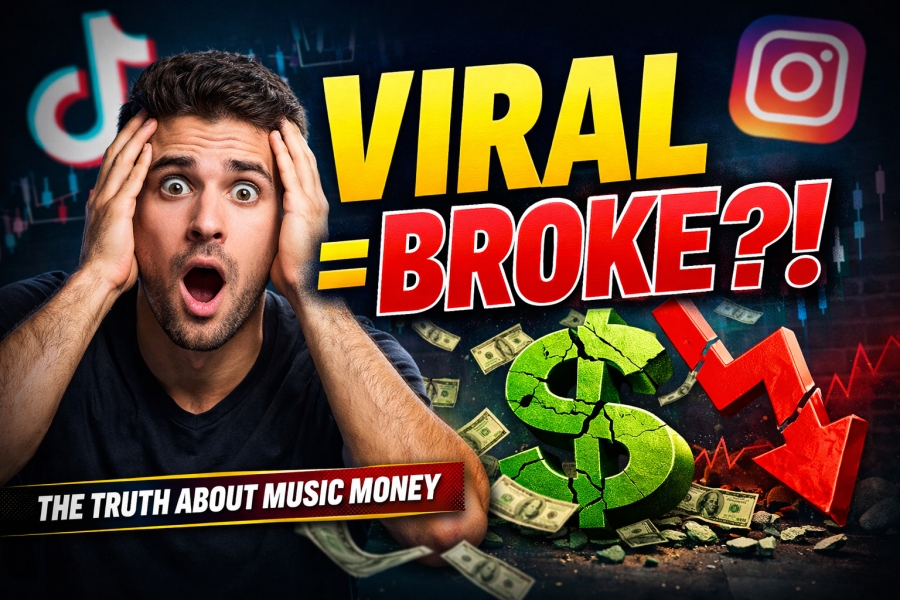
Social Media Virality Rarely Translates Into Long-Term Financial Value for Artists, Report Finds
Feeling the pressure to make your music go viral? Here’s why it might not be the best idea…
In today’s music industry, artists feel intense pressure to make their songs go viral on social media platforms like TikTok, Instagram Reels, and YouTube Shorts. Overnight success stories are celebrated, and viral hits often seem like the ultimate shortcut to fame. Yet a growing body of research now suggests a stark reality: social media virality rarely converts into sustained, long-term financial value for artists.
In this blog post, we’ll explore what recent studies reveal, why viral moments aren’t always profitable, and what independent musicians can focus on instead to grow their careers sustainably.
Why Artists Chase Virality
The appeal of virality is understandable. In a world where millions of users scroll endlessly, an unexpected spike in streams, followers, or views can bring massive attention. For many artists, that sudden visibility feels like the key to:
-
Exploding their fanbase
-
Getting playlisted on major streaming services
-
Securing record deals or industry buzz
-
Earning sponsorships or brand partnerships
Social media platforms have made virality seem accessible. A catchy hook, a dance challenge, or a meme-friendly snippet appears capable of thrusting unknown artists into the global spotlight overnight.
But the truth is more complex.
What the Report Found: Views ≠ Revenue
A recent industry report analyzed social media data and financial outcomes for artists who experienced viral moments. The findings were eye-opening:
1. Viral Moments Often Don’t Lead to Sustainable Income
Although many tracks gained millions of views on platforms like TikTok, those views rarely translated into lasting revenue streams. While streams and royalties might spike briefly, most artists saw only short-lived financial gains.
2. Streaming Does Not Equal Financial Stability
Music streaming pays a fraction of a cent per play. Even when a viral song accumulates millions of streams, the payout is often modest and distributed across multiple rights holders. This means:
-
Artists often see only a small cut
-
Labels and publishers may take the lion’s share
-
Independent creators sometimes earn less than expected
3. Attention Doesn’t Automatically Build Fans
Viral exposure is often transactional rather than transformational. Many listeners engage with a song once — driven by a trend — without becoming invested long-term fans.
This disconnect between attention and commitment is one of the central shortcomings of virality as a strategy.
The Viral Trap: Why Quick Fame Can Be Misleading
Virality feels like success because it’s quantifiable: views, likes, shares, and chart positions all rise quickly. But there are several ways that viral fame can be deceptive:
Short-Term Metrics vs. Long-Term Growth
A viral moment may give an artist thousands of new followers, but conversion into sustained support — concert tickets, merchandise, loyal fanbase — often falls short. Platforms reward what is trending now, not what will matter in the future.
Dependency on Algorithms
Platforms constantly tweak their algorithms. A song that worked with one algorithm update might not perform the same the next month. This means artists who build their strategy around virality are at the mercy of unpredictable tech changes.
Creative Pressure and Burnout
Chasing virality can push artists into a cycle of content creation that prioritizes trends over originality. This can lead to:
-
Creative exhaustion
-
Loss of artistic identity
-
Feeling trapped in a loop of chasing relevance
Rather than cultivating art that matters to them, many musicians find themselves making content that caters to algorithms — not their audience.
What Makes Virality Hard to Monetize
To understand why virality often fails to produce lasting value, let’s break down the economics of social platforms and streaming:
Low Streaming Payouts
Despite the perception that millions of streams equal significant income, most platforms pay artists very little per play. Between distribution fees, label cuts, and publishing splits, the actual amount that reaches the artist is small.
Uneven Revenue Distribution
Even when a song goes viral, revenue doesn’t always go where it should:
-
Labels and managers often take predefined percentages
-
Publishing deals may siphon off a large share of royalties
-
Independent artists may lack control over their splits
This means that getting heard doesn’t always lead to getting paid.
Virality Without Ownership
Many viral trends use only a snippet of a song — sometimes less than 15 seconds. Because of this:
-
Listeners may never visit the full track
-
Artists may not earn significant streaming royalties
-
Users may remix, transform, or appropriate the content with little compensation
In short: viral moments often generate engagement metrics, but do not guarantee monetizable consumption.
The Value of a Loyal Fanbase
If virality is unreliable, what should artists focus on? The answer lies in building real, committed fans rather than chasing fleeting attention.
Why Loyalty Matters More Than Likes
A loyal fan is someone who:
-
Streams your music regularly
-
Buys merchandise
-
Attends your shows
-
Shares your story with others
These forms of engagement build multiple revenue streams and long-term sustainability.
Repeat Engagement Beats One-Time Views
A fan who listens to your new album repeatedly • pays for merch • follows your live shows offers far more value over time than one million random viewers who heard your track once because of a trend.
Consistency beats spikes.
Strategies for Sustainable Success
Here are practical ways artists can build long-term value without depending on virality:
1. Focus on Direct Fan Engagement
Platforms like:
-
Patreon
-
Discord
-
Email newsletters
-
TikTok live sessions
Give artists direct access to their audience. By engaging fans consistently, artists create deeper connections and recurring income.
2. Prioritize Long-Form Content
Rather than short clips designed for rapid consumption, consider:
-
Behind-the-scenes videos
-
Songwriting breakdowns
-
Full-length music videos
-
Storytelling about your creative process
These encourage longer listening sessions and stronger emotional investment.
3. Build Multiple Revenue Streams
Don’t rely solely on streaming revenue. Diversify with:
-
Merchandise
-
Sync licensing
-
Live performances
-
Fan subscriptions
-
Exclusive releases
Multiple income paths make your career less dependent on unpredictable algorithmic trends.
4. Invest in Community
A strong fan community can:
-
Amplify your releases organically
-
Attend shows consistently
-
Buy merch and support through tips
Giving your audience something to belong to leads to growth that is both meaningful and profitable.
When Virality Works — And When It Doesn’t
It’s important to acknowledge that virality can be beneficial — but its impact varies widely depending on how artists leverage it.
Virality as a Boost, Not a Goal
Viral moments can be helpful when they:
-
Enhance exposure at the right time
-
Attract listeners to your wider catalog
-
Reinforce a long-term release strategy
-
Amplify your brand identity
However, making virality the sole objective often backfires.
Examples of What Works Better
Rather than chasing TikTok trends, consider:
-
Aligning a release with a storytelling campaign
-
Building a narrative arc around a song or album
-
Releasing a music video that invites deeper engagement
-
Collaborating with artists who share your audience
These strategies create resonance — not just reach.
Case Studies: When Viral Success Didn’t Pay Off
Here’s how virality alone can fall short:
The One-Hit Trend
An artist’s song goes viral because of a dance challenge, but listeners only engage with the specific clip. Full streams don’t increase significantly, resulting in minimal revenue and no fan retention.
Algorithmic Obsolescence
A sudden algorithm change eliminates visibility for specific kinds of content. Artists who depended on that pipeline see their metrics rapidly decline with no fallback plan.
No Fan Conversion
A viral hit might bring followers, but if they don’t engage with future releases, ticket sales, or other offerings, the moment remains a metric — not a career milestone.
These scenarios show how virality can be exciting but ultimately empty without a deeper fan connection.
How to Tell If Your Strategy Is Working
Instead of fixating on views and virality, track metrics that indicate long-term health:
Meaningful Metrics to Watch
Focus on:
-
Average streams per listener
-
Growth in email list subscribers
-
Repeat engagement
-
Merchandise sales
-
Paid subscriptions
-
Show attendance
These numbers reflect genuine fan commitment and financial growth.
Signals of Sustainable Growth
If your audience:
✔ Returns for new releases
✔ Shares your music with others
✔ Buys products or attends events
— then you’re building something real. Virality might come with this growth, but it shouldn’t be the driver.
Final Takeaway: You Are More Than a Trend
For many artists, the dream of viral fame feels like the modern version of the “overnight success.” But as data increasingly shows, these spikes in attention rarely equate to long-term financial value.
Virality feels exciting because it’s measurable. But the most financially rewarding careers are built through consistency, connection, creativity, and community — not one-off moments of viral fame.
Instead of chasing trends, focus on:
✨ Creating music you truly believe in
✨ Growing a loyal fanbase
✨ Diversifying your revenue streams
✨ Engaging your audience with meaning
By investing in these core elements, artists can cultivate careers that last — beyond the fleeting shine of a viral moment.
