


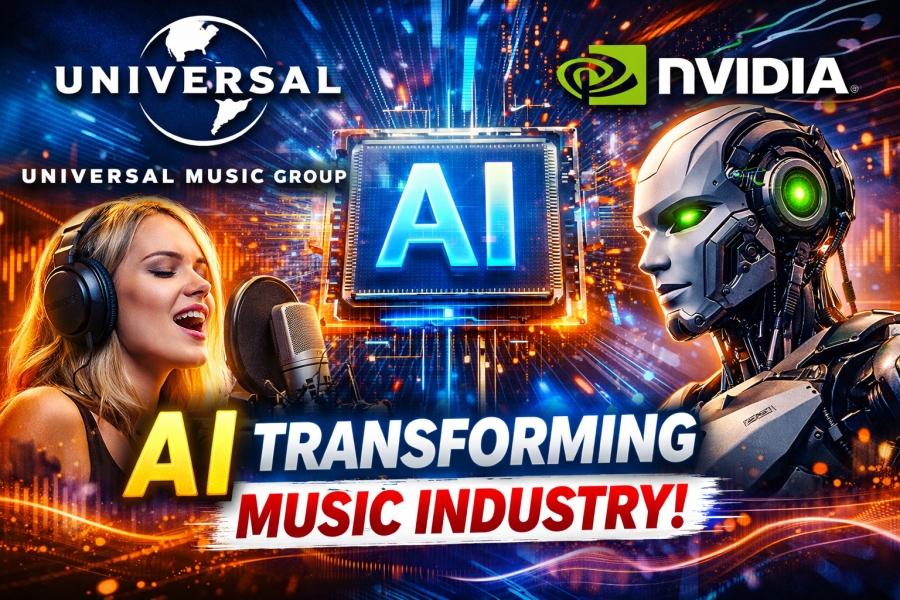
How Universal Music Group + NVIDIA AI Partnership Is Reshaping the Future of Music (2026 & Beyond)
In early January 2026, the music industry witnessed a groundbreaking technology shift — Universal Music Group (UMG), the world’s largest music rights company, announced a strategic partnership with tech giant NVIDIA to pioneer responsible artificial intelligence (AI) in music discovery, creation, and fan engagement. This collaboration represents one of the most significant alliances between a major music entity and an AI research powerhouse — and it could redefine how music is created, experienced, and monetized around the world.
This blog breaks down what this partnership means, why it matters, and how it could change music forever — from artist tools and discovery systems to licensing, copyright, and fan interaction.
🎵 1. Why Universal Music Group + NVIDIA AI Is a Big Deal
Universal Music Group is home to some of the biggest artists on the planet — from Taylor Swift and Drake to The Weeknd and Kendrick Lamar. It oversees millions of recordings spanning every genre and cultural moment. Partnering with NVIDIA, a leader in AI and GPU technology, positions UMG at the forefront of AI-powered music innovation.
🔍 AI Beyond Recommendation — Into True Understanding
Traditional music discovery algorithms on streaming platforms rely primarily on metadata (genre, tempo, keywords). But the new AI engine at the heart of this partnership — Music Flamingo — changes that:
-
It listens to full tracks (up to 15 minutes)
-
Parses harmony, timbre, lyrics, structure, mood, and cultural context
-
Generates deeper insight into emotional narrative and resonance
-
Surfaces songs based on feeling, story, or cultural themes rather than basic tags or similarity.
In other words, fans could be discovering music in human-like ways, making playlists not just based on beats per minute, but based on how songs make you feel, what they’re about, or what cultural moments they reflect.
🎤 2. Music Flamingo — The AI Engine Powering the Future
At the core of the partnership is NVIDIA’s Music Flamingo — a large audio-language model developed to interpret music with unprecedented depth. Unlike typical AI that only skims the surface, Music Flamingo uses chain-of-thought reasoning to understand songs the way humans do: by considering emotional arcs, cultural references, thematic development, and sonic textures.
This technology can:
✅ Break down songs into meaningful components
✅ Match listeners to tracks based on emotion and vibe
✅ Help artists explore creative elements of their catalog
✅ Power interactive music experiences and discovery tools
Imagine asking an AI, “Show me tracks that feel like early morning after rain,” and getting a curated list based on structure and mood — not just genre similarity.
🎧 3. How This Partnership Enhances Music Discovery
🎯 Smarter Personalization
With Music Flamingo, discovery evolves beyond standard recommendations. Instead of:
-
“If you like this, you’ll like that.”
It becomes: -
“If you love this emotional vibe, here are deeply connected songs you haven’t heard yet.”
This could dramatically improve how listeners find new artists, deeper tracks from catalog hits, or music from entirely new cultures.
🚀 New Opportunities for Emerging Artists
One of the biggest challenges for new musicians is being discovered. This AI can match emerging artists to listeners based on emotional or narrative resonance, which isn’t captured by traditional algorithms. This means:
-
Smaller artists can find their niche
-
Fans can discover music that feels right rather than sounds familiar
-
Discovery isn’t hindered by industry gatekeeping.
🎹 4. Artist Tools & Creative Innovation
Another major element of the deal is the creation of an “artist incubator” — a collaborative environment where artists, songwriters, producers, and engineers test and shape the AI tools they’ll use in real-world workflows. This ensures AI becomes a creative partner, not a replacement.
🧠 Toolsets for Creativity
With GPU acceleration and Music Flamingo’s deep understanding of music, creators could access features like:
-
Real-time harmony suggestions
-
Advanced snippet and stem separation
-
Arrangement optimization
-
Personalized creative prompts
-
AI-assisted lyric and melody expansion
All without compromising artistic integrity.
This kind of development could help producers polish ideas faster, experiment with new arrangements, and explore blends of styles they might never have considered.
🧑🤝🧑 5. Responsible AI — Artist Rights, Copyright, and Revenue
One of the biggest controversies in AI music has been around copyright and creator rights. Several AI platforms have drawn legal challenges for using copyrighted material without permission or compensation.
UMG’s move with NVIDIA reflects a clear strategy: embrace AI responsibly, protect rights, and ensure fair compensation.
🔐 Copyright Safeguards
The companies have emphasized that AI training and recommendations will follow authorized and licensed frameworks, steering clear of unlicensed scraping practices that fueled lawsuits against platforms like Suno and Udio last year.
💰 Artist Attribution & Compensation
One of the core pledges of this partnership is to:
-
Ensure proper attribution of original works
-
Protect copyright ownership
-
Create new revenue streams via AI-enhanced engagement and creation tools
-
Maintain artist control over how AI interacts with their catalog.
This balanced approach makes AI a value-add to creators, not a threat.
🌐 6. What This Means for Fans and the Music Industry
📲 A More Immersive Fan Experience
Music Flamingo’s capabilities suggest a future where fan engagement goes beyond playlists and radio:
-
Interactive discovery interfaces
-
Emotion-driven recommendations
-
Cultural context insights
-
Personalized listening journeys
-
Conversational music exploration
Fans could say things like:
“Show me songs that feel like a cinematic sunset with guitar and piano.”
and get curated responses.
📈 New Industry Opportunities
Labels, streaming platforms, and technology companies are watching this partnership closely:
-
It sets a new standard for AI in music
-
It crafts a framework for ethical AI use in entertainment
-
It presents scalable models for discovery and monetization
Competitors like Sony and Warner may follow with their own AI strategies — but UMG + NVIDIA has a first-mover advantage in publicly defined responsible AI for music.
⚠️ 7. Industry Pushback & Concerns You Should Know
Not everyone sees this as an unalloyed good. Some critics believe:
👎 AI could dull creativity if over-relied upon
👎 Fans might distrust AI-generated “personalized” recommendations
👎 Emerging artists could struggle if algorithms favor major label catalogs
👎 Some creative communities feel AI threatens artistic authenticity
These concerns illustrate the need for balance, transparency, and human-centric AI design in music.
📌 8. Final Thoughts — A New Era in Music Tech
The partnership between Universal Music Group and NVIDIA AI marks a pivotal moment in the evolution of music technology. It’s not just about algorithms — it’s about human creativity, responsible innovation, artist rights, and how we experience music in the digital age.
Whether you’re:
-
A fan excited about personalized discovery
-
An artist looking for new tools
-
A creator/producer exploring efficiency gains
-
Or a music industry analyst tracking trends
This alliance is a significant milestone in the ongoing integration between music and artificial intelligence.
Stay tuned — the concert hasn’t ended; it’s just entered a new, intelligent movement powered by responsible AI for music’s future.
