


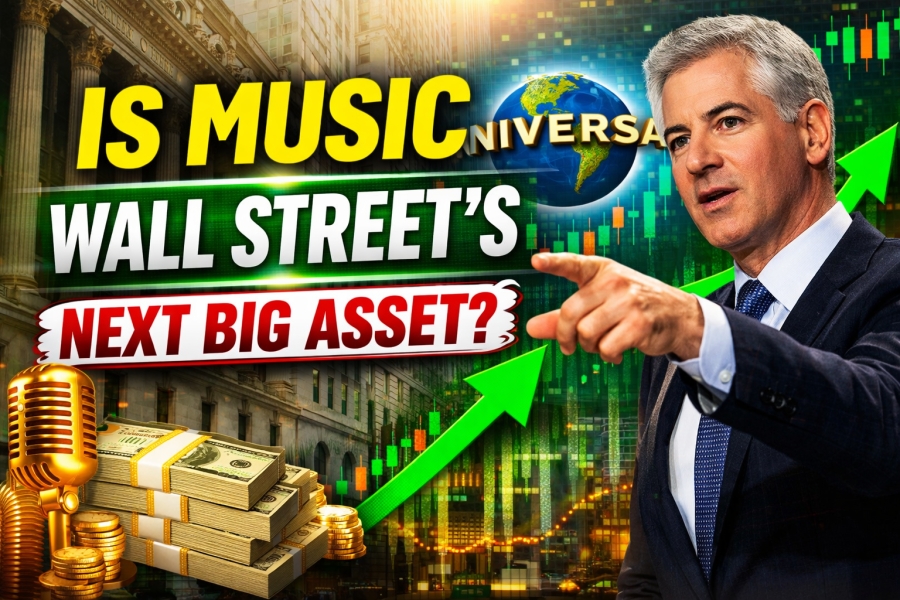
💰 Is the Music Industry Becoming Wall Street’s Biggest Asset?
The $63 Billion Universal Music Group Buyout Attempt Explained
Meta Title:
Universal Music Group $63B Buyout: Is Music the Next Wall Street Asset?
Meta Description:
A deep dive into the $63 billion bid for Universal Music Group and what it means for music ownership, catalog value, and the financialization of the music industry in 2026.
Meta Keywords:
Universal Music Group buyout, music industry investment, music catalogs value, Bill Ackman UMG, music business 2026, streaming economy, music ownership
🎧 Introduction: When Music Meets Wall Street
The music industry is undergoing one of the most dramatic transformations in its history—and it’s not being driven by artists, producers, or even streaming platforms. Instead, the real power shift is coming from Wall Street.
At the center of this shift is a staggering $63 billion acquisition attempt targeting Universal Music Group (UMG), reportedly backed by investment giant Pershing Square Capital Management, led by billionaire investor Bill Ackman.
This isn’t just another corporate deal—it’s a signal of something much bigger:
👉 Music is no longer just culture.
👉 Music is now a financial asset class.
So the question becomes:
💡 Is the music industry becoming Wall Street’s biggest asset?
💰 The $63 Billion Deal: What’s Actually Happening?
The proposed acquisition of Universal Music Group—valued at over $63 billion—has sent shockwaves across both the financial and music worlds.
Key Details:
- UMG is already the largest music company in the world
- Home to artists like Taylor Swift, Drake, and The Weeknd
- Owns vast publishing and recording catalogs
- Generates billions annually through streaming, licensing, and rights
The deal reportedly includes:
- A potential shift of stock listing to the U.S. market
- Increased institutional investor involvement
- Greater financial structuring around music assets
Why This Matters
This isn’t just about buying a company—it’s about acquiring control over music itself.
UMG doesn’t just release songs. It owns:
- Master recordings
- Publishing rights
- Licensing deals
- Royalty streams
In other words:
👉 They own the cash flow of global music consumption.
📈 Why Investors Are Obsessed With Music Right Now
So why would a hedge fund want to spend $63 billion on a music company?
1. Predictable Revenue Streams
Streaming has turned music into a subscription-driven economy.
Platforms like Spotify and Apple Music generate:
- Monthly recurring revenue
- Long-term user retention
- Global scalability
This means music catalogs now behave like:
- Real estate
- Stocks
- Bonds
👉 Stable, predictable, and long-term income generators
2. Music Catalogs = Digital Gold
In recent years, investors have poured billions into acquiring music catalogs.
Why?
Because hit songs:
- Generate royalties for decades
- Are used in films, ads, games, and TikTok
- Increase in value over time
A single song can become a lifetime asset.
👉 Think of music catalogs as the new intellectual property gold rush.
3. Low Risk, High Longevity
Unlike tech startups, music assets:
- Don’t “fail” in the traditional sense
- Continue generating revenue long after release
- Often grow in value with nostalgia and cultural relevance
👉 Example:
Songs from the 80s and 90s are still generating millions annually.

🧠 The Financialization of Music
The UMG deal represents a broader trend:
🎯 Music is being “financialized.”
This means:
- Songs are treated like stocks
- Artists’ catalogs are treated like portfolios
- Royalties are structured into financial products
We are now seeing:
- Music-backed investment funds
- Royalty trading platforms
- Institutional ownership of art
⚖️ What This Means for Artists
While investors are celebrating, artists have mixed feelings.
👍 Potential Benefits:
- Higher upfront payouts for catalog sales
- Increased exposure through corporate networks
- More structured royalty systems
👎 Major Concerns:
- Loss of ownership and control
- Reduced artistic freedom
- Music is becoming “data-driven” instead of creative
👉 The risk:
Artists may become assets themselves, rather than creators.
🏢 Control Shift: Who Owns Music Now?
Historically:
- Artists created music
- Labels distributed it
Now:
- Investors own the catalogs
- Platforms control distribution
- Algorithms decide visibility
This creates a new power structure:
🔺 The New Music Hierarchy:
- Investment firms
- Major labels
- Streaming platforms
- Artists
👉 Yes—artists are now at the bottom of the chain.
Why a U.S. Listing Matters?
One of the key elements of this deal is the potential shift of UMG’s listing to the United States.
Why this is huge:
The U.S. market offers:
- Greater liquidity
- Higher valuations
- Access to institutional capital
If UMG fully integrates into U.S. markets:
- It could attract massive new investment inflows
- Music could become a mainstream Wall Street asset
👉 This could trigger a wave of similar deals across the industry.
🌍 Global Impact: A New Era for Music Business
This isn’t just about one company.
If this deal goes through, it could reshape the entire global music ecosystem.
🌐 Expected Ripple Effects:
1. More Catalog Acquisitions
- Smaller labels and artists may be bought out
- Catalog prices will skyrocket
2. Increased Corporate Control
- Fewer independent players
- More centralized power
3. Data-Driven Music Creation
- Songs optimized for streaming performance
- AI-assisted hit-making
🤖 The AI Factor: Fueling Investor Confidence
Artificial Intelligence is another reason investors are rushing into music.
AI enables:
- Predictive hit analysis
- Automated music generation
- Catalog optimization
👉 Investors see AI as a way to:
- Maximize ROI
- Reduce risk
- Scale music production
But this raises serious questions:
👉 Will music become algorithm-first, human-second?
📉 Risks of Turning Music Into an Asset Class
While the financial upside is massive, there are real risks.
⚠️ 1. Creative Decline
If music is optimized for profit:
- Risk-taking decreases
- Innovation slows
⚠️ 2. Artist Exploitation
Artists may:
- Sell catalogs too early
- Lose long-term earnings
⚠️ 3. Market Bubble
If catalog prices inflate too quickly:
- A correction could hit the industry
👉 Yes—music could face its own financial bubble.
🔮 The Future: What Happens Next?
If the UMG deal succeeds, expect:
🚀 1. More Billion-Dollar Music Deals
Music companies will become investment targets
📊 2. Music on Wall Street
Music assets may be traded like:
- Stocks
- ETFs
- Funds
🎧 3. Artists as Entrepreneurs
Artists will need to:
- Understand ownership
- Protect their rights
- Think like investors
💡 Final Verdict: Is Music Wall Street’s Next Big Asset?
The answer is increasingly clear:
👉 Yes.
Music is evolving into:
- A financial instrument
- A long-term investment vehicle
- A global asset class
The $63 billion bid for Universal Music Group isn’t just a headline—it’s a turning point.
🎤 Conclusion: Art vs Capital
We are entering a new era where:
- Creativity meets capital
- Art meets algorithms
- Music meets markets
The biggest question moving forward is:
👉 Can the industry balance profit and creativity?
Or will music become just another line on a balance sheet?
