


Spotify’s New “Verified” Badge Could Change the Future of Music Streaming
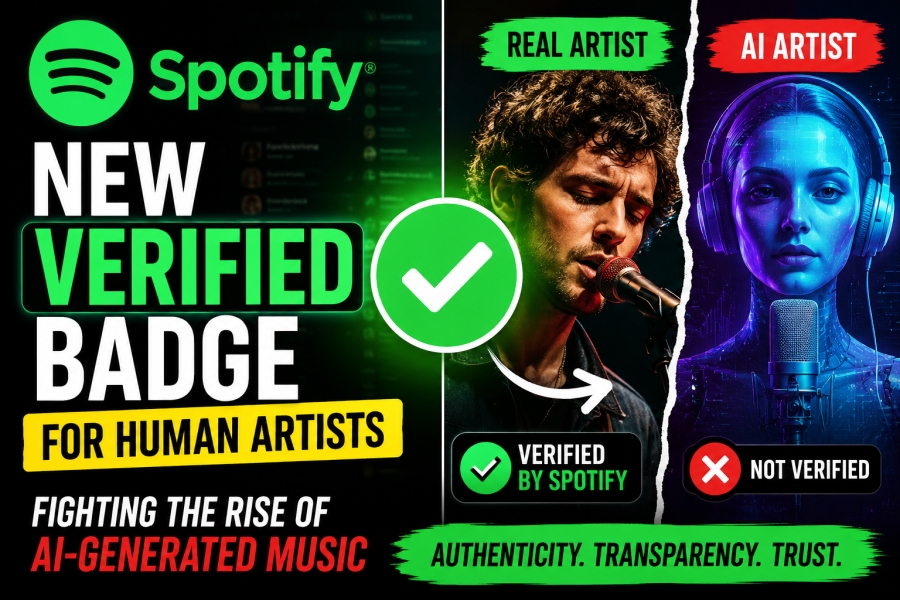
The rise of artificial intelligence has transformed the music industry faster than anyone expected. In just a few years, AI-generated songs have flooded streaming platforms, blurring the lines between human creativity and machine-made content. Now, Spotify is taking a major step to restore trust in digital music by introducing a new “Verified by Spotify” badge for human artists.
The move comes at a critical time for the music industry. AI-generated tracks are appearing across streaming services at unprecedented levels, creating confusion among listeners who want to know whether the artists they support are real people or AI-created personas. Spotify’s new verification system aims to solve that growing problem while protecting authentic musicians and improving transparency for fans.
Why Spotify Introduced the Verified Badge
Artificial intelligence has dramatically lowered the barrier to music creation. Platforms like Suno and Udio now allow users to generate fully produced songs in minutes using simple text prompts. While this technology has opened new creative possibilities, it has also triggered major concerns throughout the music industry.
Many listeners have recently discovered that songs they enjoyed were not made by human musicians at all. Instead, they were created entirely by algorithms designed to imitate popular styles, vocals, and emotional structures. In some cases, AI-generated artists have accumulated millions of streams without audiences realizing they were synthetic creations.
Spotify acknowledged that in the AI era, listeners increasingly want reassurance that the artists they follow are authentic humans. The company said the new “Verified by Spotify” badge is intended to provide “a signal of authenticity and trust” for artists on the platform.
The badge will appear as a light green checkmark on artist profiles and next to artist names in Spotify search results. According to Spotify, profiles that primarily represent AI-generated artists or AI personas are not eligible for verification at launch.
The Growing Problem of AI-Generated Music
AI-generated music is no longer a niche experiment. It has become one of the biggest disruptions the music industry has faced since streaming itself.
Researchers have noted an “explosive rise” in AI-generated music platforms, with enormous amounts of synthetic songs being uploaded and consumed daily.
The challenge is not simply about quantity. Modern AI music generators have become sophisticated enough to create convincing vocals, realistic artist images, and polished production that can easily fool listeners. Some AI-generated songs now sound nearly indistinguishable from tracks made by human musicians.
This has created several major concerns:
- Fake artist personas gaining popularity
- AI-generated songs manipulating streaming algorithms
- Reduced visibility for independent musicians
- Listener confusion around authenticity
- Copyright and ethical disputes
- The rise of “content farm” music optimized for passive listening
Many users have voiced frustration online, saying they want clearer distinctions between real artists and AI-generated content. Reddit discussions around Spotify’s announcement reveal widespread concern about how difficult it has become to identify authentic musicians.
One Reddit user described the issue by saying people are discovering “artists” who look and sound real, only to later learn that no actual human exists behind the music.
How Spotify’s Verification System Works
Spotify says artists who receive the “Verified by Spotify” badge must meet several criteria related to authenticity, trust, and sustained listener engagement.
According to Spotify, verified artists are reviewed based on:
- Consistent listener activity over time
- Compliance with Spotify’s platform policies
- Evidence of a real-world artist presence
- Linked social accounts
- Concert dates
- Merchandise availability
- Ongoing audience engagement
The company emphasized that human review plays a major role in the process rather than relying entirely on automated systems.
Spotify also stated that more than 99% of artists' users actively search for will be verified at launch, including many independent artists across different genres and regions.
Importantly, Spotify clarified that not having the badge does not automatically mean an artist is AI-generated. Since the platform hosts millions of artist profiles, the verification rollout will happen gradually over time.
What This Means for Independent Artists
For independent musicians, Spotify’s new badge could become extremely important.
As AI-generated music continues to saturate streaming platforms, authenticity may become one of the most valuable assets an artist can have. The verified badge gives real musicians a clearer way to prove legitimacy and build trust with listeners.
This could benefit independent artists in several ways:
Increased Listener Trust
Fans are more likely to engage with artists they know are authentic humans. Verification provides reassurance that listeners are supporting genuine creativity rather than AI-generated content farms.
Better Discoverability
Spotify may eventually prioritize verified artists in recommendations, editorial playlists, or search rankings. While the company has not officially confirmed this, authenticity signals could become increasingly important within streaming algorithms.
Stronger Artist Branding
The badge acts as a credibility marker similar to verification systems used on social media platforms. For emerging musicians, this can strengthen professional image and audience confidence.
Protection Against Impersonation
AI-generated music has already led to fake artist clones and imitation voices. Verification could help reduce impersonation risks by making it easier for listeners to identify official profiles.
However, some critics believe the system could unintentionally favor artists with larger marketing infrastructures. Reddit users have pointed out that requirements like merchandise, touring activity, and social media presence may disadvantage bedroom producers or newer independent creators who are still building their careers.
This raises an important question: Does authenticity require commercial visibility?
The Debate Around AI Music and Human Creativity
Spotify’s new badge is also fueling broader debates about the future relationship between AI and music creation.
Some artists view AI as a creative tool rather than a replacement for human musicians. Others believe AI-generated music threatens the emotional and cultural value of art itself.
Critics argue that music is fundamentally about human experience, storytelling, emotion, and connection. AI may imitate patterns and styles, but many listeners feel it cannot replicate lived experience or genuine artistic expression.
At the same time, AI-generated music is becoming commercially successful. Some synthetic artists have already attracted millions of streams and chart placements.
Spotify appears to be taking a middle-ground approach rather than banning AI music entirely. Instead, the platform is attempting to increase transparency so listeners can make informed choices about what they consume.
The company admitted that the concept of authenticity is “complex and quickly evolving,” suggesting its policies may continue changing as AI technology develops.
Why Transparency Matters More Than Ever
The music industry has always evolved alongside technology. From vinyl records to MP3s to streaming platforms, every technological shift has changed how audiences discover and experience music.
But AI introduces something fundamentally different.
For the first time, entire artist identities can be fabricated at scale. Songs, vocals, images, biographies, and even social interactions can now be generated synthetically.
This creates a major trust problem for streaming platforms.
Listeners increasingly want answers to questions like:
- Is this artist real?
- Who actually created this song?
- Am I supporting a human musician?
- Was AI involved in the creative process?
Spotify’s verification system is part of a larger movement toward transparency in digital music.
The company has also introduced additional context features such as expanded song credits, artist activity details, and AI-related disclosures to help users better understand the origins of the music they stream.
Could Other Streaming Platforms Follow?
Spotify’s move may pressure other streaming services to introduce similar systems.
Platforms like Apple Music, Deezer, and Qobuz are already exploring ways to combat AI-generated spam and improve artist transparency. Some competitors have reportedly taken even stronger anti-AI measures than Spotify so far.
As AI-generated content continues to grow, verification systems could eventually become standard across the entire music streaming industry.
Future developments may include:
- AI-generated content labels
- Human-only discovery filters
- Enhanced artist authentication
- Blockchain-based artist identity systems
- Advanced AI detection tools
Researchers are already developing sophisticated technologies capable of detecting synthetic music and identifying deepfake songs.
The Future of Music Streaming
Spotify’s “Verified by Spotify” badge represents more than just a new feature. It signals the beginning of a new era where authenticity becomes central to digital music consumption.
The music industry is entering a phase where audiences are no longer simply choosing songs based on sound alone. Increasingly, listeners also care about the creator behind the music and whether genuine human artistry exists beneath the production.
For real artists, this shift may ultimately create new opportunities to stand out in an overcrowded streaming ecosystem dominated by algorithmic content.
For AI-generated music creators, the future remains uncertain. AI music is unlikely to disappear, but platforms may increasingly separate synthetic content from human-made artistry.
One thing is clear: trust is becoming one of the most valuable currencies in streaming.
Spotify’s verification system is an attempt to rebuild that trust before AI-generated music overwhelms the relationship between artists and fans entirely.
As artificial intelligence continues reshaping the music world, the green verification badge may soon become one of the most important symbols in the entire streaming industry — not just for status, but for proving humanity itself.
