



General Knowledge (261)
Suno 5.5 New Features Explained – Voice Integration, Custom AI Models & Personalized Music
Written by Sounds Space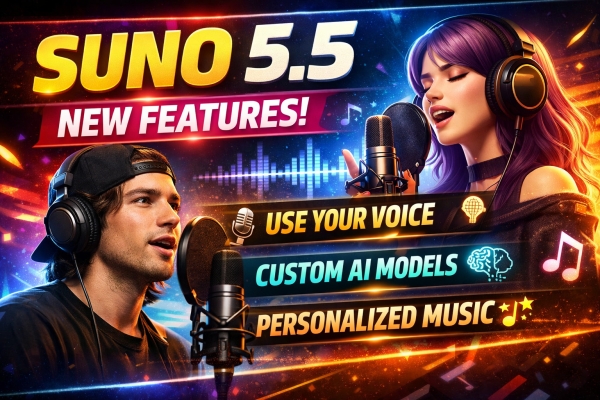
Suno 5.5 Is Here: Key Features Every Musician Should Know in 2026
AI music production is evolving faster than ever, and one of the biggest updates in the space has just arrived. Suno 5.5 is now officially rolling out, bringing powerful new tools that aim to make AI-generated music more personal, more professional, and more useful for real musicians.
Since its public launch in 2023, Suno has become one of the most popular AI music generators in the world. The platform allows users to create full songs — including vocals and instrumentation — simply by typing a prompt.
Now, with version 5.5, the company is clearly shifting its focus toward something much more important: helping artists build a unique sound rather than just generating random songs.
In this article, we’ll break down the most important features of Suno 5.5 and explain why every musician — from beginners to professionals — should be paying attention.
What Is Suno and Why Is Everyone Talking About It?
Before diving into the update, it’s important to understand what makes Suno so powerful in the first place.
Suno is an AI music creation platform that can generate complete songs from text prompts. Users simply type a description such as “emotional piano ballad with female vocals” or “deep house track with a catchy vocal hook,” and the system creates a full track in seconds.
Since its launch, the platform has gone through multiple major updates, with each version improving vocal realism, sound quality, and creative control. By 2025, AI-generated music had already reached a level where it could be difficult to distinguish from human-made songs in certain situations.
However, musicians were still asking for one big thing: personalisation.
That’s exactly what Suno 5.5 focuses on.
Suno 5.5: The Biggest Upgrade Yet for Musicians
The newest version of Suno introduces several major improvements that change how artists interact with AI music tools. Instead of simply generating songs, version 5.5 is designed to help musicians create something that feels truly their own.
Based on early releases and community discussions, the three biggest new features are:
- Voice integration
- Custom AI models
- Personalised style learning
These upgrades move Suno away from “random AI music generator” territory and into something much closer to a real music production assistant.
1. The New Voice Feature (One of the Most Requested Updates Ever)
One of the most exciting features in Suno 5.5 is the ability to use your own voice directly inside the platform.
According to early announcements shared by the community, users can now record or upload their voice and use it to sing on their AI-generated tracks.
This is a massive step forward for musicians because until now, creators had to rely on random AI voices that didn’t match their personal identity.
With this update, artists can:
- Record a vocal idea quickly without a full studio setup
- Replace the default AI voice with their own
- Keep full control over their musical identity
- Create demo tracks much faster than before
For independent artists especially, this feature could save hours of recording time and make it easier to release music more consistently.
2. Custom Models: Train Suno to Sound Like You
Another major addition in version 5.5 is the introduction of custom models.
This feature allows users to upload several of their own tracks so the AI can learn their musical style. Instead of generating random songs, Suno begins to understand:
- Your preferred genre
- Your production style
- Your chord progressions
- Your sound design choices
- Your vocal style (if vocals are included)
Community posts explaining the update mention that artists can upload at least six tracks to create a personalised version of the AI that matches their sound.
This is extremely important because one of the biggest criticisms of AI music tools has always been the lack of originality. Custom models aim to fix that by making the AI work with you, not instead of you.
3. “My Taste”: AI That Learns What You Actually Like
One of the smartest additions in Suno 5.5 is something called My Taste.
Instead of forcing users to write extremely detailed prompts every time, the platform now learns your preferences automatically. If you repeatedly generate:
- Deep house tracks
- Emotional pop songs
- Chill lo-fi music
- UK garage beats
- Or techno instrumentals
The system begins to understand what you like and improves future results.
According to early discussions, this feature works in the background and helps guide future song generations based on your listening habits and creative choices.
This makes Suno much easier to use, especially for beginners who don’t fully understand prompt engineering yet.
4. A Huge Step Toward Building an AI Artist Brand
One of the biggest changes in the music industry right now is the rise of AI artists — virtual musicians that release music regularly without traditional recording processes.
Recent reports show that AI-generated artists are already getting record deals and millions of streams, proving that the technology is moving very fast.
With the new features in Suno 5.5, it’s now much easier to:
- Create a consistent sound across multiple tracks
- Use the same vocal identity
- Build a recognisable musical style
- Release music faster than ever
This update clearly shows that Suno is no longer just a fun tool. It’s becoming a serious platform for music creators who want to grow quickly in 2026 and beyond.
5. Faster Workflow for Producers and Songwriters
If you are a music producer, the biggest advantage of Suno 5.5 might not even be the new features themselves — it’s the speed.
Here’s how version 5.5 can speed up the music creation process:
Idea Generation
Instead of spending hours trying to find inspiration, producers can generate multiple song ideas in minutes.
Demo Creation
Artists can now create demo tracks using their own voice without recording a full song.
Songwriting Support
Writers can test different melodies and styles instantly.
Genre Experimentation
Want to try a new genre but don’t know where to start? Suno can generate a full track that gives you a starting point.
For busy producers, this can dramatically increase productivity.
6. Community Reactions to Suno 5.5 (The Good and the Bad)
Whenever a big AI update drops, the community reacts instantly — and Suno 5.5 is no exception.
Many users are extremely excited about the new features, especially the ability to use personal voices and train custom models.
However, not everyone is completely happy yet.
Some users have mentioned that the update still needs improvement in certain genres, especially electronic music. Others believe earlier versions such as 4.5 still sound better in some situations.
This is actually normal for AI platforms. Every major update focuses on different improvements, and it usually takes a few weeks before everything becomes fully stable.
7. Why Suno 5.5 Matters More Than Previous Updates
Previous versions of Suno focused mainly on sound quality and realistic vocals.
Version 5.5 is different.
This update focuses on identity.
That means:
- Your voice instead of a random AI voice
- Your style, instead of generic AI music
- Your taste instead of random prompts
This is a huge step forward because the biggest fear many musicians had was losing their identity when using AI tools. Suno 5.5 moves in the opposite direction — it actually strengthens it.
8. Is Suno 5.5 Good for Independent Artists?
Short answer: yes — especially if you want to grow quickly.
Independent artists often struggle with:
- Limited recording budgets
- Slow production workflows
- Lack of professional vocals
- Not enough time to release music consistently
Suno 5.5 helps solve many of these problems by making music production faster and more accessible.
Instead of spending weeks on one track, artists can now generate ideas, record vocals quickly, and release music more often.
In a world where consistency matters more than ever, this could be a game-changer.
9. How Suno 5.5 Is Changing the Future of Music Production
AI music is no longer just a trend — it’s becoming a major part of the music industry.
Studies and reports published in 2026 show that AI-generated music is already being used in:
- YouTube content
- TikTok videos
- Advertising
- Background music
- Gaming soundtracks
And in many cases, listeners cannot even tell the difference between AI-generated music and human-produced tracks.
With the new features in Suno 5.5, the gap between AI music and real music is becoming smaller than ever.
10. Should Musicians Be Worried About AI Tools Like Suno?
This is probably the most common question in the music industry right now.
The truth is: AI is not replacing musicians — it’s changing how music is created.
Just like:
- DAWs changed recording
- Auto-Tune changed vocals
- VST plugins changed sound design
AI music tools are simply the next step in music production.
And the musicians who learn how to use them early will have a huge advantage in the future.
Final Thoughts: Is Suno 5.5 Worth Using in 2026?
Suno 5.5 might not be perfect yet, but it is definitely one of the most important AI music updates released so far.
The addition of:
- Voice integration
- Custom AI models
- Personalised music generation
shows that the platform is moving in the right direction — toward helping musicians create something unique rather than just generating random songs.
If you are a producer, singer, songwriter, or independent artist, this update is absolutely worth exploring.
Because the future of music is not just human creativity or AI creativity.
It’s a combination of both.
SUNO Desktop Software Is Coming: The Future of AI Music Making on Your Computer
Written by Sounds Space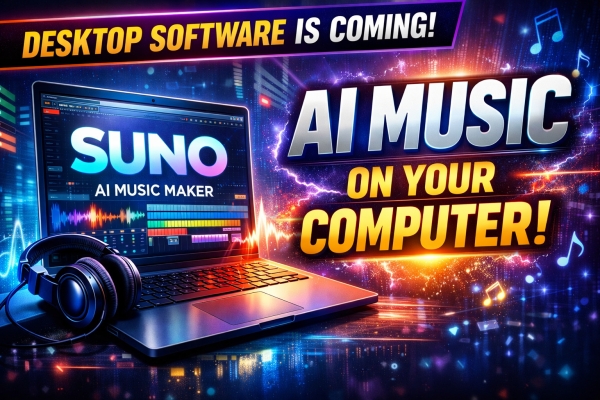
SUNO Is Working on a Desktop Software: The Power of AI Music Making Will Soon Be on Your Computer
The world of music production is evolving faster than ever, and artificial intelligence is at the center of this transformation. One of the most talked-about platforms in recent months is SUNO, a revolutionary AI music generator that allows users to create full songs from simple text prompts. Now, exciting news is emerging: SUNO is reportedly working on a desktop software version, which means the power of AI music making could soon be available directly on your computer.
This development could completely change how producers, artists, content creators, and even beginners approach music creation. In this SEO-optimized blog post, we will explore what SUNO desktop software could mean for the future of music production, how it may benefit musicians, and why this move could reshape the entire music industry.
What Is SUNO and Why It Is Changing Music Production
SUNO has quickly become one of the most innovative AI music platforms available today. Unlike traditional music production tools that require technical knowledge, plugins, and expensive equipment, SUNO allows users to create music simply by describing what they want.
For example, you can type something like:
- “A deep house track with a female vocal and emotional lyrics”
- “A lo-fi hip hop beat with soft piano and vinyl crackle.”
- “An energetic UK garage track with modern basslines”
Within seconds, the AI generates a complete song, including vocals, instruments, and arrangement. This is not just a simple beat maker—it is a full music creation system powered by artificial intelligence.
Because of this, SUNO has gained massive attention from:
- Music producers
- Independent artists
- YouTubers and content creators
- Social media creators
- Game developers
- Podcast creators
Now imagine having this level of power directly on your computer without relying on a web browser. That is exactly what a SUNO desktop software could offer.
Why a SUNO Desktop Software Is a Game Changer
Currently, most AI music tools operate through the cloud. While this works well, a desktop version opens up entirely new possibilities. Instead of relying only on an internet connection and a browser, users could have a powerful AI music studio installed directly on their computer.
Here are some of the biggest reasons why this is such a major step forward.
Faster Music Creation Without Browser Limitations
One of the biggest advantages of a desktop version is speed. Web-based tools often have limitations such as:
- Slower loading times
- Browser crashes
- Limited memory usage
- Reduced performance when creating complex music
A desktop version could eliminate many of these issues. With software installed directly on your computer, music generation could become faster, smoother, and far more stable.
This means producers will be able to:
- Generate more songs in less time
- Test more creative ideas quickly
- Create music without interruptions
- Work more efficiently during production sessions
For artists who create music daily, this could be a massive productivity boost.
Full Control Over AI Music Creation
Another major advantage of SUNO desktop software is the potential for greater creative control. While the online version is already powerful, a desktop application could include advanced tools designed specifically for musicians and producers.
Some features that could be included in a desktop version:
- Advanced prompt customization
- Vocal style control
- Genre-specific AI models
- Real-time song editing
- Offline music generation (in the future)
- High-quality export options
- Integration with music production software
This would turn SUNO from a simple AI music generator into a complete AI music production studio.
The Future of AI Music Making on Your Computer
If SUNO releases a desktop software, it could mark the beginning of a new era in music production. For years, music production has required:
- Expensive plugins
- Powerful computers
- Technical knowledge
- Time-consuming processes
AI is now removing many of these barriers. A desktop version would make music creation faster, easier, and more accessible than ever before.
Even people with no music production experience could:
- Create full songs in minutes
- Experiment with different genres
- Create background music for videos
- Generate demo ideas instantly
- Produce vocals without hiring singers
This level of accessibility could bring millions of new creators into the music industry.
Why Music Producers Should Be Excited About SUNO Desktop Software
Some producers worry that AI music tools might replace human creativity. However, the reality is very different. AI is not replacing producers—it is giving them new creative tools.
A desktop version of SUNO could become one of the most powerful tools for producers who want to work faster and smarter.
Here is how it could help music producers specifically.
Faster Song Ideas and Creative Inspiration
One of the hardest parts of music production is starting a new track. Many producers spend hours trying to find the perfect melody, vocal idea, or song structure.
With SUNO desktop software, producers could generate instant ideas such as:
- Vocal melodies
- Song hooks
- Song structures
- Instrumental ideas
- Lyrics
Instead of spending hours trying to find inspiration, producers could use AI as a creative partner. This does not replace creativity—it actually makes the creative process faster.
Perfect for Independent Artists
Independent artists often struggle because they do not have access to large studios or expensive production teams. AI music tools like SUNO are changing that completely.
A desktop version could allow independent artists to:
- Create professional-sounding songs at home
- Test multiple song ideas quickly
- Create demos for labels
- Produce music for streaming platforms
- Experiment with different musical styles
This could level the playing field between independent artists and major labels.
A Powerful Tool for Content Creators and YouTubers
The demand for music is higher than ever. YouTubers, TikTok creators, and social media influencers constantly need new background music for their content.
A SUNO desktop software could become one of the most valuable tools for content creators because it would allow them to:
- Generate custom music instantly
- Avoid copyright issues
- Create unique soundtracks
- Match music perfectly with their videos
- Produce music regularly without extra costs
Instead of searching for royalty-free music online, creators could simply generate their own music whenever they need it.
How SUNO Desktop Software Could Change the Music Industry
The release of a desktop version would not only help individual creators—it could also transform the entire music industry.
Here are some of the biggest ways it could make an impact.
Faster Music Production Across the Industry
AI is already speeding up music production, but a desktop version could take this even further. Music producers could create:
- Multiple tracks in a single day
- Demo versions in minutes
- Instrumentals instantly
- New genre experiments quickly
This means music creation could become faster than ever before.
A New Era of AI-Assisted Music Production
Instead of replacing human creativity, AI tools like SUNO are becoming assistants for producers and artists. Think of it like having a creative partner that never runs out of ideas.
A desktop version could allow users to:
- Generate melodies and then edit them manually
- Use AI vocals as a starting point
- Combine AI music with traditional production tools
- Experiment without wasting time
This is not the end of music production—it is the evolution of it.
Why AI Music Software on Desktop Makes More Sense
While cloud-based platforms are powerful, desktop software offers advantages that many musicians prefer.
Here is why desktop AI music tools make more sense for serious creators.
Better Performance and Stability
Music production requires stability. No producer wants a browser crash in the middle of a creative session.
A desktop version of SUNO could provide:
- More reliable performance
- Faster processing speeds
- Higher-quality audio generation
- Better export options
- More professional tools
This would make it much more appealing to professional producers.
Integration With Music Production Software
One of the most exciting possibilities is integration with existing music production tools. If SUNO desktop software connects with DAWs (Digital Audio Workstations), it could completely change how music is created.
Imagine being able to:
- Generate AI vocals and drag them into your DAW
- Create full song ideas and edit them manually
- Generate instrumentals directly into your project
- Create AI melodies and modify them in real time
This would create the perfect combination of AI technology and human creativity.
What This Means for the Future of AI Music
The release of SUNO desktop software would not just be a new product—it would be a major step forward for the entire AI music industry.
We are moving toward a future where:
- Music can be created faster than ever
- Creativity is more accessible to everyone
- Independent artists have more power
- Content creators can produce music instantly
- Producers can work smarter, not harder
This is not about replacing artists. It is about giving them better tools.
Should You Be Excited About SUNO Desktop Software?
The short answer is yes. Whether you are a music producer, artist, content creator, or beginner, this could become one of the most important music tools of the next few years.
A desktop version of SUNO could offer:
- Faster music creation
- Better performance
- More creative control
- Professional production tools
- AI music making directly on your computer
For anyone interested in the future of music production, this is definitely something to watch.
Final Thoughts: The Future of AI Music Is Coming to Your Computer
AI music creation is no longer a futuristic idea—it is happening right now. Platforms like SUNO are proving that anyone can create music using artificial intelligence, and a desktop version could make this technology even more powerful.
The ability to generate full songs directly on your computer could completely change how music is made. Producers will work faster, artists will have more creative freedom, and content creators will have unlimited access to custom music.
The music industry is evolving, and AI is leading the way. If SUNO releases a desktop software soon, it could become one of the biggest innovations in modern music production.
The future of AI music is not just online anymore—it is coming directly to your computer.
How Big Artists Are Changing Music Release Strategies in 2026 | AI Deals, Vinyl & Exclusive Releases
Written by Sounds Space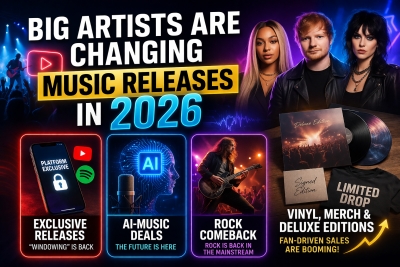
Big Artists Are Changing How Music Is Released in 2026 – And the Industry Will Never Be the Same
The music industry has always evolved, but the changes happening right now are far bigger than a simple trend. In 2026, some of the biggest artists in the world are completely transforming how music is released, promoted, and monetized. Traditional release strategies are being replaced by smarter, more creative, and more artist-driven approaches.
For independent artists, producers, and music marketers, this shift is not just interesting — it’s extremely important. Because what big artists do today often becomes the standard for the entire industry tomorrow.
In this article, we will explore how major artists are changing the traditional release system, why platform-exclusive releases are making a comeback, how AI-music deals are reshaping the future, why rock music is returning to the mainstream, and why physical sales such as vinyl and deluxe editions are becoming more powerful than ever.
The Traditional Music Release Model Is Disappearing
For decades, the music release process followed a simple structure:
- Announce the single
- Release it on all platforms at the same time
- Push it through radio and streaming playlists
- Release the album a few months later
This system worked perfectly in the CD era and even in the early days of streaming. But in 2026, this approach is becoming outdated. Today’s audience consumes music differently. Fans expect content instantly, they want something unique, and they respond more strongly to creative release strategies than standard promotional campaigns.
Because of this, big artists are experimenting with new release methods that focus on exclusivity, storytelling, and fan engagement rather than just numbers.
Platform-Exclusive Releases Are Becoming Popular Again
One of the biggest changes in the music industry right now is the return of platform-exclusive releases. Instead of releasing music everywhere at the same time, artists are now choosing to release songs or videos exclusively on a single platform first.
For example, an artist may release a music video only on YouTube for the first week. Another artist may release a new track exclusively on a streaming platform before making it available globally. This strategy is often called “windowing,” and it is becoming increasingly common.
Why are artists doing this?
The answer is simple: exclusivity creates excitement.
When fans know that a song is only available in one place, they are more likely to engage with it immediately. It creates urgency, increases views, and helps the artist control the attention cycle rather than relying completely on algorithms.
This is especially powerful in the age of social media. When something is exclusive, people talk about it more. It becomes a moment rather than just another release.
Artists Are Focusing More on Strategy Than Speed
In the past, releasing music quickly was often the main goal. Artists wanted to stay active and release as many songs as possible. But in 2026, the focus is shifting from speed to strategy.
Instead of releasing music every few weeks without a plan, big artists are carefully designing how each release will work. They are thinking about:
- Which platform should get the first release
- When the music video should drop
- How social media content should support the release
- Whether the release should be connected to a bigger project
This approach makes each release feel more important. Instead of disappearing after a few days, songs now stay relevant for longer because they are part of a bigger strategy.
For independent artists, this is actually good news. It means success is no longer just about releasing more music — it’s about releasing smarter music.
AI-Music Deals Are Changing the Future of Releases
Another major shift in the music industry is the growing influence of artificial intelligence. While AI has already been used for production tools and sound design, it is now becoming part of major artist deals.
Some artists are experimenting with AI-generated vocals, AI-assisted songwriting, and even AI collaborations. Instead of seeing AI as a threat, many big artists are using it as a creative tool that helps them release more music in new and interesting ways.
This is creating a completely new type of release strategy. Imagine an artist releasing:
- A human-created version of a song
- An AI-remixed version
- An alternative AI-generated version with a different style
This allows one song to become multiple releases. It also keeps fans engaged for longer because each version feels new.
In 2026, AI is not replacing artists — it is helping them expand their creativity and release music in ways that were impossible before.
The Comeback of Rock Music Is Influencing Release Strategies
One of the most surprising trends right now is the comeback of rock music. For years, pop, hip-hop, and electronic music dominated the charts. But in 2025 and 2026, rock music is slowly returning to the mainstream.
Why is this happening?
Many fans are starting to feel tired of overly polished music. Rock music feels more emotional, more real, and more powerful. Because of this, big artists are experimenting with rock-influenced sounds even if they originally came from other genres.
This shift is also changing how music is released. Rock fans often care more about albums than singles. They want full projects, strong storytelling, and meaningful releases rather than random songs every few weeks.
Because of this, some artists are returning to album-based release strategies. But this time, they are doing it in a modern way by mixing streaming releases with creative marketing campaigns.
Fan-Driven Physical Sales Are Stronger Than Ever
While streaming continues to grow, physical music sales are becoming more important again — especially for big artists. Vinyl records, deluxe album editions, signed merchandise, and collectible physical releases are now a huge part of modern music marketing.
Why is this happening?
Because fans no longer just want music. They want something they can own.
Streaming makes music easy to access, but it also makes it feel temporary. Physical releases feel special. They create a stronger emotional connection between the artist and the fan.
Big artists understand this very well. Instead of releasing a standard album, they now release:
- Limited edition vinyl versions
- Deluxe box sets
- Signed album copies
- Special fan-only merchandise
These physical releases are not just products. They are experiences. And in 2026, experiences are more valuable than ever.
Deluxe Editions Are Becoming a Powerful Marketing Tool
Another major trend is the return of deluxe album editions. But unlike the past, deluxe editions are no longer released months later without a plan. Today, they are part of the original release strategy.
An artist may release a standard album first and then release a deluxe version shortly after with new songs, remixes, or alternative versions. This keeps the album alive for a longer period and helps it stay visible in streaming charts.
Deluxe editions also give artists a chance to experiment. They can release songs that are more creative or different without affecting the main album concept.
For fans, deluxe editions feel exciting because they provide more content. For artists, they create a second wave of attention. This is why deluxe releases are becoming one of the most powerful tools in modern music marketing.
Social Media Is Now More Important Than the Release Itself
Another reason why release strategies are changing is the power of social media. Platforms like TikTok, Instagram, and YouTube Shorts are now just as important as streaming platforms.
In fact, many songs become popular on social media before they even become popular on streaming platforms. Because of this, big artists are designing their releases specifically for social media success.
Instead of just releasing a song, they now create:
- Short teaser videos
- Behind-the-scenes clips
- Fan-interaction campaigns
- Visual storytelling content
This makes the release feel bigger and more exciting. It also helps the song reach new audiences faster.
In 2026, music is no longer just audio. It is content, storytelling, and emotional connection combined.
Independent Artists Can Learn a Lot From These Changes
The most interesting thing about these new release strategies is that they are not only for big artists. Independent artists can use the same ideas on a smaller scale.
For example, an independent artist can:
- Release a song exclusively on one platform first
- Create a limited-edition digital release
- Release multiple versions of the same track
- Use social media storytelling instead of expensive promotion
These strategies do not require huge budgets. They only require creativity and planning.
This means the gap between independent artists and big artists is becoming smaller. Today, success is more about smart marketing than expensive marketing.
The Future of Music Releases Will Be More Creative Than Ever
Looking ahead, it is clear that the traditional release model will continue to disappear. Instead of standard releases, we will see more creative and more experimental strategies.
Artists will continue to experiment with:
- Exclusive platform releases
- AI-powered music versions
- Deluxe album expansions
- Limited-edition physical products
- Fan-driven marketing campaigns
This is not a temporary trend. It is a complete transformation of the music industry.
And the artists who understand these changes early will have a huge advantage.
Final Thoughts
The way music is released in 2026 is very different from how it worked even five years ago. Big artists are no longer relying on the traditional release system. Instead, they are using smarter strategies that focus on exclusivity, creativity, and fan engagement.
Platform-exclusive releases, AI-music deals, the comeback of rock music, and the rise of fan-driven physical sales are all signs that the music industry is entering a new era.
For independent artists, this is actually an exciting opportunity. Because success is no longer controlled only by record labels or massive budgets. Today, artists who understand strategy, storytelling, and audience connection have a real chance to grow faster than ever before.
The future of music releases will not belong to the biggest artists. It will belong to the smartest ones.
Vinyl Sales Hit $1 Billion in 2026: Why Records Are Making a Massive Comeback
Written by Sounds Space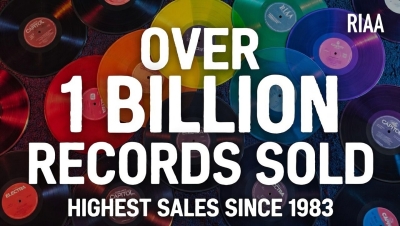
How AI Is Transforming the Music Industry in 2026: From Threat to Growth Engine
Written by Sounds Space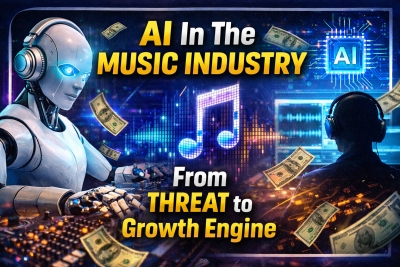
🤖 AI Is Reshaping the Music Industry in 2026
The music industry is undergoing one of the most significant transformations in its history—and at the center of it all is artificial intelligence.
What was once seen as a disruptive and controversial force is now being embraced by major players as a powerful tool for growth. Industry giants like Warner Music Group are no longer resisting AI—they’re actively integrating it into their operations and calling it a “growth engine.”
This marks a turning point.
AI is no longer an experiment. It’s becoming core infrastructure across music production, distribution, marketing, and artist development.
So what does this mean for the future of music? And why is this shift so important?
Let’s dive in.
🎧 From Fear to Adoption: The Evolution of AI in Music
Just a few years ago, AI in music was surrounded by controversy.
Artists, producers, and fans raised serious concerns about:
- Copyright infringement
- Deepfake vocals
- Loss of human creativity
- Ethical use of artist likeness
High-profile incidents involving AI-generated songs mimicking real artists sparked global debates. Many feared that AI would replace musicians altogether.
But fast forward to 2026, and the narrative has changed dramatically.
Instead of viewing AI as a threat, the industry is now recognizing it as a tool—one that enhances creativity rather than replacing it.
🚀 AI as a “Growth Engine”
When a company like Warner Music Group labels AI as a “growth engine,” it signals a fundamental shift in mindset.
AI is now seen as a way to:
- Increase efficiency
- Unlock new revenue streams
- Enhance creativity
- Scale operations globally
This is similar to how streaming was once viewed as a threat to physical sales—before becoming the dominant force in the industry.
👉 AI is following the same trajectory.
🎼 AI in Music Production
One of the most exciting areas where AI is making an impact is music production.
🎹 1. AI-Assisted Composition
AI tools can now:
- Generate melodies and chord progressions
- Suggest harmonies
- Help overcome creative blocks
Rather than replacing producers, these tools act like collaborators—offering inspiration and speeding up the creative process.
🎚️ 2. Mixing and Mastering
AI-powered platforms can analyze tracks and automatically:
- Balance levels
- Apply EQ and compression
- Optimize sound quality
This allows artists to achieve professional-quality results without expensive studio setups.
🎤 3. Vocal Processing and Enhancement
AI can:
- Clean up recordings
- Correct pitch and timing
- Enhance vocal clarity
It can even generate entirely new vocal styles, opening up creative possibilities that were previously unimaginable.
🌍 AI in Music Distribution
Beyond production, AI is revolutionizing how music is distributed and consumed.
📊 1. Smart Recommendations
Streaming platforms use AI algorithms to:
- Recommend songs
- Curate playlists
- Personalize user experiences
This increases engagement and helps artists reach the right audiences.
🌐 2. Global Reach
AI can analyze listener data across regions and:
- Identify emerging markets
- Optimize release strategies
- Target specific demographics
This enables artists to scale globally faster than ever before.
⏱️ 3. Release Optimization
AI tools can determine:
- The best time to release a track
- Ideal marketing strategies
- Audience behavior patterns
This data-driven approach maximizes impact and revenue.
📢 AI in Marketing and Fan Engagement
Marketing is another area where AI is proving invaluable.
📱 1. Content Creation
AI can generate:
- Social media captions
- Video clips
- Promotional materials
This helps artists maintain a consistent online presence.
🎯 2. Audience Targeting
AI analyzes user data to:
- Identify core fanbases
- Predict trends
- Deliver personalized campaigns
💬 3. Chatbots and Fan Interaction
AI-powered chatbots allow artists to:
- Engage with fans 24/7
- Provide updates and exclusive content
- Build stronger relationships
💰 New Revenue Streams Powered by AI
AI is not just improving existing processes—it’s creating entirely new ways to make money.
🎵 1. AI-Generated Music
Brands, games, and content creators are increasingly using AI-generated music for:
- Background scores
- Advertising
- YouTube content
🎮 2. Interactive Experiences
AI enables:
- Personalized music experiences
- Adaptive soundtracks in games
- Interactive live performances
🧠 3. Licensing Opportunities
AI tools can quickly generate custom music for licensing, opening up new revenue channels for artists and labels.
⚖️ The Ethical and Legal Landscape
Despite its advantages, AI still raises important questions.
❗ Copyright Issues
Who owns AI-generated music?
Is it the developer, the artist, or the user?
❗ Artist Consent
Using AI to replicate an artist’s voice without permission is a major concern.
❗ Fair Compensation
Ensuring that artists are fairly compensated when AI uses their work is critical.
Major labels like Warner Music Group are actively working on frameworks to address these issues, balancing innovation with protection.
🎤 What This Means for Artists
For artists, AI presents both opportunities and challenges.
✅ Opportunities:
- Faster production workflows
- Lower costs
- Greater creative freedom
- Access to global audiences
⚠️ Challenges:
- Increased competition
- Need to adapt to new tools
- Maintaining authenticity
The key to success will be embracing AI while staying creatively unique.
🧠 AI vs Human Creativity: The Real Debate
One of the biggest questions surrounding AI is whether it can replace human creativity.
The answer, at least for now, is no.
AI can:
- Analyze patterns
- Generate ideas
- Assist in execution
But it cannot:
- Feel emotions
- Tell authentic personal stories
- Create cultural movements
👉 The future is not AI vs humans—it’s AI + humans.
🔮 The Future of AI in Music
Looking ahead, AI will become even more deeply integrated into the industry.
🔥 What to Expect:
- Real-time AI collaboration tools
- Fully immersive music experiences
- Advanced voice synthesis with ethical safeguards
- AI-driven A&R (artist discovery)
AI will become as essential as digital audio workstations (DAWs) are today.
📊 Why This Shift Matters
The transition of AI from controversy to infrastructure is a defining moment for the music industry.
🎯 1. It Increases Efficiency
Artists and labels can produce and release music faster.
🎯 2. It Expands Creativity
New tools enable new sounds and styles.
🎯 3. It Drives Growth
AI unlocks new revenue streams and business models.
🎯 4. It Levels the Playing Field
Independent artists gain access to tools once reserved for major studios.
🚀 Final Thoughts: Embrace or Fall Behind
The message from the industry is clear:
👉 AI is here to stay.
Companies like Warner Music Group are not just experimenting with AI—they are building their future around it.
For artists, producers, and industry professionals, the choice is simple:
- Adapt and leverage AI
- Or risk being left behind
This doesn’t mean sacrificing creativity or authenticity. Instead, it’s about using AI as a tool to amplify human talent and unlock new possibilities.
🎧 The Bottom Line
AI is no longer a threat—it’s the backbone of the next generation of the music industry.
From production to distribution, marketing to monetization, artificial intelligence is transforming every aspect of how music is created and consumed.
And this is just the beginning.
🚀 Stay Ahead of the Curve
Want more insights on the future of music, AI tools, and industry trends?
Stay tuned—because the next evolution of music is already happening.
Netflix x Warner Music Deal: How Music Documentaries Are Reshaping the Industry in 2026
Written by Sounds Space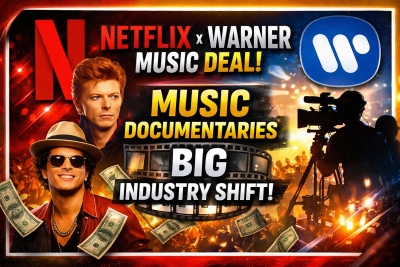
🎬 Netflix x Warner Music Deal: The Future of Music Is Now Visual
The music industry is evolving faster than ever, and one of the most significant developments in 2026 is the groundbreaking partnership between Netflix and Warner Music Group. This multi-year deal is set to redefine how music is consumed, monetized, and experienced globally.
At its core, this collaboration signals a powerful shift: music is no longer just about audio streaming—it’s about storytelling, visual experiences, and cultural impact. With plans to produce high-quality music documentaries and artist films featuring icons like David Bowie and global superstars like Bruno Mars, this deal represents a new frontier in entertainment.
But what does this really mean for the music industry, artists, and fans? Let’s break it down.
🎥 The Rise of Music as Visual Content
For decades, music has primarily been consumed through audio—radio, CDs, downloads, and now streaming platforms. However, the modern audience craves more than just songs. They want stories, behind-the-scenes access, and emotional connections with artists.
This is where Netflix comes in.
As one of the world’s leading streaming platforms, Netflix has already proven the power of music-driven content through successful documentaries and concert films. From intimate artist profiles to large-scale tour documentaries, these productions attract millions of viewers globally.
Now, by partnering with Warner Music Group, Netflix gains direct access to one of the largest music catalogs in the world. This includes decades of legendary recordings, unreleased material, and exclusive artist stories.
👉 The result? A content goldmine.
💰 Music Catalogs Become Premium Content Assets
One of the biggest takeaways from this deal is the transformation of music catalogs into high-value intellectual property.
Traditionally, music catalogs generated revenue through:
- Streaming platforms like Spotify and Apple Music
- Physical sales (vinyl, CDs)
- Licensing for film, TV, and commercials
But this partnership introduces a powerful new monetization layer: long-form video content.
Instead of a song generating revenue per stream, it can now be part of:
- A full-length documentary
- A biopic film
- A serialized artist story
- A live performance special
This dramatically increases the lifetime value of music assets.
For example, the legacy of David Bowie can now be reintroduced to a new generation through cinematic storytelling, while modern artists like Bruno Mars can expand their brand beyond music into global entertainment franchises.
🌍 Why Streaming Platforms Are Expanding Beyond Music
The competition among streaming platforms is fiercer than ever. While music platforms like Spotify dominate audio streaming, companies like Netflix are investing heavily in exclusive content ecosystems.
This deal highlights a key industry trend:
👉 Streaming is no longer just about hosting content—it’s about owning unique experiences.
By producing exclusive music documentaries, Netflix can:
- Attract new subscribers
- Retain existing users
- Differentiate itself from competitors
- Tap into global fanbases
Music has universal appeal, and combining it with storytelling creates highly engaging content that travels across cultures and markets.
🎤 Artists Become Multimedia Brands
Another major shift driven by this partnership is the evolution of artists into full-scale multimedia brands.
In today’s industry, success is no longer defined solely by chart performance or streaming numbers. Artists are now expected to:
- Build personal brands
- Engage audiences across platforms
- Create visual and narrative content
- Expand into film, fashion, and business
With Netflix involved, artists under Warner Music Group gain access to a global platform capable of turning their stories into cinematic experiences.
This means:
- Deeper fan engagement
- Greater creative control
- New revenue streams
- Increased global exposure
For artists, this is a massive opportunity to extend their influence far beyond music.
📈 The Business Impact on the Music Industry
From a business perspective, the Netflix and Warner Music deal is a strategic move that could reshape industry economics.
1. Diversified Revenue Streams
Music companies are no longer reliant on streaming payouts alone. Video content opens up new income channels, including licensing, distribution, and advertising partnerships.
2. Increased Catalog Valuation
Music catalogs are becoming more valuable as they can be repurposed into multiple formats. This could drive more acquisitions and investments in legacy catalogs.
3. Cross-Industry Collaboration
The line between music and film industries is blurring. Record labels are now functioning more like entertainment studios.
4. Global Market Expansion
Netflix’s global reach allows artists to tap into new audiences in regions where they may not have been previously popular.
🔥 Why This Deal Matters More Than You Think
At first glance, this might seem like just another business partnership. But in reality, it represents a fundamental shift in how music is positioned in the entertainment ecosystem.
Here’s why it’s so important:
🎯 1. Music Is Becoming Story-Driven
Fans are no longer satisfied with just listening—they want to understand the journey, struggles, and personalities behind the music.
🎯 2. Content Is King
Exclusive, high-quality content is the primary driver of growth in the streaming era.
🎯 3. Attention Is the New Currency
In a crowded digital landscape, storytelling helps artists capture and retain audience attention.
🎯 4. The Industry Is Converging
Music, film, and technology are merging into a single, interconnected ecosystem.
🎬 What Kind of Content Can We Expect?
The possibilities from this deal are enormous. Some likely formats include:
🎥 Artist Documentaries
Deep dives into the lives and careers of iconic musicians.
🎤 Tour Films
Behind-the-scenes access to global tours, rehearsals, and performances.
🎼 Biographical Films
Dramatized stories based on real-life artists.
📺 Music Series
Episodic content exploring genres, movements, or specific eras.
🎧 Studio Sessions
Exclusive footage of artists creating music in real time.
This variety ensures that content appeals to both hardcore fans and casual viewers.
🚀 The Future of Music Consumption
This partnership is a clear sign that the future of music consumption is evolving into a multi-sensory experience.
Instead of simply streaming songs, fans will:
- Watch the story behind the album
- Experience live performances from home
- Connect emotionally with artists
- Engage with interactive and immersive content
This creates a deeper, more meaningful relationship between artists and audiences.
⚖️ Challenges and Potential Risks
While the opportunities are massive, there are also challenges to consider:
❗ Oversaturation
Too much content could dilute quality and overwhelm audiences.
❗ Creative Control
Balancing artistic integrity with commercial demands may become more complex.
❗ Platform Exclusivity
Content locked behind specific platforms could limit accessibility.
❗ Industry Competition
Other labels and streaming platforms will likely respond with similar deals, increasing competition.
📊 What This Means for Independent Artists
While this deal primarily benefits major label artists, it also sets a precedent for independent musicians.
Indie artists can learn from this trend by:
- Creating their own documentary-style content
- Leveraging platforms like YouTube and TikTok
- Building strong personal narratives
- Collaborating with filmmakers and content creators
The key takeaway? Storytelling is becoming just as important as music itself.
🔮 Final Thoughts: A New Era for Music
The partnership between Netflix and Warner Music Group marks the beginning of a new era—one where music is no longer confined to audio formats but expands into a fully immersive entertainment experience.
As platforms compete for attention, storytelling will become the ultimate differentiator. Artists who embrace this shift will not only survive but thrive in the evolving landscape.
For fans, this means richer, more engaging experiences. For the industry, it means new opportunities, new challenges, and unprecedented growth.
One thing is certain:
👉 The future of music isn’t just something you listen to—it’s something you watch, feel, and experience.
Native Instruments Insolvency Update 2026: What Producers Need to Know
Written by Sounds Space
Native Instruments Insolvency Update 2026: What It Means for Music Producers
Introduction
The music production world was shaken earlier this year when Native Instruments confirmed it had entered insolvency proceedings. As one of the most influential companies in modern music production—responsible for industry-standard tools like Kontakt, Maschine, and Traktor—the news sparked widespread concern among producers, DJs, and audio professionals worldwide.
Now, as of March 2026, the situation has evolved significantly. While the headlines may still sound alarming, the reality is more complex—and not necessarily catastrophic.
In this article, we break down everything you need to know about the Native Instruments insolvency situation, what has changed recently, and what it means for your music production workflow moving forward.
What Happened to Native Instruments?
To understand the current situation, we need to briefly revisit how things unfolded.
Earlier in 2026, Native Instruments entered preliminary insolvency proceedings in Germany. This legal process is often misunderstood—it doesn’t mean a company is shutting down. Instead, it allows businesses to restructure their finances under court supervision while continuing operations.
Since then, the company has progressed further into formal insolvency proceedings, marking a new phase in its restructuring efforts.
Key takeaway:
Native Instruments is not bankrupt in the traditional sense—it is restructuring in an attempt to survive.
Native Instruments Is Now Actively Seeking a Buyer
The biggest development in recent weeks is that Native Instruments has officially entered an active mergers and acquisitions (M&A) process.
This means:
-
The company is looking for potential buyers or investors
-
There is reportedly strong interest from multiple parties
-
A sale—either full or partial—is increasingly likely
This could reshape the future of the entire ecosystem.
What could happen?
There are three realistic scenarios:
-
Full acquisition
A larger company acquires Native Instruments entirely and continues operations -
Partial sale
Different divisions are sold separately (more likely) -
Strategic investment
External investors stabilize the company without fully acquiring it
Business Is Still Running (For Now)
Despite the uncertainty, one important fact stands out:
👉 Native Instruments is still fully operational
Users can still:
-
Download and activate products
-
Use plugins and instruments
-
Access customer support
-
Receive updates (though possibly slower)
This includes the entire ecosystem:
-
Kontakt libraries
-
Maschine hardware and software
-
Traktor DJ tools
-
Effects and plugins
For now, your workflow remains unaffected.
Not All Parts of Native Instruments Are Impacted
A crucial detail that many people miss is that only certain parts of the company are involved in insolvency proceedings.
-
The insolvency primarily affects German entities (Native Instruments GmbH)
-
International divisions, particularly in the US, remain more stable
This includes brands like:
-
iZotope
-
Plugin Alliance
These companies operate somewhat independently and are not directly tied to the insolvency process in Germany.
Why this matters:
Even in a worst-case scenario, parts of the ecosystem could continue independently.
Why Did Native Instruments Get Into Trouble?
The insolvency didn’t come out of nowhere. It’s the result of several years of strategic decisions and industry pressure.
1. The Soundwide Merger Strategy
Native Instruments attempted to build a massive audio ecosystem through the Soundwide initiative, bringing together multiple brands under one umbrella.
While ambitious, this strategy:
-
Increased operational complexity
-
Created integration challenges
-
Required significant financial investment
2. Rapid Expansion and Acquisitions
The company acquired or merged with several major players, including iZotope and Plugin Alliance.
While this expanded its reach, it also:
-
Increased financial strain
-
Added overlapping products and teams
-
Slowed down innovation in some areas
3. Industry Competition
The music production space has become more competitive than ever, with companies like:
-
Ableton
-
Image-Line
-
Steinberg
pushing rapid innovation and strong user engagement.
Native Instruments, by comparison, faced criticism for:
-
Slow updates
-
Aging software architecture
-
Lack of clear direction
4. Investor Pressure
Private equity ownership added another layer of complexity. Investors typically expect growth and returns, which can lead to aggressive expansion strategies that don’t always succeed long term.
What This Means for Producers
This is the question everyone is asking:
👉 Should you be worried?
Short answer: Not immediately—but stay informed.
What Happens to Your Plugins and Licenses?
One of the biggest concerns is whether users could lose access to their tools.
Here’s the current reality:
-
Your purchased products are safe for now
-
Offline functionality will continue to work
-
Activation servers are still running
Even in restructuring scenarios, companies typically maintain:
-
License validation systems
-
Download access
-
Core product functionality
Worst-case scenario:
If servers were ever shut down (unlikely in the near term), offline use could still be possible for many products.
The Future of Kontakt, Maschine, and Traktor
Let’s break down the three biggest ecosystems.
Kontakt
Kontakt is the backbone of modern sample-based music production.
-
Used by thousands of developers
-
Powers massive orchestral and cinematic libraries
-
Industry standard for sampling
👉 Highly likely to survive in any acquisition scenario
Maschine
Maschine combines hardware and software for beat-making.
-
Strong user base
-
Unique workflow
-
Less dominant than Kontakt
👉 Could be:
-
Continued under new ownership
-
Repositioned
-
Or potentially spun off
Traktor
Traktor has faced tough competition in recent years.
-
Competes with platforms like Serato and Rekordbox
-
Slower development cycles
👉 More uncertain future compared to Kontakt
What Happens If Native Instruments Gets Sold?
If a buyer steps in, here’s what typically happens:
Positive outcomes:
-
Increased investment
-
Faster updates
-
Improved support
-
Renewed innovation
Potential downsides:
-
Product discontinuation
-
Price changes
-
Ecosystem fragmentation
-
Account migrations
Could Native Instruments Be Split Up?
Yes—and this is one of the most likely outcomes.
For example:
-
iZotope could be sold separately
-
Plugin Alliance could remain independent
-
Core NI products could go to another buyer
This would fundamentally change the “all-in-one ecosystem” vision.
Industry Impact: Why This Matters
Native Instruments is not just another company—it’s a pillar of the music production industry.
Its tools are used in:
-
Film scoring
-
EDM production
-
Hip-hop beatmaking
-
Game audio design
If the company changes direction, it could influence:
-
Plugin standards
-
Sample library ecosystems
-
Production workflows worldwide
Should You Keep Using Native Instruments Products?
Yes—with some awareness.
Reasons to continue:
-
Tools are still industry-standard
-
No immediate risk to functionality
-
Workflow familiarity is valuable
Smart precautions:
-
Keep backups of installers
-
Save project files with rendered audio
-
Avoid relying 100% on cloud-based systems
The Most Likely Outcome
Based on current developments, the most realistic scenario is:
👉 Native Instruments survives—but in a different form
-
A buyer or investor steps in
-
Some restructuring occurs
-
The ecosystem evolves
This is not the end of Native Instruments, but it is likely the end of its current structure.
Final Thoughts
The Native Instruments insolvency situation is serious—but far from hopeless.
The company is:
-
Still operating
-
Actively seeking buyers
-
Supported by strong industry interest
For producers, the key takeaway is simple:
👉 Stay informed, but don’t panic
Your tools aren’t going anywhere overnight. However, the long-term landscape may shift—and being prepared is always the smart move.
Sony Removes 135,000 AI Deepfake Songs: What It Means for the Music Industry
Written by Sounds Space
Sony Removes 135,000 AI Deepfakes from Streaming Platforms: What It Means for the Future of Music
Introduction
The music industry is facing one of its most disruptive technological challenges yet: AI-generated deepfake music. In a landmark move, Sony Music Entertainment has taken aggressive action by requesting the removal of more than 135,000 AI-generated deepfake songs impersonating its artists from streaming platforms.
This development marks a critical turning point in the ongoing battle between artificial intelligence innovation and copyright protection. As AI tools become more advanced and accessible, the line between real and synthetic music is rapidly blurring—raising serious legal, ethical, and financial concerns.
In this in-depth blog, we’ll break down what happened, why it matters, and what it means for artists, labels, streaming platforms, and the future of the music industry.
What Happened: Sony’s Massive Deepfake Takedown
Sony Music revealed that it has identified and requested the removal of over 135,000 fake songs that mimic the voices, styles, and identities of its artists.
These tracks were uploaded to major streaming platforms by third parties using generative AI tools, often designed to sound nearly identical to real artists.
Key Highlights:
-
Over 135,000 deepfake tracks removed
-
Songs impersonated major global artists
-
Content uploaded fraudulently to streaming platforms
-
Represents only a fraction of total AI-generated music online
This isn’t Sony’s first move. Previously, the company had already removed more than 75,000 AI-generated tracks, showing how quickly the problem is escalating.
👉 The jump from 75,000 to 135,000 highlights a massive surge in AI-generated music abuse within just a year.
What Are AI Deepfake Songs?
AI deepfake music refers to tracks created using artificial intelligence that:
-
Mimic an artist’s voice
-
Replicate their style and delivery
-
Are often falsely labeled as official releases
These songs are generated using advanced AI models trained on existing music—sometimes without permission.
How It Works:
-
AI models are trained on hours of an artist’s recordings
-
The system learns vocal tone, cadence, and style
-
Users generate new songs that sound convincingly real
-
Tracks are uploaded to platforms like Spotify or Apple Music
The result? Fake songs that are nearly indistinguishable from real ones.
Why Sony Is Taking Action
Sony Music’s aggressive stance is driven by several major concerns:
1. Financial Damage to Artists
AI-generated tracks can divert streams and revenue away from legitimate artists. Sony has warned that deepfakes cause “direct commercial harm” to musicians.
With streaming being a primary income source, even small disruptions can significantly impact artists—especially independent ones.
2. Identity Theft for Musicians
Deepfake music isn’t just copyright infringement—it’s digital identity theft.
Artists like:
-
Harry Styles
-
Beyoncé
-
Queen
have all reportedly been mimicked in AI-generated songs.
This raises serious questions about:
-
Ownership of voice
-
Artistic identity
-
Consent in the AI era
3. Streaming Platform Abuse
Fraudsters are not just uploading fake songs—they’re gaming the system.
In some cases:
-
Bots repeatedly stream AI-generated tracks
-
Fake engagement inflates royalties
-
Money is siphoned from real artists
This phenomenon has been described as “robots listening to robots”, highlighting how AI can exploit streaming economics.
4. Explosive Growth of AI Music
The scale of the problem is staggering.
-
Platforms detect thousands of AI songs daily
-
Some AI tools generate millions of tracks
-
New content is being uploaded faster than it can be removed
Sony itself admits that even 135,000 takedowns represent just the tip of the iceberg.
The Bigger Issue: AI vs Copyright Law
At the heart of this issue is a major legal battle:
Should AI companies be allowed to train models on copyrighted music?
The Controversy
Some governments (notably the UK) have proposed rules that would allow AI companies to:
-
Use copyrighted content for training
-
Without explicit permission
-
Unless rights holders opt out
Sony and other industry leaders strongly oppose this.
They argue:
-
The system is unfair and unbalanced
-
It puts the burden on artists to protect their work
-
It could damage the entire creative economy
Why This Matters for the Music Industry
This isn’t just about Sony—it’s about the future of music itself.
🎵 1. Trust in Music Is at Risk
If listeners can’t tell what’s real:
-
Artist credibility suffers
-
Fans lose trust
-
Platforms become flooded with low-quality content
💰 2. Revenue Models Could Collapse
Streaming relies on fair distribution:
-
Fake songs steal streams
-
Royalties get diluted
-
Legitimate artists earn less
🎤 3. Smaller Artists Are Most Vulnerable
While major artists have legal teams:
-
Independent musicians are easier targets
-
They lack the resources to fight AI misuse
-
Their voices can be cloned without detection
🤖 4. AI Innovation vs Ethical Boundaries
AI is not inherently bad—it’s powerful and transformative.
But without regulation:
-
It enables exploitation
-
Undermines creativity
-
Prioritizes automation over authenticity
How Streaming Platforms Are Responding
Major streaming services are now under pressure to act.
Current Measures:
-
AI detection algorithms
-
Content moderation systems
-
Takedown processes
However, challenges remain:
-
The volume of uploads is overwhelming
-
Detection isn’t always accurate
-
Enforcement is reactive, not proactive
👉 The industry is still playing catch-up.
The Role of AI Companies
AI developers are also facing scrutiny.
Some platforms:
-
Claim fair use of training data
-
Argue AI fosters creativity
-
Promote democratization of music production
But critics say:
-
Models are trained on copyrighted work without consent
-
Artists are not compensated
-
The system benefits tech companies more than creators
What Happens Next?
The removal of 135,000 deepfake songs is just the beginning.
Likely Future Developments:
1. Stronger Copyright Laws
Governments may introduce:
-
Clear AI usage regulations
-
Licensing requirements
-
Penalties for misuse
2. Voice Protection Rights
Artists could gain:
-
Legal ownership of their voice
-
Control over AI replication
-
New licensing revenue streams
3. AI Detection Technology
Expect rapid growth in:
-
Deepfake detection tools
-
Blockchain authentication
-
Verified artist content systems
4. New Music Industry Models
AI could reshape:
-
Music production workflows
-
Collaboration between humans and AI
-
Monetization strategies
The Double-Edged Sword of AI Music
It’s important to recognize that AI isn’t purely negative.
Potential Benefits:
-
Faster music production
-
New creative possibilities
-
Accessibility for emerging artists
But the Risks:
-
Loss of originality
-
Oversaturation of content
-
Devaluation of human artistry
👉 The key challenge is balance.
Final Thoughts
Sony’s removal of 135,000 AI deepfake songs is one of the clearest signals yet that the music industry is entering a new era—one defined by the clash between technology and creativity.
This isn’t just a legal battle—it’s a cultural one.
The decisions made today will shape:
-
How music is created
-
Who owns artistic identity
-
Whether human creativity remains at the center of the industry
As AI continues to evolve, one thing is certain:
The fight to protect real artists in a world of synthetic music has only just begun.
Okeechobee Festival 2026: Major Comeback Signals New Era for Live Music
Written by Sounds Space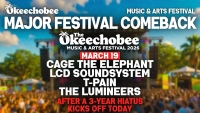
🎵 Introduction: The Festival Scene Is Back—And Bigger Than Ever
After years of uncertainty, cancellations, and a dramatic pause across the global events industry, one thing is now crystal clear: music festivals are officially back.
Leading that comeback is the iconic Okeechobee Music & Arts Festival 2026, which kicks off today, March 19, marking its long-awaited return after a three-year hiatus. For fans, artists, and the entire music ecosystem, this isn’t just another festival—it’s a powerful symbol of revival.
With a diverse and nostalgia-driven lineup featuring Cage the Elephant, LCD Soundsystem, T-Pain, and The Lumineers, the event reflects a broader shift in the live music world—one defined by genre blending, emotional connection, and cultural nostalgia.
🎪 The Comeback Story: Why This Festival Matters
The return of Okeechobee is more than just a scheduled event—it represents the resilience of live music culture.
For three years, fans have been waiting. Festivals were postponed, reimagined, or canceled altogether due to global disruptions. During that time, digital experiences and streaming filled the gap—but they could never fully replace the magic of live performance.
Now, as thousands of fans gather once again under open skies, Okeechobee 2026 stands as proof that:
-
Live music demand never disappeared
-
Festival culture remained deeply rooted
-
The appetite for shared experiences is stronger than ever
🌟 A Lineup Built on Nostalgia and Diversity
One of the most exciting aspects of this year’s festival is its lineup—a carefully curated mix of genres, eras, and fanbases.
🎸 Rock Energy Meets Indie Cool
Cage the Elephant brings raw, electrifying rock energy that defined the 2010s. Their presence taps into a wave of nostalgia while still feeling fresh.
🎧 Dance-Punk Legends Return
LCD Soundsystem represents a cult favorite with a loyal fanbase. Their inclusion highlights the ongoing demand for alternative and electronic crossover acts.
🎤 Hip-Hop Meets Party Vibes
T-Pain adds a completely different flavor—bringing energy, humor, and crowd interaction that festival audiences crave.
🌄 Emotional Indie Folk Moments
The Lumineers deliver emotional, sing-along anthems that create unforgettable shared experiences.
🔥 The Rise of Genre-Blending Festivals
One of the biggest trends highlighted by Okeechobee 2026 is the shift away from single-genre festivals.
In the past, festivals often focused on one style:
-
Rock festivals
-
EDM festivals
-
Hip-hop festivals
Today, that model is evolving.
Modern festivals are embracing genre diversity, allowing fans to:
-
Discover new music
-
Experience different styles in one place
-
Enjoy a more dynamic atmosphere
This approach reflects how people actually listen to music today—through playlists that mix genres seamlessly.
🧠 Why Nostalgia Is Driving Festival Lineups
Nostalgia has become a powerful force in the music industry.
Artists who rose to fame in the 2000s and 2010s are now:
-
Headlining major festivals
-
Drawing multi-generational crowds
-
Creating emotional connections with audiences
For many fans, attending Okeechobee isn’t just about hearing music—it’s about reliving moments tied to specific songs, memories, and life experiences.
This emotional connection is something streaming can’t replicate—and it’s a major reason why festivals are thriving again.
💰 The Economic Impact of Festival Comebacks
The return of large-scale festivals like Okeechobee has a massive economic impact.
💵 Revenue Streams Include:
-
Ticket sales
-
Sponsorships
-
Food and beverage
-
Merchandise
-
Travel and accommodation
Local economies benefit significantly as thousands of attendees spend money on hotels, transport, and local businesses.
Festivals are not just cultural events—they are economic powerhouses.
📱 Social Media and the Festival Experience
In 2026, festivals are as much about content as they are about music.
Attendees are constantly:
-
Posting videos
-
Sharing live moments
-
Creating viral content
This transforms festivals into global digital events, extending their reach far beyond physical attendees.
A single performance can:
-
Go viral on social media
-
Boost an artist’s streams overnight
-
Create cultural moments instantly
🎧 Artists and the Power of Live Performance
For artists, festivals are more important than ever.
Streaming may dominate revenue, but live performances offer:
-
Higher income potential
-
Direct fan engagement
-
Brand-building opportunities
A strong festival performance can:
-
Revitalize a career
-
Introduce music to new audiences
-
Strengthen fan loyalty
🌍 The Global Festival Revival
Okeechobee is part of a larger global trend.
Across the world, major festivals are returning stronger than ever:
-
Europe’s summer festivals are selling out faster
-
Asia’s festival scene is expanding rapidly
-
North America is seeing record attendance numbers
This global revival signals a renewed confidence in live events and shared experiences.
⚠️ Challenges Facing the Festival Industry
Despite the excitement, the festival industry still faces challenges:
🎟️ Rising Costs
Ticket prices are increasing due to inflation and production costs.
🌦️ Weather Risks
Outdoor events always carry uncertainty.
🛡️ Safety & Logistics
Managing large crowds requires advanced planning and technology.
However, organizers are adapting with:
-
Better infrastructure
-
Enhanced security
-
Improved fan experiences
🚀 What This Means for the Future of Live Music
The success of Okeechobee 2026 points to several key trends shaping the future:
🎯 1. Experience Over Everything
Fans are prioritizing experiences over ownership.
🎯 2. Hybrid Music Culture
Streaming and live events are working together—not competing.
🎯 3. Artist-Fan Connection
Live performances are becoming more personal and interactive.
🎯 4. Bigger, Bolder Festivals
Expect more ambitious productions and immersive environments.
🎵 The Emotional Power of Live Music
There’s something unique about standing in a crowd, surrounded by thousands of people, all singing the same song.
It’s not just entertainment—it’s a connection.
Festivals like Okeechobee remind us that music is:
-
A shared language
-
A cultural force
-
An emotional experience
No screen or stream can fully replicate that feeling.
⚡ Key Takeaways
-
Okeechobee Music & Arts Festival 2026 returns after a 3-year hiatus
-
Major artists like Cage the Elephant, LCD Soundsystem, T-Pain, and The Lumineers headline
-
Festivals are embracing genre diversity and nostalgia
-
Live music is making a powerful global comeback
-
The demand for real-world experiences is stronger than ever
🎯 Final Thoughts
The return of Okeechobee Music & Arts Festival 2026 isn’t just a moment—it’s a movement.
It signals the beginning of a new chapter in the music industry, where live experiences reclaim their place at the center of culture.
As fans gather, artists perform, and memories are created, one thing becomes clear:
Live music is back—and it’s stronger than ever.
Music Streaming Growth 2026: $31.7 Billion Industry & 837M Subscribers Explained
Written by Sounds Space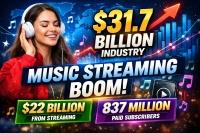
🎵 Introduction: The Streaming Era Is Dominating Music
The global music industry is not just growing—it’s exploding at an unprecedented scale. In 2025, total revenues reached an incredible $31.7 billion, marking another record-breaking year for the business of music. At the center of this growth is one unstoppable force: music streaming.
Streaming alone generated over $22 billion, accounting for roughly 70% of the entire industry’s revenue. Even more impressive, the number of paid streaming subscribers worldwide has climbed to 837 million users—a figure that continues to rise rapidly.
This isn’t just growth. This is a complete transformation of how music is created, distributed, and monetized.
📈 The Numbers Behind the Boom
Let’s break down the key figures driving headlines across the music world:
-
$31.7 billion – Total global music industry revenue (2025)
-
$22+ billion – Revenue from streaming services
-
70% – Percentage of total revenue from streaming
-
837 million – Paid streaming subscribers worldwide
These numbers confirm one thing: streaming is no longer the future—it is the present.
Over the past decade, the industry has undergone a massive shift away from physical sales and downloads toward subscription-based and ad-supported streaming platforms. What started as a convenience has now become the dominant economic engine of music.
🌍 Why Music Streaming Keeps Growing
1. Global Accessibility
One of the biggest drivers of streaming growth is accessibility. Today, anyone with a smartphone and internet connection can instantly access millions of songs.
Emerging markets in regions like Asia, Africa, and South America are playing a massive role in this expansion. As internet infrastructure improves, millions of new users are entering the streaming ecosystem every year.
2. Affordable Subscription Models
Streaming platforms have mastered pricing strategies. With:
-
Student discounts
-
Family plans
-
Regional pricing
Music has become more affordable than ever. This has significantly reduced piracy and encouraged legal consumption.
3. Personalized User Experience
Advanced algorithms and AI-driven recommendations have transformed how people discover music. Users no longer need to search—music finds them.
Playlists, daily mixes, and curated suggestions keep listeners engaged for longer periods, increasing both user retention and revenue.
4. Mobile-First Consumption
Streaming fits perfectly into modern lifestyles. Whether commuting, working out, or relaxing, users can listen anytime, anywhere.
This “always-on” accessibility has made music a constant companion in daily life.
💰 Where the Money Is Coming From
Streaming revenue is divided into two main categories:
🔹 Subscription-Based Streaming
Paid subscriptions are the largest revenue driver. With 837 million subscribers globally, monthly fees generate consistent and predictable income for platforms and rights holders.
🔹 Ad-Supported Streaming
Free tiers supported by ads also contribute billions. These platforms act as entry points, eventually converting users into paid subscribers.
🎤 What This Means for Artists
While the industry is making more money than ever, the impact on artists is complex.
✅ Opportunities
-
Global reach: Artists can reach international audiences instantly
-
Low barriers to entry: No need for physical distribution
-
Data insights: Artists can analyze listener behavior
⚠️ Challenges
-
Low per-stream payouts: Revenue is spread thin across millions of artists
-
High competition: Over 100,000 tracks are uploaded daily
-
Algorithm dependency: Success often depends on playlist placement
For independent artists, streaming is both a blessing and a challenge. It provides access—but not guaranteed income.
🔥 The Rise of Independent Artists
One of the most important trends in the streaming era is the rise of independent musicians.
Artists no longer need major labels to distribute their music globally. Platforms and digital distributors have made it possible to:
-
Release music instantly
-
Build fanbases organically
-
Monetize content directly
However, standing out in a saturated market requires strong branding, marketing, and consistency.
🎧 The Role of Playlists and Algorithms
Playlists have become the new radio.
Being featured on major playlists can:
-
Generate millions of streams
-
Launch careers overnight
-
Increase visibility globally
Algorithms also play a huge role by:
-
Recommending songs based on user behavior
-
Boosting tracks with high engagement
-
Creating viral moments
This shift has fundamentally changed how hits are made.
🌐 Streaming and Globalization of Music
Streaming has removed geographical barriers.
Today:
-
Latin music dominates global charts
-
K-pop continues to expand worldwide
-
African genres like Afrobeats are gaining massive traction
Listeners are more open than ever to music from different cultures, languages, and styles.
This global exchange is shaping a more diverse and interconnected music industry.
📊 Is This Growth Sustainable?
While the numbers are impressive, questions remain about long-term sustainability.
Key Concerns:
1. Artist Compensation
Many artists argue that streaming payouts are too low. This has led to ongoing debates about fair distribution of revenue.
2. Streaming Fraud
Artificial streams generated by bots are becoming a growing issue, costing the industry billions.
3. Market Saturation
With millions of songs available, discoverability is becoming increasingly difficult.
🚀 Future Trends in Music Streaming
The streaming boom is far from over. Here are the trends shaping the next phase:
🎯 1. AI Integration
AI will play a bigger role in:
-
Music recommendations
-
Content creation
-
Listener personalization
🎯 2. Higher Subscription Prices
As platforms mature, price increases are expected to boost revenue further.
🎯 3. Exclusive Content
Platforms may invest more in:
-
Exclusive releases
-
Artist partnerships
-
Premium experiences
🎯 4. Immersive Audio
Technologies like spatial audio and high-resolution streaming are becoming more popular.
🎯 5. Direct-to-Fan Monetization
Artists are exploring new ways to earn, including:
-
Fan subscriptions
-
Exclusive content
-
Merch integrations
🎵 The Return of Physical Formats (Yes, Really)
Despite streaming dominance, physical formats—especially vinyl—are making a surprising comeback.
Vinyl sales have been growing for nearly two decades, driven by:
-
Collectors
-
Audiophiles
-
Nostalgia
This shows that while streaming is king, physical music still has emotional and cultural value.
⚡ Key Takeaways
-
The global music industry reached $31.7 billion in 2025
-
Streaming accounts for over 70% of total revenue
-
There are 837 million paid subscribers worldwide
-
Streaming continues to reshape how music is consumed and monetized
-
Opportunities for artists are growing—but so are challenges
🎯 Final Thoughts
Music streaming is not just a trend—it’s the foundation of the modern music industry.
With billions in revenue, hundreds of millions of subscribers, and continuous technological innovation, streaming has redefined what it means to be a musician, a fan, and a business in the digital age.
However, the industry is still evolving. Issues like fair pay, discoverability, and sustainability will shape the next chapter of this growth story.
One thing is certain:
Music streaming isn’t slowing down anytime soon. It’s only getting bigger.
More...
Streaming Music Payouts Explode: Inside Spotify’s $11B and YouTube’s $8B Industry Payments
Written by Sounds Space
Streaming Money Is Exploding (But Still Controversial)
The Truth Behind Spotify’s $11 Billion and YouTube’s $8 Billion Music Payout Boom
The global music industry is experiencing one of the most dramatic financial transformations in its history. After years of decline caused by piracy and collapsing physical sales, streaming platforms have not only revived the industry—they’ve turned it into a multi-billion-dollar powerhouse.
At the center of this revolution are two giants: Spotify and YouTube.
In 2025 alone:
-
Spotify paid over $11 billion to the music industry
-
YouTube paid over $8 billion in a single year
These numbers are staggering. But here’s the catch:
Despite record-breaking payouts, artists are still unhappy.
So what’s really going on?
Let’s break it down.
🎧 The Streaming Boom: More Money Than Ever Before
The modern music economy is powered by streaming, and it’s growing fast.
According to Spotify’s latest reports, the platform paid out more than $11 billion in 2025, marking the largest annual payout in music history.
At the same time, YouTube revealed it paid more than $8 billion to the music industry between 2024 and 2025, highlighting its increasing role in music monetization.
This isn’t just incremental growth—it’s explosive.
Streaming now accounts for the majority of global music revenue, with billions of users worldwide contributing through subscriptions and ad-supported listening.
Even more impressive:
-
Spotify alone contributes roughly 30% of global recorded music revenue
-
Around 70% of its revenue is paid back to the industry
👉 In simple terms:
The more streaming grows, the more money flows into music.
📈 A Rising Tide… But Who Benefits?
At first glance, these numbers suggest a golden era for artists. And in some ways, that’s true.
Spotify reports:
-
Over 13,800 artists now earn $100,000+ per year from the platform alone
-
Around 1,500 artists generate over $1 million annually
-
Even smaller artists are earning more than ever before compared to a decade ago
There’s also been a massive rise in independent artists:
-
Roughly half of Spotify’s payouts go to indie artists and labels
This signals a huge shift:
👉 You no longer need a major label to make money in music.
Streaming has:
-
Democratized distribution
-
Opened global audiences
-
Created new income opportunities
But here’s where things get complicated…
⚠️ The Big Controversy: Artists Still Feel Underpaid
Despite billions flowing into the industry, many artists argue they’re not seeing their fair share.
The core issue lies in how streaming payments actually work.
Unlike traditional sales (where an artist earns money per album or download), streaming platforms use a pro-rata system:
-
All revenue is pooled together
-
Artists are paid based on their share of total streams
This means:
👉 Your income depends on your percentage of total listens—not just your fans.
Spotify itself confirms it doesn’t pay artists directly. Instead, money goes to rights holders (labels, publishers, distributors), who then split it further.
💡 Why This Causes Problems
1. Superstars Take a Huge Share
Because payouts are based on total streams:
-
Top artists dominate revenue
-
Smaller artists get a much smaller slice
Critics argue this creates a system where:
👉 The rich get richer
2. Millions of Streams = Modest Income
Even with growth, per-stream payouts are still low.
Artists often need:
-
Hundreds of thousands
-
Or even millions of streams
…to generate meaningful income.
3. Labels Take a Cut
If you’re signed:
-
Labels, publishers, and distributors all take percentages
-
Artists may receive only a fraction of total earnings
4. Streaming Replaced Higher-Paying Formats
In the past:
-
CD sales = higher margins
-
Downloads = direct purchases
Now:
-
Streaming pays fractions of a cent per play
🎤 The Artist Backlash Is Growing
This tension has led to increasing criticism from musicians worldwide.
Many argue that:
-
Streaming platforms are profitable
-
But artists struggle to make a living
Some campaigns and proposals include:
-
A “penny per stream” model
-
User-centric payment systems (where your subscription only pays artists you listen to)
Critics say the current system is fundamentally flawed because:
👉 It prioritizes scale over loyalty
🔄 The Industry’s Defense: Streaming Saved Music
Streaming companies push back strongly against criticism.
Their argument is simple:
👉 Without streaming, the music industry might have collapsed.
In the early 2000s:
-
Piracy was rampant
-
Revenue was shrinking
-
Artists were losing income
Streaming reversed that trend by:
-
Making music accessible
-
Encouraging paid consumption
-
Reducing illegal downloads
Today:
-
The industry is growing again
-
More artists are earning than ever before
Spotify claims this is a more sustainable, long-term ecosystem.
🌍 Global Growth Is Changing Everything
One of the biggest impacts of streaming is global reach.
Artists now earn:
-
More than 50% of their royalties from international listeners
This means:
-
A track made in Turkey can blow up in Brazil
-
A UK Garage song can trend in Japan
Streaming has turned music into a truly borderless industry.
🚀 Independent Artists Are Winning (Sort Of)
Streaming has empowered independent musicians in ways never seen before.
Benefits include:
-
Direct distribution (no label needed)
-
Global exposure
-
Data-driven audience insights
Platforms like:
-
DistroKid
-
TuneCore
-
CD Baby
…allow artists to upload music directly to streaming services.
However, independence comes with challenges:
-
Marketing is harder
-
Competition is massive (100,000+ songs uploaded daily)
-
Visibility is limited without algorithm support
👉 So while access is easier, success is still difficult.
🤖 New Problem: AI and Streaming Fraud
Another layer of controversy is emerging in 2026:
-
AI-generated music
-
Fake streams and bot activity
Streaming platforms are now:
-
Cracking down on “fake plays.”
-
Filtering low-quality or spam content
Why?
Because fake streams:
-
Drain revenue from real artists
-
Manipulate charts and payouts
This is becoming a major battleground for the future of streaming.
💸 Where the Money Really Goes
Let’s break down a typical streaming dollar:
-
~30% → Platform (Spotify, YouTube, etc.)
-
~70% → Rights holders
-
Labels
-
Publishers
-
Distributors
-
Artists
-
From there:
-
Artists receive a percentage depending on contracts
👉 This layered system is why payouts feel smaller than headlines suggest.
🔮 The Future of Streaming Payments
The current model isn’t set in stone.
Here are the biggest potential changes coming:
1. User-Centric Payments
Instead of pooling all revenue:
-
Your subscription would only pay artists you listen to
2. Higher Subscription Prices
Streaming platforms are already increasing prices to:
-
Boost payouts
-
Improve profitability
3. AI Regulation
Expect:
-
AI labeling requirements
-
Stricter monetization rules
4. More Transparency
Platforms like Spotify are publishing more data to:
-
Address criticism
-
Show how money flows
⚖️ So… Is Streaming Good or Bad?
The answer is: both.
✅ The Good:
-
Record-breaking payouts
-
Global reach for artists
-
Independent music growth
-
Industry revival
❌ The Bad:
-
Low per-stream earnings
-
Unequal distribution
-
Complex royalty systems
-
Ongoing artist dissatisfaction
🎯 Final Thoughts: A Billion-Dollar Paradox
The modern music industry is built on a paradox:
👉 There has never been more money in music
👉 But it’s never been harder for most artists to earn a living
Spotify’s $11 billion and YouTube’s $8 billion payouts prove one thing clearly:
Streaming is not the problem—distribution is.
As the industry evolves, the biggest question isn’t whether streaming will continue to grow…
It’s whether artists will finally get a system that feels fair.
Spotify’s $11 Billion Payout to Artists: What It Means for Musicians in 2026
Written by Sounds Space
Spotify’s $11 Billion Payout to Artists: What It Means for Musicians in 2026
The music streaming era has fundamentally reshaped how artists earn money from their work. At the center of this transformation is Spotify, the world’s largest music streaming platform.
In early 2026, the company announced that it paid more than $11 billion to the music industry in 2025, marking the largest annual payout from any music retailer in history.
At first glance, the number appears to signal a thriving digital music economy. But behind the headline figure lies a heated debate across the industry. Many musicians, producers, and independent labels argue that despite record payouts, individual artists still struggle to earn sustainable income from streaming.
With the rise of AI-generated music, massive catalog uploads, and algorithm-driven discovery, the economics of streaming are once again under scrutiny.
So what does Spotify’s $11 billion payout actually mean for artists—and is the streaming model really working?
Spotify’s Record-Breaking $11 Billion Payout
Spotify revealed its record payout as part of its annual Loud & Clear report, which aims to increase transparency around how streaming royalties work.
According to the company, Spotify paid over $11 billion to the music industry in 2025, surpassing the previous year’s record and bringing total lifetime payouts close to $70 billion.
The company says this makes it the highest-paying retailer in the music industry, exceeding what physical stores, digital download platforms, and other streaming services contribute annually.
Spotify also highlighted several notable trends in its report:
-
Over 13,800 artists earned more than $100,000 annually from Spotify streams.
-
Roughly half of all royalties went to independent artists and labels.
-
Global streaming continues to grow as Spotify expands into more markets.
From Spotify’s perspective, the data proves that streaming has revived the music business after the piracy crisis of the early 2000s.
And in many ways, that claim has merit.
Streaming Helped Save the Music Industry
Two decades ago, the music industry was struggling.
During the late 1990s and early 2000s, digital piracy platforms like Napster caused record sales to collapse. Revenue from physical albums plummeted as consumers downloaded music illegally.
Streaming services changed that trajectory.
Platforms like Spotify introduced a subscription model that made music accessible, affordable, and legal. Instead of purchasing albums individually, listeners could access millions of songs for a monthly fee.
The result was a major industry rebound.
Today, streaming accounts for the largest share of global music revenue, and platforms like Spotify now reach hundreds of millions of listeners worldwide.
Spotify alone reportedly has over 751 million users globally, including around 290 million paying subscribers.
This massive scale is what makes billion-dollar royalty payouts possible.
But scale does not necessarily translate into fair distribution.
How Spotify Actually Pays Artists
One of the biggest misconceptions about streaming royalties is the idea that Spotify pays a fixed amount per stream.
In reality, the platform uses a pro-rata revenue-sharing model.
Here’s how it works:
-
Spotify collects revenue from subscriptions and advertising.
-
Around 70% of that revenue goes to rights holders, including labels, publishers, and distributors.
-
Royalties are distributed based on stream share—how much of the total listening each artist receives.
So if an artist’s songs represent 1% of all streams, they receive 1% of the total royalty pool for that period.
Because of this system, there is no universal per-stream payment rate.
However, industry estimates suggest that artists typically earn between $0.003 and $0.005 per stream on average.
To put that into perspective:
-
10,000 streams: roughly $30–$50
-
100,000 streams: roughly $300–$500
-
1 million streams: roughly $3,000–$5,000
And that money is usually split among labels, publishers, distributors, and collaborators before the artist receives their share.
This is where much of the criticism begins.
Why Many Artists Still Struggle Financially
Despite billions flowing through streaming platforms, many musicians say the economics remain unsustainable.
There are several reasons for this.
1. Extremely Low Per-Stream Earnings
While millions of streams sound impressive, the revenue generated from them can still be modest.
For example, an artist might need hundreds of thousands—or even millions—of streams per month just to earn a living wage.
This has led many musicians to argue that streaming platforms undervalue recorded music.
Comparisons with other streaming services have also fueled criticism. Some industry analyses suggest platforms like Apple Music may pay higher average royalties per stream than Spotify.
However, Spotify counters that its massive user base generates more total revenue overall.
2. Revenue Is Concentrated Among Superstars
Another criticism centers on the distribution of streaming income.
The pro-rata payout model tends to favor artists with the highest streaming numbers.
Global superstars dominate listening on platforms like Spotify, meaning they receive a large portion of the royalty pool.
Even though thousands of artists earn significant money on Spotify, most musicians still earn relatively small amounts from streaming alone.
This has created what some analysts call a “winner-takes-most” streaming economy.
3. The Explosion of New Music
Streaming platforms have also dramatically increased the number of artists releasing music.
Today, tens of thousands of tracks are uploaded every day.
This abundance of content means:
-
More competition for listeners
-
Shorter attention spans for songs
-
Smaller revenue shares for individual artists
In other words, the streaming economy is growing—but it’s also becoming more crowded.
The AI Music Factor
One of the newest challenges facing the streaming economy is AI-generated music.
Artificial intelligence tools can now generate songs automatically, sometimes producing thousands of tracks in a short period of time.
Some industry insiders worry that AI music could flood streaming platforms, diluting the royalty pool and making it even harder for human artists to earn money.
Streaming platforms are already responding to this concern.
Spotify has begun introducing policies designed to combat AI-generated music spam, which can involve automated uploads intended to exploit royalty systems.
As AI music tools continue to evolve, the industry will likely face difficult questions about:
-
Copyright ownership
-
AI training data
-
Revenue distribution
The outcome of these debates could shape the future of streaming economics.
Independent Artists Are Growing, But Slowly
One positive trend highlighted in Spotify’s data is the growth of independent artists.
According to the company, roughly half of all Spotify royalties now go to independent artists and labels rather than major record companies.
This reflects a broader shift in the music industry.
Digital distribution platforms have made it easier than ever for musicians to release music without signing traditional record deals.
Many independent artists are now building careers through:
-
Streaming revenue
-
Social media audiences
-
Direct-to-fan marketing
-
Touring and merchandise
Spotify also claims its discovery tools and editorial playlists have helped launch thousands of new artist careers.
However, critics argue that independent artists still face major challenges gaining visibility in an algorithm-driven ecosystem.
Streaming Is Only One Piece of the Puzzle
Another important point in the streaming debate is that recorded music is only one revenue stream for artists.
Many musicians rely on multiple income sources, including:
-
Live performances
-
Merchandise sales
-
Brand partnerships
-
Sync licensing
-
Patreon-style fan support
Streaming platforms themselves are also expanding into new areas.
Spotify has developed features like concert discovery tools and ticket sales integrations, which have helped generate billions in live music revenue.
These features suggest that the future of music income may depend on integrated digital ecosystems, rather than streaming royalties alone.
The Future of Streaming Economics
As streaming continues to dominate music consumption, the debate around artist compensation is unlikely to disappear.
Several potential changes could reshape the system in the coming years.
User-Centric Royalty Models
Some experts propose switching from the current pro-rata model to a user-centric system, where each subscriber’s fee is distributed only among the artists they listen to.
AI Regulation
Governments and industry groups are beginning to explore regulations for AI-generated music, including copyright protections and licensing frameworks.
Higher Subscription Prices
Streaming platforms have already begun raising subscription prices in some markets, which could increase the royalty pool.
New Monetization Tools
Platforms are experimenting with fan subscriptions, tipping, and exclusive content, which may provide additional revenue streams for artists.
Conclusion
Spotify’s $11 billion payout to the music industry represents a historic milestone for the streaming era.
It reflects the enormous scale of modern music consumption and the growing financial power of digital platforms.
However, the number also highlights a deeper debate about how that money is distributed.
While top artists are earning millions and streaming has revived industry revenues, many musicians still struggle to generate meaningful income from their recordings.
With the rise of AI music, algorithm-driven discovery, and an ever-growing flood of new releases, the economics of streaming are entering a new phase of evolution.
The big question now is whether the next decade of music streaming will deliver a system that works not only for platforms and superstars—but for the entire creative ecosystem.
Streaming Platforms Are Changing AI Music Rules: Labeling, Filtering, and New Policies Explained
Written by Sounds Space
Streaming Platforms Are Changing the Rules: AI Labeling, Filtering, and New Policies in the Music Industry
Artificial intelligence is rapidly transforming the global music industry. From AI-generated vocals to fully automated song creation, technology is changing how music is produced, distributed, and consumed. But as AI tools become more powerful and accessible, streaming platforms are facing a growing challenge: how to manage the flood of AI-generated music entering their catalogs.
Major platforms like Spotify, Apple Music, and YouTube are now introducing new rules aimed at regulating AI music. These changes include AI labeling systems, content filtering technologies, and updated policies designed to protect both artists and listeners.
The shift marks a turning point for the music industry, as streaming services attempt to balance innovation with fairness in the age of artificial intelligence.
The Rapid Rise of AI-Generated Music
Over the past two years, AI music generation tools have advanced dramatically. Platforms powered by machine learning can now produce entire songs—including lyrics, vocals, and instrumentals—based on simple prompts.
This surge has been fueled by new technologies developed by companies like Google, OpenAI, and several emerging AI startups.
As a result, millions of AI-generated tracks are being created every month. Many of these songs are uploaded directly to streaming platforms, often through independent distribution services.
While this technology has opened exciting, creative possibilities, it has also created serious concerns across the music ecosystem. Streaming platforms are now dealing with:
-
Massive increases in song uploads
-
AI-generated “spam” tracks flooding catalogs
-
Copyright concerns related to training data
-
Difficulty distinguishing human music from AI-generated content
To address these challenges, streaming services are beginning to introduce new policies designed specifically for the AI era.
Why Streaming Platforms Are Changing Their Rules
The primary reason streaming platforms are introducing new rules is simple: the scale of AI-generated music is becoming difficult to manage.
Historically, streaming services primarily hosted music created by human artists. Today, AI tools allow anyone to generate thousands of songs in minutes.
Some developers have even created automated systems capable of generating and uploading large volumes of AI music in order to collect streaming royalties.
This practice—sometimes called AI music spam—has raised serious concerns among artists and record labels.
Platforms such as Spotify and Apple Music rely heavily on recommendation algorithms to deliver music to listeners. When large amounts of AI-generated content flood these systems, it can disrupt how songs are discovered and promoted.
In response, streaming companies are developing new tools and policies to maintain the integrity of their platforms.
AI Labeling: Transparency for Listeners
One of the most significant changes coming to streaming platforms is the introduction of AI labeling systems.
AI labeling aims to inform listeners whether a song was created by a human artist, generated entirely by AI, or produced with the assistance of artificial intelligence.
These labels may include categories such as:
-
AI-Generated – Music created entirely by artificial intelligence
-
AI-Assisted – Songs produced by human artists using AI tools
-
Human-Created – Traditional music created without AI assistance
Streaming platforms believe these labels will help maintain transparency for listeners while allowing AI innovation to continue.
For example, Apple has reportedly explored metadata tags that identify AI-generated content across its music services.
Such labeling systems could soon become a standard feature across the streaming industry.
Filtering AI Music to Prevent Platform Abuse
Another major change involves filtering systems designed to detect large volumes of automated uploads.
Some developers have attempted to exploit streaming platforms by uploading thousands of AI-generated tracks designed to accumulate small royalty payments.
Although each stream may generate only a fraction of a cent, mass uploading can create significant revenue if done at scale.
Streaming platforms are now developing tools capable of identifying suspicious patterns, such as:
-
Thousands of similar songs are uploaded simultaneously
-
Repetitive audio structures generated by AI
-
Artificial streaming activity or a bot plays
Platforms like Spotify have already begun removing tracks suspected of violating platform guidelines.
By filtering AI-generated spam, streaming services hope to ensure that legitimate artists continue to receive fair exposure.
New Policies for AI Music Uploads
In addition to labeling and filtering systems, streaming services are updating their official policies to address AI-generated music.
These new rules may include requirements such as:
Disclosure of AI usage
Artists may soon be required to disclose whether AI tools were used in the creation of their music.
Verification of ownership
Creators must prove that they have the legal rights to distribute any audio uploaded to streaming platforms.
Restrictions on impersonation
Some AI tools can mimic the voices of famous singers. Streaming platforms are introducing policies to prevent unauthorized vocal cloning.
These measures aim to prevent misuse of AI technology while still supporting legitimate creative experimentation.
Protecting Artists’ Rights in the AI Era
One of the biggest concerns driving these new policies is the protection of artists’ rights.
Many musicians worry that AI-generated music could dilute streaming royalties and make it harder for human artists to earn income.
Because streaming royalties are divided among all songs played on a platform, a massive influx of AI tracks could potentially reduce the share available to human creators.
Industry organizations have therefore urged streaming services to implement safeguards.
By labeling AI music and filtering automated uploads, platforms hope to maintain a fair environment for artists who rely on streaming revenue.
The Role of Copyright in AI Music Policies
Copyright law is another major factor influencing new streaming policies.
AI systems are often trained using vast datasets of existing music. In some cases, artists have alleged that their songs were used as training data without permission.
This has led to multiple legal disputes between musicians and technology companies.
Streaming platforms want to avoid hosting music that could become the subject of copyright lawsuits.
As a result, they are beginning to require more detailed information about how songs were created and whether AI tools were involved.
These policies could become even stricter if courts rule that AI training on copyrighted music requires licensing.
Listener Experience and Music Discovery
Another reason streaming platforms are updating their rules is to protect the listener experience.
Streaming services depend on recommendation systems that suggest music based on listening habits. When catalogs become flooded with low-quality or repetitive AI music, these recommendation algorithms can become less effective.
Listeners may encounter playlists filled with generic or nearly identical tracks.
To maintain high-quality discovery experiences, streaming companies are working to ensure that AI-generated music does not overwhelm human-created content.
Filtering systems and labeling tools may help platforms maintain a balanced music ecosystem.
The Business Impact on the Music Industry
The new policies being introduced by streaming platforms could significantly reshape the economics of the music industry.
For AI developers, stricter regulations may increase the cost of building generative music platforms. Companies may need to:
-
License training datasets
-
Develop content verification systems
-
Implement safeguards against copyright violations
For musicians, these policies may provide important protections against unfair competition from automated content.
However, some artists are also embracing AI as a creative tool. Many producers now use AI to generate ideas, assist with composition, or enhance sound design.
Streaming platforms, therefore, face a delicate balancing act: supporting innovation while preventing abuse.
A New Era for Music Technology
The changes being introduced by streaming platforms signal the beginning of a new era in music technology.
Artificial intelligence is unlikely to disappear from the music industry. In fact, AI tools are expected to become even more powerful in the coming years.
Future developments may include:
-
AI-generated virtual artists
-
Personalized music created in real time
-
Interactive songs that adapt to listener preferences
As these technologies evolve, streaming platforms will continue to adapt their policies.
Transparency, fairness, and artist protection will likely remain central priorities.
Conclusion
The rapid rise of AI-generated music has forced streaming platforms to rethink how their ecosystems operate.
Major services such as Spotify, Apple Music, and YouTube are introducing new rules designed to manage the growing presence of AI in music catalogs.
AI labeling systems, automated filtering tools, and updated platform policies represent the first wave of regulation in the AI music era.
These changes aim to protect artists, maintain fair royalty systems, and ensure that listeners can trust the music they discover online.
As artificial intelligence continues to reshape creative industries, streaming platforms will play a critical role in determining how technology and human artistry coexist.
The rules of music distribution are evolving—and the decisions made today could define the future of the global music industry.
Google AI Music Lawsuit: Independent Artists Challenge AI Training on YouTube Songs
Written by Sounds Space
Google Facing Lawsuit Over AI Music Training: A Case That Could Reshape the Music Industry
Artificial intelligence is rapidly transforming the music industry, from songwriting tools to full song generation. However, the rise of AI music technology has also triggered intense legal battles between technology companies and musicians. One of the most significant cases unfolding right now involves a lawsuit against Google over allegations that its AI music systems were trained using copyrighted music from YouTube without permission.
Independent artists claim that Google’s AI music models were trained on millions of songs uploaded to YouTube, potentially without proper licensing or compensation. If proven true, this lawsuit could become one of the most important legal precedents in the history of AI-generated music.
The case could determine whether AI companies must license music datasets, pay royalties to creators, or fundamentally change how generative music models are developed.
The Rise of AI Music Technology
Artificial intelligence has rapidly become a powerful tool in music production. AI music generators can now create entire tracks—from melodies to vocals—based on simple text prompts.
Companies like Google have invested heavily in this technology, developing systems capable of generating music in different styles and genres. One of the most advanced models reportedly involved in the lawsuit is Lyria, an AI music generation system developed by Google’s AI research teams.
These tools analyze large datasets of music to learn patterns such as:
-
Melody structures
-
Rhythm patterns
-
Instrumentation
-
Song arrangements
-
Vocal styles
By studying millions of songs, AI systems can generate completely new compositions that mimic the structure and style of human-created music.
However, this approach has raised a critical legal question: Where did the training data come from, and did artists consent to its use?
Why Independent Artists Are Suing Google
A group of independent musicians has filed a lawsuit claiming Google illegally used copyrighted music to train its AI systems. According to the complaint, Google allegedly copied and analyzed large volumes of music from internet videos, including songs hosted on YouTube.
The lawsuit argues that Google extracted audio clips from millions of music videos and used them as training data for its generative AI models. Plaintiffs claim the company did this without:
-
Licensing the recordings
-
Compensating artists
-
Allowing creators to opt out
The legal filing alleges that Google’s training dataset may have included tens of millions of music videos, from which short audio segments were extracted for machine learning purposes.
In simple terms, the artists argue that Google effectively used their music to build a competing product without paying them.
The Artists Leading the Lawsuit
The case was brought by a coalition of independent musicians from across the United States. Several artists involved in the lawsuit have previously taken legal action against other AI music platforms as well.
Among the plaintiffs are:
-
Singer-songwriter Sam Kogon
-
Composer Magnus Fiennes
-
Producer Michael Mell
-
Members of the band Directrix
-
Several other independent artists and producers.
These musicians claim that Google’s AI tools directly compete with human artists, particularly in markets such as background music, production music, and commercial licensing.
Because many independent artists rely heavily on licensing income, they argue that AI-generated music could significantly undermine their livelihoods.
The Role of YouTube in the Case
One of the most controversial aspects of the lawsuit involves YouTube’s role in the AI training pipeline.
Google owns YouTube, which is one of the largest music distribution platforms in the world. Millions of musicians upload their songs to the platform to promote their work and earn revenue through ads or streaming.
The plaintiffs argue that Google used this vast catalog of music as a training dataset for its AI models.
According to the complaint, Google allegedly:
-
Extracted audio from music videos
-
Converted recordings into machine-readable data
-
Used those data patterns to train AI music models.
This has sparked criticism because artists uploaded their work to YouTube expecting it to be distributed, not used to train AI systems that could replace them.
Allegations of Copyright Management Removal
Another key allegation in the lawsuit involves copyright metadata.
Music files typically include copyright management information such as:
-
Artist names
-
Track titles
-
Copyright notices
-
ISRC identification codes
The plaintiffs claim that during the AI training process, Google removed or ignored this information when processing recordings.
According to the lawsuit, this may violate provisions of the Digital Millennium Copyright Act (DMCA), which prohibits removing copyright management information from protected works.
If the court agrees with this argument, it could strengthen the artists’ case significantly.
A Unique Conflict of Interest
The lawsuit also highlights what some legal experts describe as a “unique conflict of interest.”
Google operates several major components of the music ecosystem:
-
YouTube (music distribution platform)
-
Content ID (copyright detection system)
-
AI music generators like Lyria
Because Google manages both the distribution platform and the AI tools, the plaintiffs argue the company had unparalleled access to copyrighted music.
They claim this gave Google the ability to:
-
Identify copyrighted recordings
-
Access vast datasets of music
-
Train AI systems on those recordings
All without needing permission from artists.
According to the plaintiffs’ legal team, no other AI developer has this level of control over the music supply chain.
How Google Has Responded So Far
Google has not yet fully responded to all claims in court, but the company has previously stated that it aims to develop AI responsibly and work with the music industry.
In earlier announcements about its AI music projects, Google said it is mindful of copyright and partnership agreements. However, critics say the company has not clearly disclosed which licenses, if any, were obtained for training data.
The lawsuit claims that Google had the resources and industry relationships to license music properly but chose not to.
Because Google already licenses music for services like YouTube and advertising campaigns, the plaintiffs argue that the company fully understands how music licensing works.
Why This Case Could Become a Major Legal Precedent
The lawsuit against Google is part of a broader wave of legal challenges against AI companies.
Across the creative industries, artists, writers, and filmmakers are filing lawsuits against companies that train AI systems using copyrighted material.
However, the Google case could be especially influential because it targets one of the world’s largest technology companies.
If courts rule that AI training on copyrighted works is illegal without permission, it could reshape the entire AI industry.
Possible outcomes include:
-
Mandatory licensing of training datasets
-
New royalty systems for AI-generated content
-
Restrictions on how AI companies collect training data.
Potential Impact on AI Music Companies
A ruling against Google could affect dozens of companies developing generative music technology.
Platforms like Suno, Udio, and other AI music generators rely on large datasets of existing music to train their models.
If courts determine that training on copyrighted music requires licensing, AI developers may need to negotiate agreements with record labels, publishers, and independent artists.
This could lead to a new licensing market for AI training data.
Major record labels could potentially earn billions of dollars licensing their catalogs for AI training purposes.
What It Means for Musicians
For musicians, the outcome of the case could determine whether they receive compensation for AI systems trained on their work.
If the artists win, AI companies may be required to:
-
Pay royalties to creators whose work is used for training
-
Provide opt-out mechanisms for artists
-
Disclose training datasets.
This could create a new revenue stream for musicians whose recordings contribute to AI models.
On the other hand, if AI companies win the case, courts could rule that training AI on copyrighted material qualifies as “fair use.”
Such a decision would allow AI developers to continue training models without licensing music.
The Future of AI Music Regulation
Regardless of the final verdict, the lawsuit highlights the urgent need for clearer regulations around AI and copyright.
Governments and industry groups are already exploring new frameworks for managing AI-generated content.
Possible future regulations may include:
-
Mandatory labeling of AI-generated music
-
Licensing systems for AI training datasets
-
Revenue-sharing models between AI companies and artists.
As AI technology continues to evolve, policymakers will likely face increasing pressure to protect creative professionals while allowing innovation to continue.
The Bigger Picture: AI vs Human Creativity
At its core, the lawsuit raises a philosophical question about the future of creativity.
AI tools can now compose songs, generate vocals, and mimic musical styles with remarkable accuracy. But these capabilities are built on vast collections of human-created music.
Artists argue that their work should not be used to train AI systems without permission or compensation.
Technology companies argue that analyzing data to build AI systems is a form of innovation protected by fair use.
The courts will ultimately decide where the line between inspiration and infringement lies.
Conclusion
The lawsuit against Google over AI music training could become one of the most significant legal battles in modern music history.
Independent musicians claim their copyrighted songs were used to train Google’s AI models without consent, potentially allowing the company to generate music that competes directly with human creators.
If courts rule against Google and other AI developers, the decision could force companies to license training data, compensate artists, and redesign how generative AI systems are built.
Such a ruling would fundamentally reshape the economics of AI music.
As AI continues to transform creative industries, this case may determine whether the future of music technology is built through collaboration with artists—or without them.