


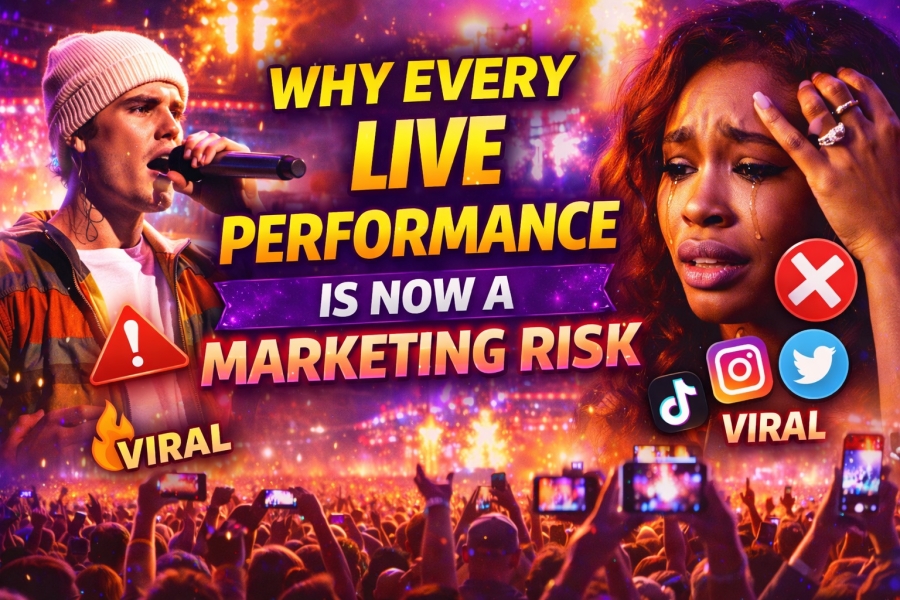
Why Every Live Performance Is Now a Marketing Risk
Coachella 2026, Controversy, Comebacks & The New Reality of Live Music
Introduction: The Stage Is No Longer Just a Stage
In 2026, stepping onto a stage is no longer just about performing music—it’s about entering a high-stakes, global marketing arena.
The events surrounding Coachella Valley Music and Arts Festival 2026 made this clearer than ever. When Justin Bieber delivered a performance that sparked mixed reactions—and rumors involving SZA spread like wildfire online—it highlighted a powerful truth:
👉 Every live performance today is a potential PR win… or a viral disaster.
In this blog, we’ll break down why live performances have become marketing risks, how social media has changed the game, and what artists must do to survive—and thrive—in this new era.
The Coachella 2026 Moment: A Perfect Case Study
Coachella 2026 wasn’t just another festival—it was a real-time global media event.
What Happened:
- Justin Bieber’s performance divided audiences
- Social media reactions ranged from praise to criticism
- Rumors about SZA’s involvement went viral—before being denied
What This Shows:
- Performances are no longer judged only by fans in the crowd
- Millions online shape the narrative instantly
- Perception can shift within minutes
This isn’t just music anymore—it’s live reputation management.
From Performance to PR Event
Live shows used to be about:
- Sound quality
- Crowd interaction
- Stage presence
Now they’re also about:
- Brand perception
- Public narrative
- Media impact
Why?
Because every performance is:
- Filmed
- Shared
- Analyzed
- Debated
Platforms like TikTok and Instagram have turned concerts into global PR moments.
The Viral Effect: One Clip Can Define Everything
In today’s digital landscape, a single 15-second clip can:
- Define an entire performance
- Go viral globally
- Impact an artist’s reputation
The Problem:
Context disappears.
A moment taken out of context can:
- Misrepresent the performance
- Spark controversy
- Create false narratives
The Reality:
👉 Artists are no longer performing for the crowd—they’re performing for the algorithm.
The Rise of “Performance Pressure”
Artists today face more pressure than ever before.
Why?
Because every show must:
- Entertain the audience
- Impress critics
- Go viral
- Avoid backlash
The New Standard:
A “good” performance isn’t enough.
It must be:
- Memorable
- Shareable
- Flawless
Anything less risks being labeled:
- “Mid”
- “Disappointing”
- “Overhyped”
Controversy = Visibility (But at What Cost?)
One of the biggest shifts in 2026 is this:
👉 Controversy drives attention.
When Justin Bieber’s performance sparked debate, it:
- Dominated social media
- Increased engagement
- Kept him trending
The Double-Edged Sword:
Controversy can:
✔ Boost visibility
✔ Increase streams
✔ Keep artists relevant
But it can also:
❌ Damage credibility
❌ Alienate fans
❌ Hurt long-term brand value
Rumors, Misinformation & The Speed of the Internet
The SZA rumor situation highlights another major issue:
👉 Speed beats accuracy.
False information spreads faster than the truth.
Why This Matters:
- Fans react before facts are confirmed
- Narratives form instantly
- Corrections rarely go as viral as the rumor
The Result:
Artists must now manage:
- Performance quality
- Public perception
- Real-time misinformation
Comebacks: The Other Side of the Story
While live performances can damage reputations, they can also revive them.
The Power of a Comeback Performance:
- Reintroduces artists to audiences
- Changes public perception
- Creates redemption narratives
Artists have used major stages like Coachella to:
- Rebuild their image
- Prove critics wrong
- Launch new eras
Key Insight:
👉 The same stage that can destroy can also rebuild.
Artists as Brands: The Bigger Picture
In 2026, artists are no longer just musicians—they are brands.
Every performance affects:
- Their image
- Their partnerships
- Their future opportunities
What’s at Stake:
- Sponsorship deals
- Streaming numbers
- Tour ticket sales
A single controversial performance can:
- Impact brand deals
- Influence media coverage
- Shift public perception
The Role of Fans: From Audience to Amplifiers
Fans are no longer passive listeners—they are active participants.
They:
- Film performances
- Share opinions
- Create viral content
- Influence narratives
The Shift:
Fans now act as:
📱 Content creators
📢 Critics
📊 Marketers
This means artists no longer control their narrative fully.
The Algorithm Factor: What Gets Seen Matters
Not every moment goes viral—but the ones that do shape perception.
Algorithms prioritize:
- Drama
- Emotion
- Controversy
This Creates a Problem:
Balanced, nuanced performances often get ignored
While controversial clips get amplified
The Result:
👉 The internet rewards extremes.
The Economics of Risk
Despite the risks, artists can’t avoid live performances.
Why?
Because live music is the biggest revenue stream in 2026.
Revenue Sources:
- Ticket sales
- VIP experiences
- Merchandise
- Brand partnerships
The Trade-Off:
More exposure = more risk
But also:
More exposure = more opportunity
How Artists Are Adapting
To survive this environment, artists are evolving.
Strategies Include:
1. Over-Preparation
- Rehearsing extensively
- Perfecting stage production
2. Narrative Control
- Pre-planned moments
- Coordinated social media strategies
3. Real-Time Response
- Addressing controversies quickly
- Engaging directly with fans
4. Authenticity
- Being real instead of perfect
- Embracing imperfections
The Role of Media & Blogs
Media outlets and blogs play a huge role in shaping narratives.
They:
- Amplify controversies
- Analyze performances
- Influence public opinion
Why This Matters for SEO:
Topics like:
- “Justin Bieber Coachella 2026 performance reaction”
- “SZA Coachella rumor explained”
Generate massive search traffic.
The Future: More Risk, More Reward
Looking ahead, live performances will become:
- More produced
- More strategic
- More high-pressure
What Will Increase:
- Viral moments
- Controversies
- Audience expectations
What Won’t Change:
👉 The demand for live music
Key Takeaways
- Live performances are now global PR events
- Social media has turned concerts into viral content machines
- Controversy can boost visibility—but carries risk
- Artists must balance performance + perception
- Fans and algorithms now shape narratives
Conclusion: The New Reality of Live Music
In 2026, the stage is no longer just a place to perform—it’s a place where careers are:
- Built
- Tested
- Reinvented
The events at Coachella 2026 prove one thing:
👉 Every live performance is a marketing moment—and a potential risk.
Artists who understand this will thrive.
Those who don’t?
They risk becoming the next viral controversy.
