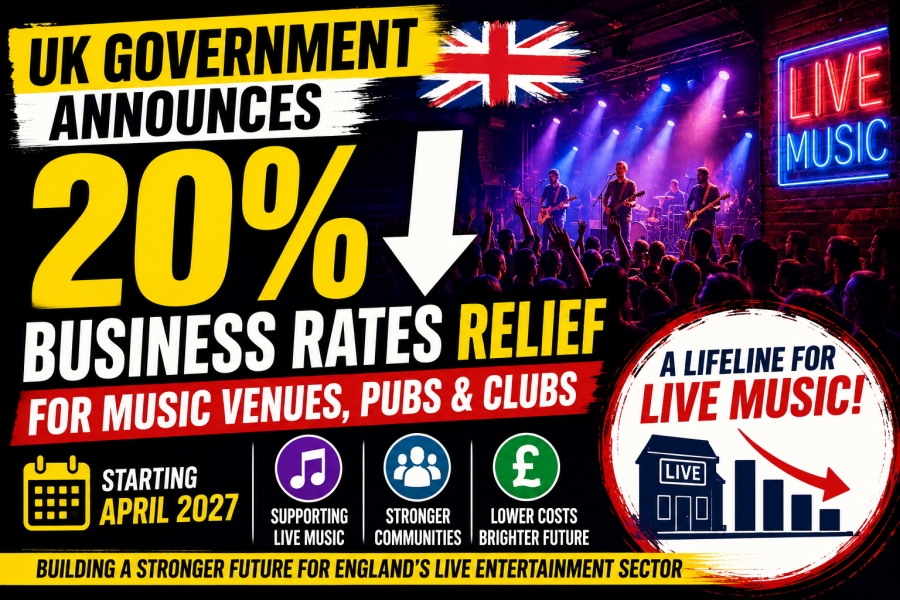
UK Government Announces 20% Business Rates Relief for Music Venues: A Lifeline for England's Live Entertainment Industry
The UK government has unveiled a significant boost for England's live entertainment sector by announcing a 20% reduction in business rates for eligible music venues, pubs, and clubs from April 2027. The measure is designed to ease the financial burden on venues that have struggled with rising operating costs, inflation, and changing consumer habits in recent years.
The announcement has been widely welcomed by venue operators, artists, promoters, and industry organizations, many of whom have long called for greater government support to preserve the UK's vibrant live music ecosystem. As grassroots venues continue to serve as the foundation for emerging talent, the new business rates relief could play a crucial role in safeguarding the future of live music across England.
A Major Financial Boost for Music Venues
Business rates have long been one of the largest fixed costs facing venue owners. Combined with increasing energy prices, staffing expenses, rent, insurance, and licensing costs, many independent venues have struggled to remain financially sustainable.
The government's decision to introduce a 20% business rates reduction aims to provide much-needed financial relief for thousands of qualifying venues. The policy is expected to free up funds that operators can reinvest into live performances, venue improvements, staffing, artist bookings, and audience experiences.
For many independent venues operating on tight margins, even a modest reduction in overhead costs can make the difference between remaining open or permanently closing their doors.
Why the Live Music Industry Needed Support
The UK's live entertainment industry has faced numerous challenges over the past several years.
Although audiences have returned to concerts and festivals following the pandemic, many venues continue to battle higher operating expenses, inflation, and changing consumer spending habits. Rising utility bills, increased supplier costs, and higher wages have significantly reduced profit margins across the sector.
Independent venues have been particularly vulnerable because they often lack the financial reserves available to larger arena operators and corporate entertainment groups.
Industry organizations have repeatedly warned that without additional support, many grassroots music venues risk closure, reducing opportunities for emerging artists and weakening local cultural communities.
Grassroots Music Venues Benefit the Most
Grassroots venues are widely regarded as the backbone of the UK music industry.
Many internationally successful artists began their careers performing in small clubs and independent venues before reaching global audiences. These intimate spaces provide musicians with opportunities to develop their live performances, build fan bases, and gain industry recognition.
The new business rates relief is expected to benefit many of these venues by helping owners invest in better sound systems, venue maintenance, marketing initiatives, and artist programming.
Protecting grassroots venues also helps preserve local music scenes, supports creative communities, and strengthens regional economies.
Economic Impact Beyond Live Entertainment
The benefits of supporting live music venues extend well beyond the entertainment industry.
Music venues attract visitors who also spend money at nearby restaurants, hotels, pubs, transport services, and retail businesses. This wider economic activity contributes significantly to local economies across England.
A healthier live music sector can generate increased tourism, create employment opportunities, and encourage investment in city centres and regional communities.
By reducing business costs for venues, the government hopes to stimulate broader economic growth while maintaining the UK's reputation as one of the world's leading destinations for live entertainment.
Support for Pubs and Clubs
The business rates reduction will not only benefit dedicated music venues but also pubs and clubs that regularly host live performances.
Many pubs serve as important cultural spaces where local artists perform and audiences discover new music. Smaller clubs also play a vital role in supporting DJs, electronic music, independent bands, comedy events, and community entertainment.
Lower operating costs could encourage more venues to expand their live event schedules, providing additional performance opportunities for artists while increasing entertainment options for local communities.
Industry Leaders Welcome the Announcement
The announcement has been positively received by many stakeholders across the music industry.
Venue owners have described the relief as an important step toward improving financial sustainability, while promoters believe lower costs could help encourage more live events throughout the year.
Artists and music advocates also recognize that healthier venues create more opportunities for touring musicians, particularly emerging acts seeking to establish their careers.
However, many industry representatives continue to argue that additional long-term measures may still be necessary to fully address the financial pressures facing the live entertainment sector.
Challenges Still Facing the Industry
While the business rates reduction represents welcome news, it does not solve every challenge confronting music venues.
Many operators continue to face rising insurance premiums, increased production costs, talent fees, security requirements, and changing audience expectations.
Competition from streaming platforms, home entertainment, and large-scale festivals has also altered consumer behaviour, making it increasingly important for smaller venues to offer unique live experiences.
Some industry experts believe continued collaboration between government, local authorities, venue operators, and music organizations will be essential to ensure long-term sustainability.
Supporting Emerging Artists Through Venue Stability
A thriving venue network is essential for artist development.
Live performances remain one of the most effective ways for musicians to connect with audiences, improve their stagecraft, and generate income beyond streaming platforms.
Independent venues often provide the first opportunities for unsigned artists to perform professionally, making them an indispensable part of the music industry's talent pipeline.
Financial stability for venues ultimately benefits artists by preserving performance opportunities and strengthening the UK's creative ecosystem.
A Positive Signal for the UK's Creative Economy
The government's latest announcement also reflects growing recognition of the economic and cultural value of the creative industries.
Music contributes billions of pounds annually to the UK economy through concerts, festivals, tourism, exports, publishing, recording, and licensing activities.
Supporting live entertainment infrastructure demonstrates an understanding that music is not only a cultural asset but also an important driver of economic growth, employment, and international influence.
The policy may also encourage future investment across the broader entertainment and hospitality sectors.
Looking Ahead to April 2027
With implementation scheduled for April 2027, venue operators now have greater certainty when planning future budgets, programming, and investment strategies.
Many businesses are expected to use the financial savings to improve customer experiences, upgrade facilities, expand event calendars, and strengthen community engagement.
Although challenges remain, the announcement offers renewed optimism for an industry that has shown remarkable resilience despite years of financial uncertainty.
Conclusion
The UK government's decision to introduce a 20% business rates relief for music venues, pubs, and clubs marks an important milestone in supporting England's live entertainment industry. By easing one of the sector's largest operating expenses, the initiative aims to protect grassroots venues, strengthen local economies, and create new opportunities for artists and audiences alike.
As the live music landscape continues to evolve, targeted government support such as this can help ensure that independent venues remain vibrant cultural hubs where new talent flourishes and communities come together through the power of live performance. If successfully implemented, the business rates relief could become a key step toward building a more resilient, sustainable, and thriving future for England's music industry.
