


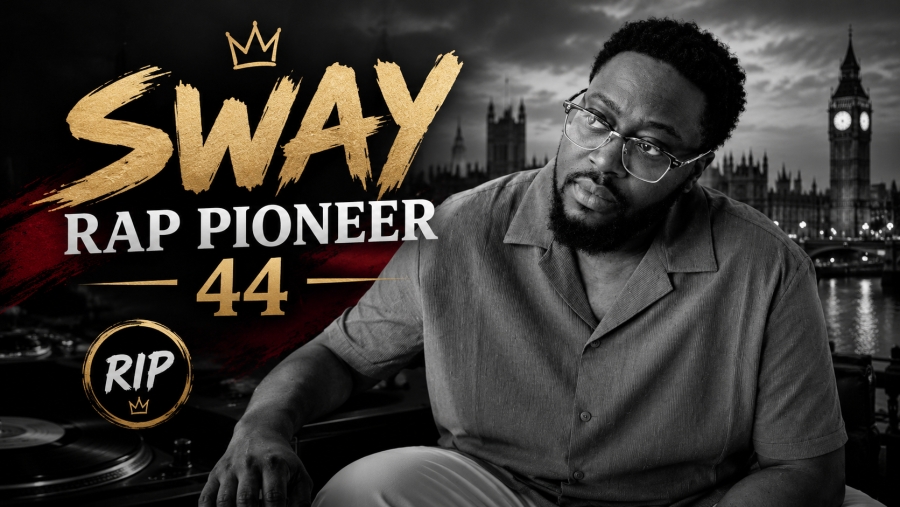
Sway, Born Derek Andrew Safo, Dies Aged 44: Remembering the UK Rap Pioneer
The British-Ghanaian music community is mourning the loss of Sway DaSafo, the pioneering UK rapper, producer and creative executive whose real name was Derek Andrew Safo. Sway died aged 44, with news of his passing emerging on September 17, 2026. A close friend confirmed that he died at his home in Ghana. His cause of death has not been publicly disclosed.
For fans of British hip-hop, Sway represented an important generation of artists who helped establish UK rap as a distinctive force rather than simply an extension of American hip-hop. His career combined intricate lyricism, storytelling, grime, hip-hop, and club influences, while his Ghanaian heritage remained an important part of his identity.
His legacy extends well beyond his own records. Sway made history at the 2005 MOBO Awards, became the first unsigned artist to win Best Hip Hop Act, released the Mercury Prize-nominated This Is My Demo, achieved UK chart success with songs including “Little Derek,” “Still Speedin’” and “Level Up,” and worked with artists across Britain, America and Ghana.
His death at 44 marks the loss of an artist whose influence reached across multiple generations of British music.
Who Was Sway DaSafo?
Born Derek Andrew Safo in North London, Sway grew up in Hornsey and developed his musical identity through a mixture of British and international influences.
He was of Ghanaian heritage, and that connection remained visible throughout his career. His music drew from UK hip-hop, grime, drum and bass and other strands of British urban music, while American hip-hop also influenced his development as a rapper.
Sway's appeal came partly from his versatility. He could move between rapid-fire delivery and more reflective songwriting, while his production background gave him an understanding of music that extended beyond simply performing vocals.
That combination helped him establish a distinctive position during a period when the British hip-hop scene was rapidly developing.
Rather than fitting neatly into one genre, Sway occupied the space between several of them.
That became an important characteristic of his career.
Sway Made MOBO History in 2005
One of the defining moments of Sway's career arrived at the 2005 MOBO Awards.
Still unsigned and without a debut studio album, Sway won the award for Best Hip Hop Act, making him the first unsigned artist to achieve the honour. He beat established international names including 50 Cent and The Game.
The victory was significant for more than Sway personally.
At the time, British rappers were still working to gain the same level of recognition enjoyed by major American hip-hop artists. Sway's victory demonstrated that an independent UK rapper could compete on one of Britain's biggest music-industry stages.
The MOBO Awards later described his achievement as an important moment for UK hip-hop.
For Sway, it became the launch point for a career that would continue to move between independent music, major-label opportunities, production and artist development.
The Success of This Is My Demo
Following his breakthrough at the MOBO Awards, Sway released his debut album, This Is My Demo, in 2006.
The album became one of the defining releases of his early career and received significant critical recognition. It was also nominated for the Mercury Prize, placing Sway alongside some of the UK's most respected contemporary artists.
The album's success demonstrated that Sway's appeal went beyond individual singles.
His writing was central to the record.
He brought a detailed storytelling approach to British rap, combining personal experiences with observations about the music industry, ambition and everyday life.
The album also helped establish Sway as an artist capable of operating independently while still reaching a mainstream audience.
According to Official Charts, This Is My Demo reached No. 45 on the UK Albums Chart and No. 4 on the Independent Albums Chart.
“Little Derek” Became One of Sway's Signature Songs
Among Sway's most recognizable early records was “Little Derek.”
Released in 2006, the track became a UK chart success and helped introduce a wider audience to his personality-driven approach to rap.
Official Charts records show “Little Derek” reaching No. 4 on the UK Hip Hop and R&B Singles Chart and spending 11 weeks on that chart.
The song demonstrated another important aspect of Sway's artistry: his ability to make technically accomplished rap feel accessible.
He wasn't simply interested in demonstrating lyrical ability. His records often had strong characters, narratives and hooks that helped them connect with audiences outside the underground scene.
That balance between technical skill and accessibility became a recurring feature throughout his career.
Sway's Rise Continued With “Still Speedin’” and “Level Up”
Sway experienced another major period of chart success several years later.
His 2011 single “Still Speedin’” became a significant UK hit, while its collaboration with Kano added another major name from the British rap scene.
The song reached No. 19 on the UK Singles Chart according to Official Charts, while Sway's solo version reached No. 7 on the UK Hip Hop and R&B chart.
Then came “Level Up” in 2012.
The track became Sway's biggest UK chart success, reaching No. 8 on the UK Singles Chart and No. 3 on the UK Hip Hop and R&B Singles Chart.
“Level Up” helped introduce Sway to another generation of listeners while demonstrating that his sound could continue evolving as the British music landscape changed.
His career therefore wasn't limited to the mid-2000s period in which he first became famous.
He continued releasing music and collaborating with artists throughout the following decade.
A Career Built Around Collaboration
Sway's catalogue included collaborations with artists from a wide range of musical backgrounds.
He worked with Akon, Ed Sheeran, Kano, Lupe Fiasco and Riz Ahmed, among others. His wider collaborative work also connected him with artists and producers from the British bass and electronic music scenes.
His work with Akon produced “Silver & Gold,” which reached the UK charts in 2009. Official Charts lists the single as peaking at No. 14 on the UK Hip Hop and R&B Singles Chart.
These collaborations reflected Sway's ability to move between scenes.
He wasn't defined solely by grime, traditional UK hip-hop or commercial rap.
Instead, he became part of a broader network connecting British urban music, international hip-hop, electronic music and Ghanaian music.
Sway's Connection to Ghana Was a Major Part of His Identity
Although Sway was born and raised in London, his Ghanaian heritage remained central to his artistic identity.
One of the clearest examples was “Black Stars,” a 2008 song that celebrated prominent Ghanaians in the diaspora. He also worked with artists from Ghana, including Sarkodie and Jayso.
His relationship with Ghana was not simply a feature of his music.
Sway's career represented the experience of a British-Ghanaian artist moving between two cultural environments and bringing elements of both into his work.
That made him particularly important to listeners who saw their own dual identities reflected in British music.
His death in Ghana also adds a deeply personal dimension to the story of an artist whose connection to the country remained important throughout his life.
Sway Was More Than a Rapper
Sway's influence extended into production, artist development and creative entrepreneurship.
He founded Dcypha Productions, through which he worked on music and helped develop emerging talent.
His work behind the scenes demonstrated a commitment to creating opportunities beyond his own career.
One artist connected with Sway's work was KSI, who collaborated with Sway and Tigger Da Author on “No Sleep.” The track reached the UK charts in 2013.
Sway also appeared in screen projects, including the British crime drama Top Boy, further demonstrating the breadth of his creative work.
This wider role is an important part of his legacy.
He wasn't simply an artist who released records.
He was involved in developing music, supporting other creatives and participating in the broader culture surrounding British entertainment.
Sway Helped Bridge Different Generations of UK Music
The British music scene changed dramatically during Sway's career.
When he first emerged, grime was becoming increasingly prominent, UK hip-hop was developing its own identity and British artists were fighting for greater recognition.
Over the following years, the UK's rap scene became a dominant part of the global music industry.
Sway's career sits directly across that transformation.
His early work belonged to an era of independent mixtapes, underground radio, specialist record shops and physical releases. Later, his music existed alongside YouTube, streaming, social media and the increasingly global reach of British rap.
That makes his catalogue a useful snapshot of how UK hip-hop evolved during the 2000s and 2010s.
Tributes Pour In Following Sway's Death
News of Sway's death prompted tributes from across the music and entertainment industries.
The MOBO Awards paid tribute to him, highlighting his historic 2005 victory and his contribution to British music.
His close friend Kream also confirmed the news through a social-media tribute, describing Sway as a pioneer of the UK rap scene. Kream said the pair had remained in contact and had supported each other through personal challenges and fatherhood.
Other artists and entertainers have also shared tributes as news of his death spread.
The response reflects the unusual position Sway occupied within British music.
He was respected both as an artist with his own catalogue and as someone who contributed to the careers and development of other creatives.
Sway's Family and Personal Legacy
Sway leaves behind four children, according to tributes and reporting following his death.
The news came only days after he celebrated his 44th birthday on September 5.
Reports say that Sway had shared a birthday post from Ghana marking the occasion.
His death therefore came unexpectedly for many fans and people who had followed his career for more than two decades.
At the time of publication, details surrounding the circumstances of his death remained limited, and no official cause of death had been publicly announced.
Remembering Sway's Music
For many fans, the most lasting way to remember Sway will be through the music.
From “Little Derek” and “Up Your Speed” to “Still Speedin’” and “Level Up,” his catalogue captures different stages of British hip-hop's development.
His music demonstrated technical ability without losing its connection to personality and storytelling.
His albums, particularly This Is My Demo, remain important documents from a period when British rap was establishing a stronger independent identity.
His collaborations also show how connected he was to different corners of the music world.
From Akon and Lupe Fiasco to Kano, Ed Sheeran, Sarkodie and other artists, Sway consistently operated across boundaries.
The Legacy of Sway DaSafo
Sway's death at 44 is a significant loss for British hip-hop.
His career represented independence, lyrical ability, cultural identity and a willingness to work across genres.
He made history as an unsigned MOBO winner, earned a Mercury Prize nomination, scored major UK chart successes and helped develop other artists.
Perhaps most importantly, Sway demonstrated that a British rapper could build an international career while remaining firmly connected to his own cultural identity.
His story began in North London, developed through the UK's underground music scene and eventually extended to Ghana and the wider international music industry.
As fans revisit This Is My Demo, “Little Derek,” “Still Speedin’,” “Level Up,” “Black Stars” and the many collaborations that followed, his contribution to British music will remain part of the history of UK hip-hop.
Sway DaSafo was only 44, but he had already spent more than two decades helping shape the sound and culture around him.
His music, collaborations and work with emerging artists ensure that his influence will continue to be heard.
