


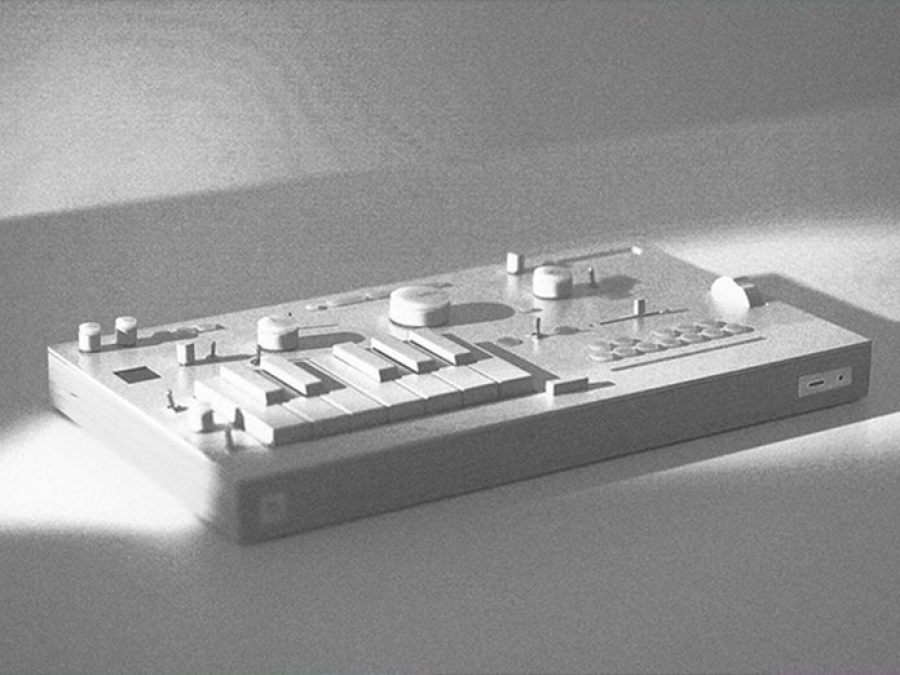
Nopia Is Finally Open for Pre-Orders, And It Might Just Give the Telepathic Orchid a Run for Its Money
The long-awaited Nopia MK1 is finally moving from viral prototype to real-world music hardware. After first appearing in 2023 and spending years in development, the unusual harmony-focused instrument has now opened its first production pre-orders through Kickstarter.
Designed by Argentine instrument makers Martin Grieco and Rocío Gal, Nopia takes a very different approach to playing chords, building progressions and exploring harmony. Rather than treating a keyboard as a collection of individual notes, Nopia is designed around the relationships between chords and tonal degrees.
That makes it particularly interesting for producers, songwriters and electronic musicians who enjoy instruments that can generate ideas rather than simply reproduce traditional keyboard layouts.
And there is an obvious comparison to make: Telepathic Instruments’ Orchid, another compact hardware instrument built around chord generation and creative exploration.
Nopia and Orchid are not identical products, but they occupy a remarkably similar creative territory. With Nopia now available to pre-order, the two instruments are likely to be compared extensively by musicians looking for a more intuitive way to explore harmony.
Here is everything you need to know about Nopia, its unusual workflow, its price, its features and how it compares with the Telepathic Orchid.
Nopia Has Finally Arrived After Three Years of Development
Nopia first attracted attention in 2023, when Grieco and Gal showed an early prototype created for a design competition.
The concept quickly spread online, turning an experimental-looking instrument into a viral piece of music technology. MusicRadar reported that the original prototype video attracted nearly three million views in a week, while Nopia's creators have since said the project has accumulated more than seven million YouTube views.
The journey from prototype to production hardware has taken several years.
According to the creators, development has involved industrial design, electronics, firmware and extensive prototyping. By July 2026, MusicRadar described the finished instrument as essentially complete.
Now the waiting period has ended.
Nopia's first production run launched through Kickstarter on September 15, 2026, with Super Early Bird pricing originally starting at $650 before taxes and shipping.
MusicTech reports that the Early Bird allocation subsequently sold through, with the Kickstarter Standard option priced at $699, compared with an advertised MSRP of $899.
What Exactly Is Nopia?
Nopia is best described as a semi-modular harmony generator with an onboard synthesizer and MIDI connectivity.
Its central idea is simple but unconventional: instead of approaching harmony primarily through individual notes, Nopia represents tonal relationships and chords through a dedicated interface.
The instrument features a single-octave layout, but that does not mean it functions like a conventional one-octave MIDI keyboard.
Each key represents a chord.
The creators explain that this single octave covers the chromatic scale while allowing users to access diatonic harmony, secondary dominants and modal interchange.
That design could make Nopia particularly appealing to musicians who want to experiment with harmonic movement without constantly thinking about individual notes and chord voicings.
It also means that the physical layout is fundamentally different from a piano.
The Chord Builder Is at the Heart of Nopia
Nopia's workflow revolves around several dedicated controls.
The Chord Builder allows users to establish the chord being played, while a 12-button Tonal Selector determines the tonal degree or harmonic context. An Extensions control can then add additional harmonic colour.
This is where Nopia's philosophy becomes particularly interesting.
Instead of asking a musician to remember which notes make up every possible chord, the interface lets them explore relationships between chords directly.
For songwriters, that can be an attractive way of generating progressions.
For electronic producers, it could also become a source of unexpected chord movements, pads and rhythmic harmonic patterns.
And because the instrument is designed for experimentation, the creators aren't positioning it simply as a shortcut for people who don't understand music theory.
Nopia's own FAQ says users don't need to know theory to play with the instrument, while musicians familiar with functional harmony may get additional value from its underlying system.
Nopia Combines Samples With Virtual Analog Synthesis
The hardware isn't merely a MIDI controller.
Nopia includes its own internal sound engine combining sample-based sounds with virtual-analog synthesis.
The engine is divided into four main sound modules:
- Keys
- Bass
- Arp
- Pad
These modules can be used independently and are routed into the instrument's effects and looping system.
That gives Nopia a more self-contained character than a conventional chord controller.
You can connect it to external synthesizers or a DAW through MIDI, but the instrument is also designed to be played on its own.
For musicians who like sitting down with hardware and immediately experimenting without opening a computer, that distinction could be important.
Multitouch Controls Add Expressive Performance
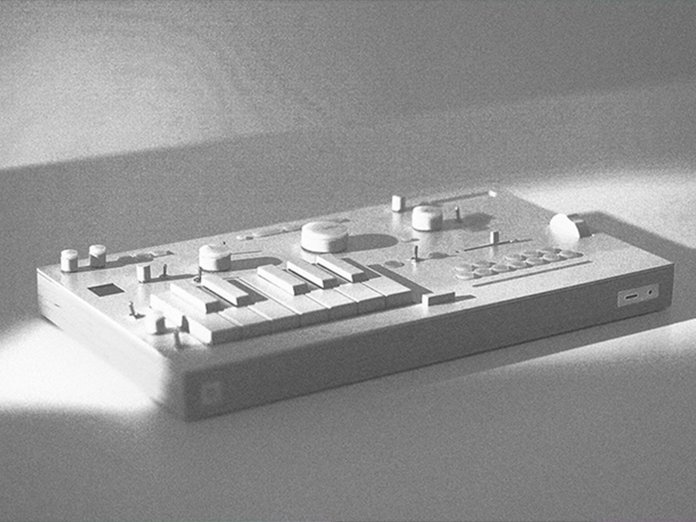
Another major part of Nopia's identity is its multitouch interface.
The instrument includes capacitive touch sensors that allow users to strum individual notes within chords, perform chromatic movements and introduce microtonal pitch bends.
That makes the device more than a chord-progression machine.
You can start with a complete harmonic structure and then interact with individual notes inside it.
The result is a workflow somewhere between a chord sequencer, synthesizer, MIDI controller and expressive performance instrument.
An OLED display provides chord monitoring and dynamic feedback for parameters, giving users additional information while playing.
Four Dedicated MIDI Outputs Could Be a Big Deal
Nopia also offers an unusually extensive MIDI setup for an instrument of its size.
It has four TRS MIDI outputs, with dedicated routing for the Keys/General, Bass, Arp and Pad modules. It also supports MIDI input, MIDI sync and clock input/output.
That means producers can potentially send different parts of Nopia's internal arrangement to different pieces of external hardware.
For example, the bass could control one synthesizer, the arpeggiator another, while the pad and keys are routed elsewhere.
There is also USB-C for power and MIDI, a sustain-pedal input, a ¼-inch master output and an ⅛-inch auxiliary output with a dedicated metronome.
For a compact instrument, that is a surprisingly flexible connectivity package.
Nopia Also Has a Master Effects Chain and Looper
The instrument's internal sounds don't stop at synthesis.
Nopia incorporates a master effects chain and looper, allowing musicians to develop ideas directly on the hardware. The documented effects include processing such as filtering, delay, reverb, saturation, tape-style processing and beat repeat.
That reinforces the instrument's role as an idea-generation device.
Instead of creating a chord progression and immediately transferring it into a DAW, you can potentially build a small musical sketch directly on Nopia.
This is particularly relevant in an era when hardware manufacturers are increasingly trying to make music-making feel more immediate and less dependent on computer screens.
Nopia vs Telepathic Orchid: Why the Comparison Makes Sense
The comparison with the Telepathic Instruments Orchid is almost unavoidable.
Orchid is also designed around chord generation and creative exploration rather than traditional keyboard performance.
Its single-octave velocity-sensitive keyboard determines the root note, while dedicated chord buttons establish chord types and modifiers add additional harmonic colour. Its two Voicing Dials allow musicians to move through chord inversions continuously.
Orchid also features three internal synthesizer engines, performance modes, looping, an onboard beat machine and MIDI output.
In other words, both instruments are trying to solve a similar creative problem:
How can hardware help musicians discover musical ideas without forcing them into a conventional keyboard workflow?
But their approaches are different.
Nopia puts a particularly strong emphasis on tonal degrees and harmonic relationships, while Orchid uses chord buttons, modifiers, voicing controls and Key Mode to help users navigate harmony.
That difference could matter more than the similarities.
The Orchid Already Has a Strong Creative Ecosystem
Telepathic Instruments has also been expanding the Orchid concept beyond the hardware itself.
Its Pistil software is available as a standalone sound-design application and as a VST3/AU plugin. It can be connected to Orchid for two-way sound editing and can also be used independently without the hardware.
Orchid itself includes three custom synth engines, more than 50 onboard presets, real-time looping, a beat machine and Key Mode.
That ecosystem gives Orchid a broader software component, while Nopia's current appeal is heavily tied to its hardware architecture and MIDI-focused workflow.
Nopia vs Orchid: Similar Idea, Different Instrument
It is tempting to frame Nopia and Orchid as direct competitors, but they are better understood as two different interpretations of the same broader movement.
Both are trying to make harmony more playable.
Both encourage experimentation.
Both reduce the emphasis on conventional piano technique.
Both are designed to help musicians escape repetitive songwriting patterns.
But the hardware layouts and underlying philosophies are distinct.
Nopia is especially interesting for producers who want to explore tonal relationships, independent musical modules and extensive external MIDI routing.
Orchid, meanwhile, combines chord generation with its own synth engines, voicing system, looping, beat-making and the expanding Pistil software ecosystem.
The choice therefore comes down less to which instrument has the longer feature list and more to which creative workflow makes sense for a particular musician.
Nopia's Price Makes the Launch Particularly Interesting
The pricing is another major reason Nopia is attracting attention.
The official Nopia website announced Super Early Bird pricing beginning at $650, before tax and shipping.
That initial allocation has already moved quickly. MusicTech reports that the Early Bird offers sold out, with the available Kickstarter Standard option priced at $699 and an MSRP of $899.
By comparison, Telepathic Instruments currently lists the Orchid ORC-1 at $649 USD, although its product page currently shows the unit as sold out.
That puts the two instruments remarkably close in price in the U.S. market.
It also makes the comparison more interesting for musicians who are genuinely deciding between them.
Nopia Is a Kickstarter Product, So There Is a Waiting Period
There is an important distinction between pre-ordering Nopia and buying an established retail synthesizer.
Nopia's first production batch is being funded through Kickstarter. The campaign is specifically intended to fund production of the first batch, meaning backers are supporting a hardware project rather than purchasing an immediately available mass-market product.
MusicTech reports that current Kickstarter information estimates fulfillment from May 2027.
That is worth keeping in mind for anyone considering a pledge.
The instrument may be generating enormous attention today, but the hardware won't necessarily be sitting in a warehouse ready to ship immediately.
The Kickstarter Response Has Been Huge
The response since launch has been substantial.
Nopia's Kickstarter campaign set a funding goal of $50,000, but reporting on September 17 indicated that the project had already attracted more than $1.4 million in pledges from more than 2,000 backers.
That is a significant response for a niche hardware instrument.
It suggests that the audience built around Nopia during its long development period did not disappear while the creators worked on the production version.
Instead, interest appears to have remained strong enough to turn a viral prototype into a heavily backed hardware project.
Why Nopia Could Be Important for Music Production
Nopia represents a broader trend in modern music technology.
For decades, electronic instruments have largely evolved around increasingly sophisticated versions of traditional interfaces: keyboards, pads, sequencers, drum grids and computer-based piano rolls.
But some newer instruments are asking a different question.
What if the interface itself could encourage musicians to think differently?
That is the philosophy behind products such as Nopia and Orchid.
Rather than simply making conventional playing easier, these instruments attempt to change the way musicians approach composition.
That can be valuable even for experienced producers.
A professional songwriter can know hundreds of chords and progressions and still fall into familiar habits. An unusual interface can introduce friction in some places while removing it in others, potentially leading to ideas that wouldn't have appeared on a standard keyboard.
Is Nopia the New Telepathic Orchid?
Not exactly.
Nopia and Orchid share enough DNA that comparisons are inevitable, but they are not interchangeable instruments.
Nopia's chord-degree architecture, four-module design, multitouch controls and extensive MIDI routing give it a distinctive identity.
Orchid's chord buttons, Voicing Dials, three synth engines, Key Mode, looping and beat-making features give it a different approach to the same creative challenge.
What makes the arrival of Nopia exciting is that musicians now have another serious hardware option for exploring harmony outside the traditional keyboard paradigm.
And with Nopia's Kickstarter already attracting more than $1.4 million in pledges, it is clear that there is an audience for this kind of instrument.
For producers, songwriters and gear enthusiasts, the most interesting question may not be whether Nopia beats Orchid.
It is whether instruments like these represent the beginning of a larger shift toward music hardware designed around ideas, exploration and harmonic discovery.
Nopia has spent three years getting from viral prototype to production-ready instrument.
Now that pre-orders are open, the real test begins: whether musicians can turn this unusual harmony machine into equally unusual music.
