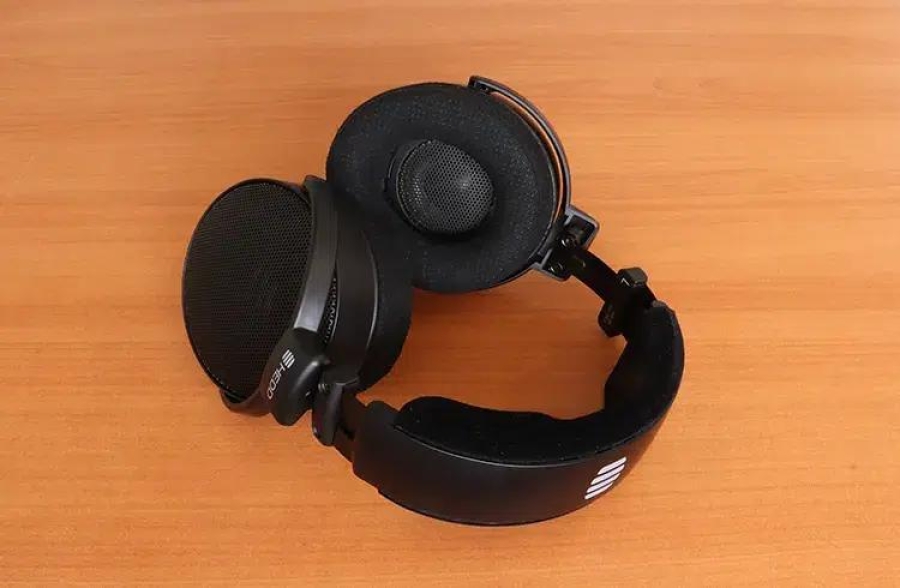
HEDD Audio’s HEDDphone D1 Are Near-Perfect Open-Back Headphones

In the ever-evolving world of audiophile gear, few products manage to disrupt expectations while still appealing to both professionals and enthusiasts. The HEDD Audio HEDDphone D1 is one of those rare releases. Positioned as a high-end open-back headphone, it combines cutting-edge material science with studio-grade tuning, and the result is something many reviewers are calling “near-perfect.”
But what exactly makes the HEDDphone D1 so special? Is it hype, or is this truly one of the best open-back headphones you can buy right now?
Let’s break it down.
A New Chapter for HEDD Audio

Before diving into the D1 itself, it’s important to understand the legacy behind it.
HEDD Audio is a Berlin-based company founded by Klaus Heinz, a pioneer in professional monitoring technology. The brand is best known for its work with Air Motion Transformer (AMT) drivers—technology that has shaped modern studio monitors.
Earlier HEDD headphones, like the original HEDDphone, also used AMT drivers. But the D1 represents a major shift: it’s the company’s first dynamic-driver headphone, signaling a move toward broader accessibility and usability.
This isn’t just a minor iteration—it’s a complete rethink of how HEDD approaches headphone design.
Revolutionary Technology: Thin-Ply Carbon Diaphragm


At the heart of the HEDDphone D1 lies its most groundbreaking feature: the Thin-Ply Carbon Diaphragm (TPCD).
This is the first time this material has ever been used in a dynamic headphone driver, making the D1 a true innovation in audio engineering.
So why does this matter?
- Ultra-lightweight construction enables faster movement
- High stiffness-to-weight ratio reduces distortion
- No need for traditional damping improves clarity and precision
Interestingly, this same type of carbon material is used in Formula 1 cars and even aerospace applications like NASA’s Mars helicopter—giving you an idea of its performance potential.
In simple terms:
👉 The driver responds faster, cleaner, and more accurately than traditional designs.
Sound Quality: Reference-Grade Performance


This is where the HEDDphone D1 truly shines.
1. Exceptional Clarity & Detail
The D1 delivers hyper-detailed treble and ultra-fast transients, revealing nuances that many headphones simply gloss over.
Every instrument feels separated and defined, making it ideal for:
- Mixing and mastering
- Critical listening
- Audiophile-grade music enjoyment
2. Neutral, Studio-Like Tuning
Unlike consumer headphones that boost bass or color the sound, the D1 is tuned for accuracy and balance.
- Mids are clean and forward
- Highs are detailed but controlled
- Bass is present but not exaggerated
This makes it perfect for professionals who need truthful audio reproduction.
3. Spacious Soundstage
Thanks to its open-back design, the D1 creates a wide, natural soundstage, giving music a sense of space and realism.
You don’t just hear music—you feel positioned inside it.
Comfort & Build Quality

High-end sound means nothing if you can’t wear the headphones for hours.
Thankfully, the D1 excels here, too.
- Weight: ~350g—light for its class
- Ear pads: Perforated velour for breathability
- Headband: Ergonomic and well-padded
- Build: Fully serviceable with replaceable parts
It’s designed for long studio sessions without fatigue, both physically and sonically.
Technical Specifications at a Glance
- Driver: Dynamic with Thin-Ply Carbon Diaphragm
- Design: Open-back, over-ear
- Frequency Range: 5 Hz – 40 kHz
- Impedance: 32Ω (easy to drive)
- Sensitivity: 100 dB
- Weight: 350g
These specs make it versatile enough for both:
- Studio setups
- High-end home listening systems
Pros and Cons
✅ Pros
- Outstanding clarity and detail
- Innovative carbon diaphragm technology
- Comfortable for long sessions
- Neutral, reference-grade tuning
- Excellent build quality and serviceability
❌ Cons
- Premium price point (~€699 / $799)
- Bass may feel restrained for casual listeners
- Some users may want slight EQ adjustments
- Strong competition in this price range
Who Are These Headphones For?
The HEDDphone D1 is not for everyone—and that’s by design.
Perfect for:
- Audio engineers and producers
- Audiophiles chasing accuracy
- Critical listeners who value detail
Not ideal for:
- Bass-heavy music lovers
- Casual listeners wanting “fun” tuning
- Wireless/portable users (these are wired only)
How It Compares to Competitors
The D1 sits in a highly competitive segment alongside models like:
- Sennheiser HD600/650 series
- Planar magnetic headphones from Audeze or HiFiMAN
What makes the D1 unique is its hybrid-like performance:
- The speed of planar headphones
- The natural tonality of dynamic drivers
Some reviewers even describe it as a potential “HD600 upgrade”—which is high praise in the audiophile world.
Real-World Listening Experience
In practical use, the HEDDphone D1 feels like a bridge between:
- Studio monitors
- High-end headphones
Music sounds:
- Clean, controlled, and precise
- Deeply immersive without artificial coloration
- Detailed without becoming fatiguing
Whether you're listening to orchestral scores, electronic music, or acoustic recordings, the D1 consistently delivers a balanced and revealing performance.
Why Reviewers Call It “Near-Perfect”


The phrase “near-perfect” isn’t used lightly.
Reviewers highlight a combination of:
- Top-tier sound quality
- Innovative engineering
- Comfort and usability
The only real drawbacks are minor—and mostly subjective:
- Slight EQ preferences
- Price sensitivity
When judged purely on performance, the D1 stands among the best in its class.
Final Verdict
The HEDD Audio HEDDphone D1 is a bold, forward-thinking headphone that successfully blends innovation with practicality.
It’s not just another audiophile release—it’s a statement:
👉 Dynamic drivers can still evolve
👉 Materials matter
👉 Accuracy and musicality can coexist
If you're looking for reference-grade open-back headphones that push boundaries without sacrificing usability, the D1 is absolutely worth your attention.
