


VinylCon Attendees Explain Why “Proper Ownership and Proper Preservation” Keep Them Hooked on Physical Music
As music consumption continues moving toward an increasingly digital, streaming-first future, vinyl records are proving that physical music is far from finished.
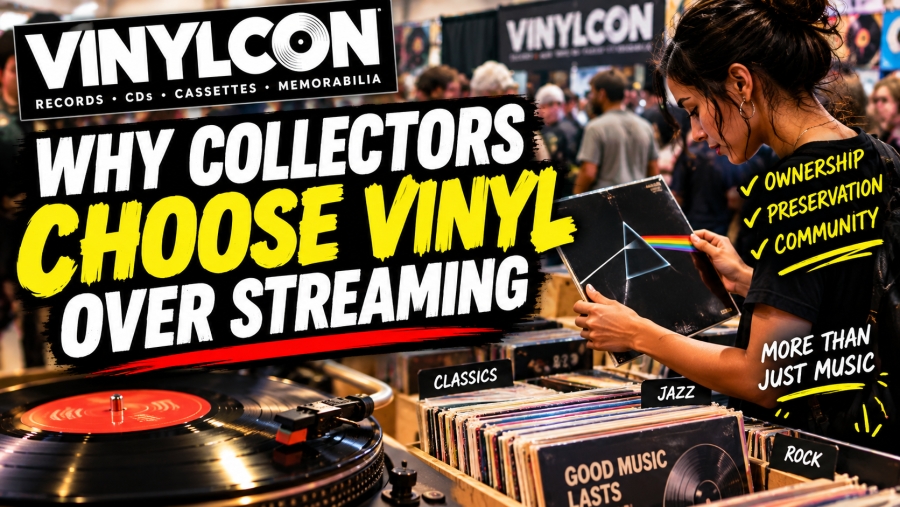
At VinylCon in Los Angeles, collectors, audiophiles, DJs, record dealers and casual music fans gathered around thousands of records, searching through crates for everything from rare pressings and vintage jazz to hip-hop classics and modern releases. More than 100 sellers took part in the August 2026 event, with the convention offering a mix of vinyl, CDs, cassettes, memorabilia and other physical media.
But what keeps people buying records in an age when virtually any song can be streamed instantly?
The answer isn't simply sound quality.
For some VinylCon attendees, it's ownership. For others, it's discovery, artwork, nostalgia, collecting, community or the simple pleasure of physically holding an album.
And for some, the most important word is preservation.
As one attendee put it, physical media provides “proper ownership” and “proper preservation” in a world where streaming platforms can change, remove or alter what listeners have access to.
VinylCon Shows That Physical Music Is Still Thriving
VinylCon's mission is explicitly centered around preserving the culture of music collecting and creating opportunities for tangible music discovery. The event describes itself as a community celebration focused on vinyl while also welcoming other recorded formats and music memorabilia.
That mission was on full display in Los Angeles.
The August edition featured more than 100 individual sellers and an enormous selection of records. Time Out described the event as featuring thousands of records from local and international dealers, ranging from rare pressings to inexpensive finds.
MusicTech reported that more than 150,000 records were available across the convention floor.
For anyone who believes streaming has made physical music irrelevant, walking into VinylCon would offer a very different picture.
Crates were packed with albums.
Collectors carried increasingly heavy bags.
DJs played records.
Dealers discussed pressings and artists.
And attendees searched through thousands of albums looking for something they couldn't simply find by typing a title into Spotify.
For Some Collectors, Vinyl Is About Ownership
One of the strongest themes emerging from conversations at VinylCon was that collecting isn't necessarily about having the best possible listening setup.
Doug Day, one of the convention's larger sellers, told MusicTech that he is primarily interested in collecting rather than listening. He compared records to the collectibles he enjoyed as a child, explaining that the attraction is discovering what people want and having those objects available for them.
That distinction is important.
The modern vinyl revival is often discussed as though everyone buying records is an audiophile chasing the ultimate analog listening experience.
That's simply not the case.
Some people collect records because they enjoy objects.
Others collect because albums represent specific moments in their lives.
Some want rare pressings.
Some want original artwork.
Some want first editions.
And others simply enjoy searching through boxes and discovering something unexpected.
Vinyl can therefore function as both a music format and a collectible.
You Don't Have to Be an Audiophile to Love Vinyl
Alex Rodriguez of Los Angeles record store Record Safari is another example.
Rodriguez has accumulated tens of thousands of records through years of collecting and selling, but he told MusicTech that he doesn't consider himself an audiophile. His primary motivation was learning about music rather than pursuing a particular physical format.
That's a fascinating contradiction.
Someone can own an enormous vinyl collection without being obsessed with expensive equipment.
And that helps explain why the vinyl revival is broader than the audiophile community.
For many listeners, vinyl isn't necessarily about frequency response, cartridge alignment or the perfect amplifier.
It's about engagement.
You find a record.
You pick it up.
You examine the cover.
You read the credits.
You put it on.
You turn it over.
You repeat the process.
Streaming removes many of those physical interactions.
Vinyl makes them part of listening.
The Physical Format Creates a Different Relationship With Music
Mimi Price, another VinylCon attendee, collects multiple forms of physical media, including vinyl, CDs, cassettes, VHS tapes and DVDs.
For Price, the attraction isn't exclusively vinyl.
It's physical media itself.
She explained that her interest has increasingly focused on the artistry surrounding physical formats rather than simply the music industry.
That perspective is becoming increasingly relevant as entertainment moves toward digital ownership models.
A streaming subscription gives you access.
A physical record gives you an object.
Those are not necessarily the same thing.
When you own a record, you can put it on your shelf and return to it years later without wondering whether a particular streaming service still has the rights to it.
That's where the idea of preservation becomes important.
“Proper Ownership” in the Streaming Era
One of the most striking observations from VinylCon came from Price, who discussed how digital services can potentially change the media people access.
Her argument was straightforward: streaming services can modify or remove content, while a physical copy remains the original object in the collector's possession.
This is one of the fundamental differences between physical media and streaming.
When you purchase a vinyl record, the content is fixed.
The album isn't going to receive a surprise remix because a streaming platform updated its catalog.
The artwork won't suddenly change.
The track listing won't be altered by an algorithm.
And the record won't disappear because a licensing agreement expired.
Physical media provides a degree of permanence.
That doesn't mean vinyl is indestructible. Records can scratch, warp or degrade when improperly stored.
But the owner has direct control over preservation.
And that control is becoming increasingly valuable to collectors.
Vinyl Is Also a Form of Music Preservation
Preservation goes beyond simply keeping a favorite album.
Collectors can preserve editions, artwork, liner notes, mastering choices and historical artifacts that might otherwise disappear.
An original pressing isn't necessarily identical to every later digital version.
Different pressings can contain different mastering decisions, packaging or mixes.
For collectors, those differences can be historically significant.
A record therefore becomes a physical document.
It captures a particular moment in the history of an artist, label or musical genre.
That's one reason rare records can become so valuable.
The collector isn't simply buying music.
They're acquiring a piece of musical history.
Vinyl Turns Music Discovery Into an Experience
Another major theme at VinylCon is discovery.
Streaming services are extraordinarily good at helping listeners find music.
But they discover music differently.
Algorithms recommend songs based on listening history, playlists and behavioral patterns.
Crate digging operates differently.
You might see an unfamiliar album cover.
You might recognize a record label.
A dealer might recommend something.
You might discover an artist because their album is sitting next to something you already love.
And sometimes you buy a record simply because you are curious.
Carlos Rojas, who has collected more than 1,100 records, told MusicTech that the physical nature of records initially attracted him. He enjoyed being able to hold an album and read the liner notes, which led him deeper into the musicians behind the recordings.
That eventually opened what collectors often describe as musical rabbit holes.
One artist leads to another.
One session musician leads to another record.
One label leads to an entire genre.
One album leads to an entire country's music scene.
The Album Cover Still Matters
Streaming has made album artwork smaller and less central to the listening experience.
Vinyl does the opposite.
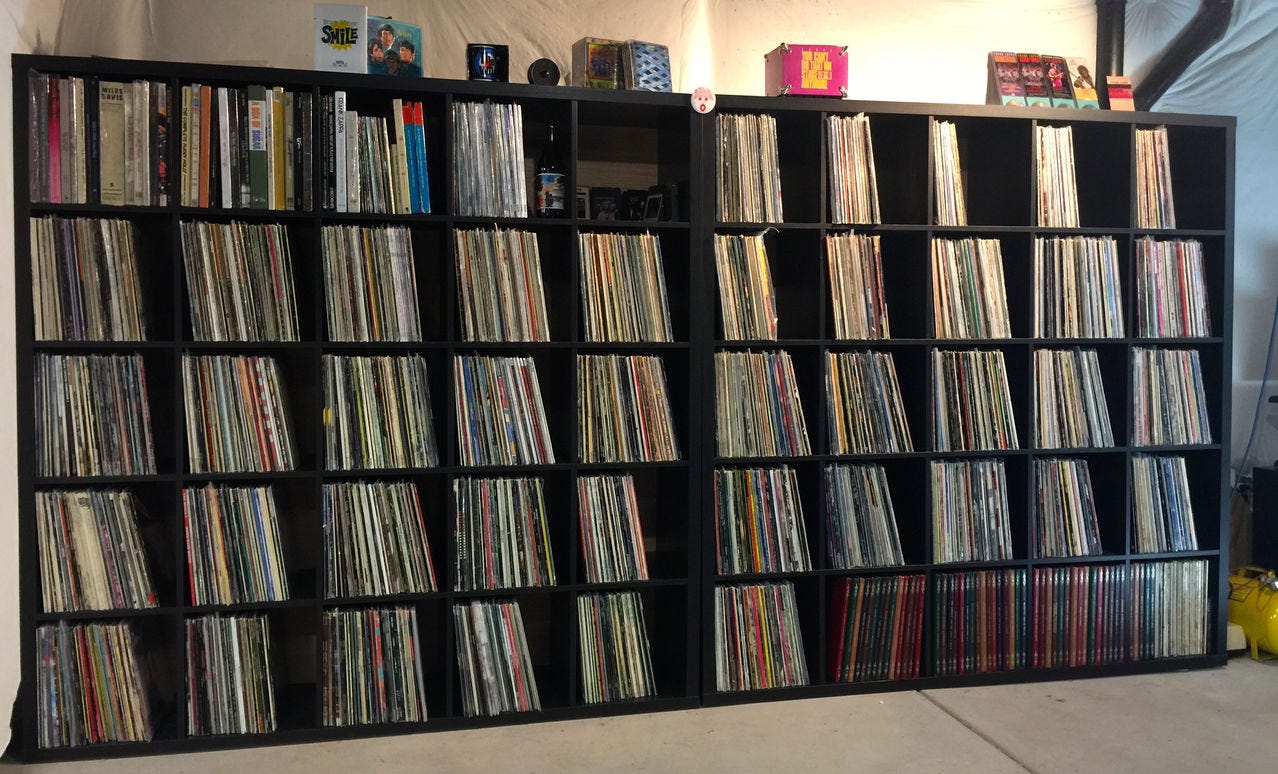
An LP sleeve is large enough to function as artwork.
Collectors can study the photography, typography, credits and design.
For artists, that physical presentation can become part of the identity of an album.
This is one reason modern vinyl releases have become popular even among people who primarily stream.
They might listen digitally but purchase vinyl as the physical representation of an album.
The record becomes something to display, hold and revisit.
Young Collectors Are Joining the Vinyl Revival
The current vinyl boom isn't limited to older listeners who remember buying records decades ago.
VinylCon founder Kobi Waldfogel has specifically noted the interest coming from younger people. When VinylCon made its New York debut earlier in 2026, Waldfogel described the event as designed to welcome “vinyl-curious” newcomers while still satisfying experienced collectors.
That's an important part of vinyl's current resurgence.
For younger listeners, buying a record isn't necessarily returning to a format they grew up with.
It's discovering something different.
A generation raised with streaming is experimenting with physical music precisely because it offers an experience streaming doesn't provide.
The format can feel slower, more intentional and more personal.
From Bedroom Decoration to Serious Listening
Caneatra Wilson's story illustrates how quickly a casual interest can become a genuine hobby.
She initially bought five records to decorate her dorm room.
But eventually, the records started to feel like they were waiting to be played.
“I actually need to play these records!” she told MusicTech.
That realization led her to purchase a proper turntable and eventually build a substantial collection. By the time she attended VinylCon, she had purchased a complete Sony system and was considering adding another turntable so she could begin DJing.
Her journey is revealing.
The vinyl experience doesn't necessarily begin with audiophile equipment.
It can start with a record cover.
Then comes curiosity.
Then a turntable.
Then better speakers.
Then more records.
And suddenly, someone who never considered themselves an audiophile is building a dedicated listening setup.
The Audiophile Side of Vinyl Is Growing Too
While VinylCon isn't exclusively an audiophile event, serious listening remains an important part of its culture.
Waldfogel, the convention's founder, is a dedicated audiophile and collector. His current setup includes a Thorens TD 124 turntable, an HH Scott tube amplifier and Klipsch Forte speakers — a system worth roughly $19,500 based on online prices cited by MusicTech.
His experience reflects another part of the vinyl journey.
People often start with an affordable turntable.
Then they learn more.
They discover better cartridges.
They explore different amplifiers and speakers.
They compare pressings.
They become more interested in mastering.
Eventually, the equipment becomes part of the hobby.
Waldfogel told MusicTech that this progression is common among collectors who become more serious about listening.
The Record Player Is Becoming Part of the Experience Again
Michael Palermo of Amoeba Music has also noticed increasing interest in hi-fi equipment.
He pointed to growing curiosity around turntables and speakers, as well as the emergence of hi-fi bars that introduce listeners to more involved listening experiences.
This suggests that the vinyl revival isn't necessarily stopping at record collecting.
It can lead to a renewed interest in how music sounds.
Someone might initially buy a record because they like the cover.
Then they discover the difference between a basic suitcase player and a proper hi-fi system.
Suddenly, the listening environment becomes part of the hobby.
Vinyl Creates a Community That Streaming Can't Reproduce
Perhaps the biggest difference between physical music and streaming is social.
A streaming platform is primarily an individual experience.
Vinyl collecting is often communal.
Record fairs bring people together.
Record stores create conversations.
Collectors trade recommendations.
DJs share discoveries.
Dealers tell stories about where records came from.
And people can physically see what other listeners are interested in.
VinylCon embodies that community aspect.
The event includes DJs, food, drinks, vendors and collectors, turning record shopping into a social experience rather than simply a transaction.
That community is one reason physical music continues to survive.
Vinyl Doesn't Have to Replace Streaming
The resurgence of vinyl shouldn't necessarily be interpreted as a rejection of streaming.
Many collectors use both.
They might stream music while driving, use playlists at work and listen to records at home.
Streaming provides convenience.
Vinyl provides ownership and ritual.
The two formats can coexist.
In fact, that's probably the most realistic picture of the future of music consumption.
People don't necessarily want to choose between convenience and physical ownership.
They want both.
The Bigger Picture for the Music Industry
Vinyl's continued popularity demonstrates that the music industry is no longer operating under a simple physical-versus-digital model.
Instead, different formats serve different purposes.
Streaming is about accessibility.
Vinyl is about ownership and collecting.
CDs offer another form of physical ownership.
Cassettes have become niche collectibles.
Digital downloads can provide permanent files without physical storage.
And live events provide the communal experience that none of those formats can fully replicate.
VinylCon's success shows that physical music can remain commercially relevant even when streaming dominates everyday listening.
Why Physical Music May Remain Important
The strongest argument for vinyl may ultimately be psychological rather than technical.
People like owning things.
They like collecting.
They like displaying objects.
They like discovering something unexpected.
They like having memories attached to physical possessions.
And they like knowing that something they purchased cannot simply disappear from their shelf because a company changed its catalog.
That's what the phrase “proper ownership and proper preservation” captures so effectively.
For many collectors, the record isn't merely a way to hear an album.
It's the album.
Final Thoughts
VinylCon offers a fascinating snapshot of where physical music stands in 2026.
At a time when consumers increasingly access entertainment through subscriptions and online platforms, thousands of people continue to search through crates for records they can hold, own and preserve.
And their reasons are surprisingly diverse.
Some are audiophiles chasing better sound.
Some are collectors hunting rare pressings.
Some are interested in album artwork and liner notes.
Some simply love discovering new music.
Others see physical media as a way of preserving culture in a world where digital catalogs can change.
What unites them is the belief that music can be more than a stream.
It can be an object.
It can be history.
It can be artwork.
It can be a memory.
And it can be something you genuinely own.
That may explain why, despite decades of predictions that physical music would disappear, vinyl remains remarkably resilient.
The future of music may be digital, but VinylCon demonstrates that the desire to own music physically isn't going anywhere.
