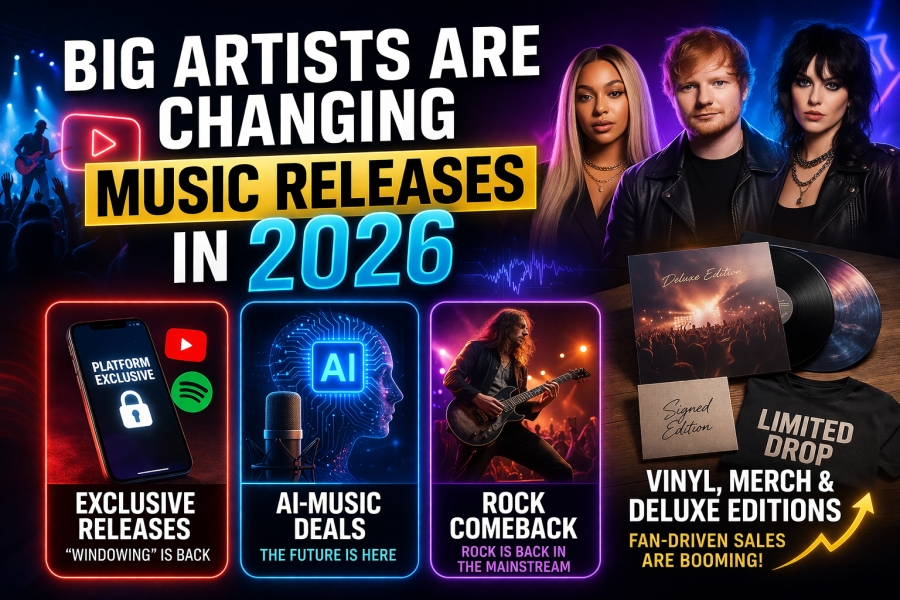
Big Artists Are Changing How Music Is Released in 2026 – And the Industry Will Never Be the Same
The music industry has always evolved, but the changes happening right now are far bigger than a simple trend. In 2026, some of the biggest artists in the world are completely transforming how music is released, promoted, and monetized. Traditional release strategies are being replaced by smarter, more creative, and more artist-driven approaches.
For independent artists, producers, and music marketers, this shift is not just interesting — it’s extremely important. Because what big artists do today often becomes the standard for the entire industry tomorrow.
In this article, we will explore how major artists are changing the traditional release system, why platform-exclusive releases are making a comeback, how AI-music deals are reshaping the future, why rock music is returning to the mainstream, and why physical sales such as vinyl and deluxe editions are becoming more powerful than ever.
The Traditional Music Release Model Is Disappearing
For decades, the music release process followed a simple structure:
- Announce the single
- Release it on all platforms at the same time
- Push it through radio and streaming playlists
- Release the album a few months later
This system worked perfectly in the CD era and even in the early days of streaming. But in 2026, this approach is becoming outdated. Today’s audience consumes music differently. Fans expect content instantly, they want something unique, and they respond more strongly to creative release strategies than standard promotional campaigns.
Because of this, big artists are experimenting with new release methods that focus on exclusivity, storytelling, and fan engagement rather than just numbers.
Platform-Exclusive Releases Are Becoming Popular Again
One of the biggest changes in the music industry right now is the return of platform-exclusive releases. Instead of releasing music everywhere at the same time, artists are now choosing to release songs or videos exclusively on a single platform first.
For example, an artist may release a music video only on YouTube for the first week. Another artist may release a new track exclusively on a streaming platform before making it available globally. This strategy is often called “windowing,” and it is becoming increasingly common.
Why are artists doing this?
The answer is simple: exclusivity creates excitement.
When fans know that a song is only available in one place, they are more likely to engage with it immediately. It creates urgency, increases views, and helps the artist control the attention cycle rather than relying completely on algorithms.
This is especially powerful in the age of social media. When something is exclusive, people talk about it more. It becomes a moment rather than just another release.
Artists Are Focusing More on Strategy Than Speed
In the past, releasing music quickly was often the main goal. Artists wanted to stay active and release as many songs as possible. But in 2026, the focus is shifting from speed to strategy.
Instead of releasing music every few weeks without a plan, big artists are carefully designing how each release will work. They are thinking about:
- Which platform should get the first release
- When the music video should drop
- How social media content should support the release
- Whether the release should be connected to a bigger project
This approach makes each release feel more important. Instead of disappearing after a few days, songs now stay relevant for longer because they are part of a bigger strategy.
For independent artists, this is actually good news. It means success is no longer just about releasing more music — it’s about releasing smarter music.
AI-Music Deals Are Changing the Future of Releases
Another major shift in the music industry is the growing influence of artificial intelligence. While AI has already been used for production tools and sound design, it is now becoming part of major artist deals.
Some artists are experimenting with AI-generated vocals, AI-assisted songwriting, and even AI collaborations. Instead of seeing AI as a threat, many big artists are using it as a creative tool that helps them release more music in new and interesting ways.
This is creating a completely new type of release strategy. Imagine an artist releasing:
- A human-created version of a song
- An AI-remixed version
- An alternative AI-generated version with a different style
This allows one song to become multiple releases. It also keeps fans engaged for longer because each version feels new.
In 2026, AI is not replacing artists — it is helping them expand their creativity and release music in ways that were impossible before.
The Comeback of Rock Music Is Influencing Release Strategies
One of the most surprising trends right now is the comeback of rock music. For years, pop, hip-hop, and electronic music dominated the charts. But in 2025 and 2026, rock music is slowly returning to the mainstream.
Why is this happening?
Many fans are starting to feel tired of overly polished music. Rock music feels more emotional, more real, and more powerful. Because of this, big artists are experimenting with rock-influenced sounds even if they originally came from other genres.
This shift is also changing how music is released. Rock fans often care more about albums than singles. They want full projects, strong storytelling, and meaningful releases rather than random songs every few weeks.
Because of this, some artists are returning to album-based release strategies. But this time, they are doing it in a modern way by mixing streaming releases with creative marketing campaigns.
Fan-Driven Physical Sales Are Stronger Than Ever
While streaming continues to grow, physical music sales are becoming more important again — especially for big artists. Vinyl records, deluxe album editions, signed merchandise, and collectible physical releases are now a huge part of modern music marketing.
Why is this happening?
Because fans no longer just want music. They want something they can own.
Streaming makes music easy to access, but it also makes it feel temporary. Physical releases feel special. They create a stronger emotional connection between the artist and the fan.
Big artists understand this very well. Instead of releasing a standard album, they now release:
- Limited edition vinyl versions
- Deluxe box sets
- Signed album copies
- Special fan-only merchandise
These physical releases are not just products. They are experiences. And in 2026, experiences are more valuable than ever.
Deluxe Editions Are Becoming a Powerful Marketing Tool
Another major trend is the return of deluxe album editions. But unlike the past, deluxe editions are no longer released months later without a plan. Today, they are part of the original release strategy.
An artist may release a standard album first and then release a deluxe version shortly after with new songs, remixes, or alternative versions. This keeps the album alive for a longer period and helps it stay visible in streaming charts.
Deluxe editions also give artists a chance to experiment. They can release songs that are more creative or different without affecting the main album concept.
For fans, deluxe editions feel exciting because they provide more content. For artists, they create a second wave of attention. This is why deluxe releases are becoming one of the most powerful tools in modern music marketing.
Social Media Is Now More Important Than the Release Itself
Another reason why release strategies are changing is the power of social media. Platforms like TikTok, Instagram, and YouTube Shorts are now just as important as streaming platforms.
In fact, many songs become popular on social media before they even become popular on streaming platforms. Because of this, big artists are designing their releases specifically for social media success.
Instead of just releasing a song, they now create:
- Short teaser videos
- Behind-the-scenes clips
- Fan-interaction campaigns
- Visual storytelling content
This makes the release feel bigger and more exciting. It also helps the song reach new audiences faster.
In 2026, music is no longer just audio. It is content, storytelling, and emotional connection combined.
Independent Artists Can Learn a Lot From These Changes
The most interesting thing about these new release strategies is that they are not only for big artists. Independent artists can use the same ideas on a smaller scale.
For example, an independent artist can:
- Release a song exclusively on one platform first
- Create a limited-edition digital release
- Release multiple versions of the same track
- Use social media storytelling instead of expensive promotion
These strategies do not require huge budgets. They only require creativity and planning.
This means the gap between independent artists and big artists is becoming smaller. Today, success is more about smart marketing than expensive marketing.
The Future of Music Releases Will Be More Creative Than Ever
Looking ahead, it is clear that the traditional release model will continue to disappear. Instead of standard releases, we will see more creative and more experimental strategies.
Artists will continue to experiment with:
- Exclusive platform releases
- AI-powered music versions
- Deluxe album expansions
- Limited-edition physical products
- Fan-driven marketing campaigns
This is not a temporary trend. It is a complete transformation of the music industry.
And the artists who understand these changes early will have a huge advantage.
Final Thoughts
The way music is released in 2026 is very different from how it worked even five years ago. Big artists are no longer relying on the traditional release system. Instead, they are using smarter strategies that focus on exclusivity, creativity, and fan engagement.
Platform-exclusive releases, AI-music deals, the comeback of rock music, and the rise of fan-driven physical sales are all signs that the music industry is entering a new era.
For independent artists, this is actually an exciting opportunity. Because success is no longer controlled only by record labels or massive budgets. Today, artists who understand strategy, storytelling, and audience connection have a real chance to grow faster than ever before.
The future of music releases will not belong to the biggest artists. It will belong to the smartest ones.
