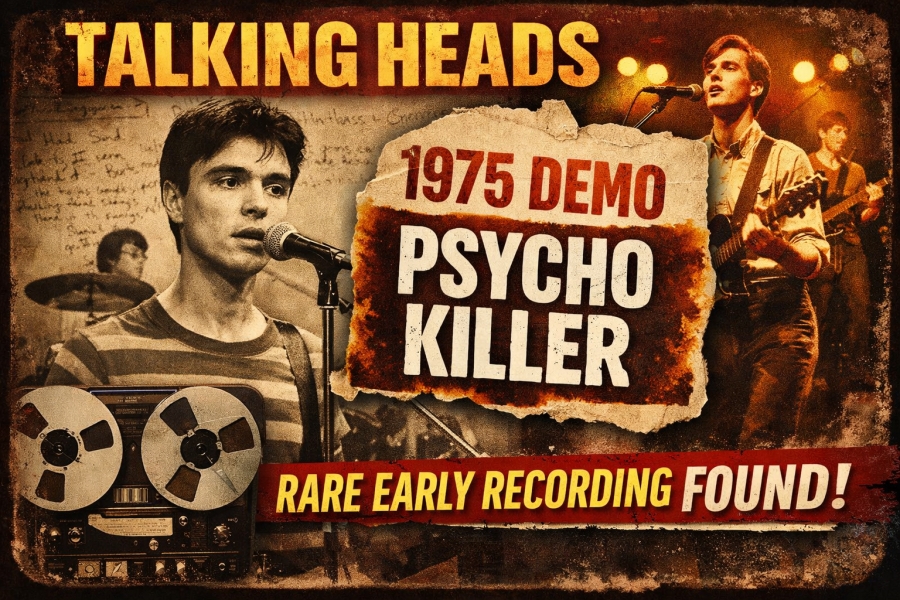
Talking Heads Share Raw 1975 “Psycho Killer” Demo — A Treasure for Fans and Music Historians Alike
In the world of classic rock and new wave, few songs have had the enduring mystique and influence of “Psycho Killer” by Talking Heads. First released in 1977, this track quickly became the band’s signature hit and a defining moment in post-punk music. Recently, a previously unheard raw 1975 demo of “Psycho Killer” was shared online — and it’s generating huge excitement among fans, collectors, and music historians. This demo captures the song in its earliest form — before it was polished, produced, and released — offering a rare glimpse into the creative process of one of the most innovative bands of the era.
In this blog, we’ll explore:
-
🔥 What the demo is and where it came from
-
🎸 Why this discovery matters so much
-
🧠 What it tells us about Talking Heads’ creative evolution
-
🎧 How the demo differs from the final version
-
📈 What music historians and fans are saying
-
📌 SEO keywords and best practices included throughout
Let’s dive in.
What Is the “Psycho Killer” 1975 Demo?
The recently shared 1975 demo of Talking Heads’ “Psycho Killer” is a rough, unpolished version of the song recorded early in the band’s career. This version was recorded before Talking Heads signed to a major label and before the song became the classic track featured on their 1977 debut album Talking Heads: 77.
This demo was unearthed from the archives of the Rhode Island School of Design (RISD), where band members David Byrne and Chris Frantz were students in the early 1970s. At that time, the group was still experimenting with its sound and had not yet formed the full lineup that would later include Tina Weymouth and Jerry Harrison.
The demo is part of a larger collection — Tentative Decisions: Demos & Live, a series of early recordings, alternate takes, and live performances spanning 1974–1976. These recordings illuminate the band’s raw energy and evolving style before they became household names.
Why This Demo Is Such a Big Deal
For most fans, hearing a raw early version of a beloved song is like uncovering buried treasure. But the significance goes beyond mere nostalgia:
1. It Offers a Rare Look at the Creative Process
Most hit songs go through years of development before reaching their final form. But rarely do fans get to hear these early iterations. The 1975 demo allows listeners to:
-
👂 Hear the song stripped back to its basics
-
🎶 Notice structural differences from the album version
-
🎸 Appreciate the early musical choices that shaped the final hit
This isn’t just a remix — it’s a piece of rock history.
2. It Captures Talking Heads Before Fame
Recorded years before Talking Heads signed with Sire Records and before their first album was released, this version reflects a band still discovering its identity. The demo captures the raw experimentation and edgy creativity that would later define the band’s sound.
3. It’s a Collector’s Dream
Archival releases like this — especially ones tied to landmark anniversaries — are gold for collectors. Whether on limited-edition vinyl or digital release, demos like this register high on rarity and cultural value.
A Brief History of “Psycho Killer”
Before we analyze the demo itself, it helps to understand where “Psycho Killer” fits in music history.
Originally written in the early 1970s, “Psycho Killer” was first performed by David Byrne and Chris Frantz’s college band The Artistics. Prototype versions were played live as early as late 1975. Later, after Jerry Harrison joined the group and Tina Weymouth solidified the band’s lineup, the song was included on the band’s debut album Talking Heads: 77, released in December 1977.
The song’s theme — a dark, introspective dive into the mind of a disturbed individual — combined with an irresistible rhythm and an unforgettable bassline, helped it stand out among a generation of post-punk songs blending art rock, funk, and new wave.
Over the years, “Psycho Killer” has become one of the Rock & Roll Hall of Fame’s “500 Songs That Shaped Rock and Roll”, illustrating its lasting cultural impact.
How the 1975 Demo Differs From the Final Version
While the studio version of “Psycho Killer” that most fans know is refined and rhythmically tight, the 1975 demo is far more rough-hewn — which is part of its charm.
Here are some key ways the two versions differ:
🎙️ Raw Vocal Delivery
Early demos often feature vocals recorded live in one take, sometimes with minimal overdubs or effects. The raw demo’s vocal performance is more direct and less polished than the studio version, giving insight into Byrne’s early lyrical interpretation.
🎸 Simpler Instrumentation
The demo lacks some of the layered production that defines the album version. Instead, it showcases the basic rhythm, bass, and guitar parts that formed the song’s backbone.
🎧 Authentic Early Sound
Without studio enhancements, the demo captures the band’s live energy and the sound of their collaboration before they had access to professional production resources.
🧠 Song Structure Variations
While the core elements — like the iconic bassline and eerie lyrical motifs — are present, the demo may feature alternate arrangements, extended sections, or improvised elements that were later refined for the album.
What This Says About Talking Heads’ Creative Evolution
One of the most fascinating things about hearing a demo is witnessing the growth of a song from its embryonic form into a polished classic. In the case of “Psycho Killer”, the 1975 demo underscores several key aspects of Talking Heads’ early development:
🎯 Experimentation Over Perfection
The demo is less about precision and more about capturing a moment of musical exploration. At this stage, Talking Heads were still defining their identity — a blend of art-school counterculture, punk urgency, and rhythmic innovation.
🎵 Collaboration Takes Shape
Although the earliest recordings were often just Byrne and Frantz, this demo highlights how crucial collaboration was to Talking Heads’ evolution. Collective input — especially from Tina Weymouth — shaped the song into the version that would become iconic.
🪩 Influences Before Style Solidified
Unlike later works with producer Brian Eno that leaned into atmospheric textures, this early demo reflects a band rooted in the raw energy of New York’s underground music scene.
Fan and Historian Reactions
The response to the demo’s release has been overwhelmingly enthusiastic:
-
Long-time fans appreciate hearing familiar elements in a brand-new historic context.
-
Music historians point to the significance of hearing the song’s early development before Talking Heads fully formed their signature sound.
-
Collectors and vinyl enthusiasts are excited about the demo’s inclusion in the Tentative Decisions compilation, a collector’s item tied to Record Store Day and archival preservation.
Many have commented that the demo captures something almost lost in time — the moment when one of rock’s most influential songs was merely an idea being hammered out on tape. This raw authenticity resonates because it highlights the tension, creativity, and breakthroughs that go into making lasting music.
Conclusion: Why the 1975 Demo Matters Today
The discovery and online sharing of the 1975 “Psycho Killer” demo is a significant cultural moment. It connects fans to the roots of a song that has shaped musical history and offers rare insight into the early days of a band that helped define an era.
Whether you’re a die-hard Talking Heads fan, a musician curious about creative evolution, or a music historian documenting the arc of modern rock, this demo provides a unique auditory snapshot that enriches our understanding of how great music is made.
For a song as iconic and influential as “Psycho Killer”, hearing where it began isn’t just interesting — it’s essential.
