Spotify Trials AI-Powered “Prompted Playlist” Feature: A New Era of Personalized Music Discovery
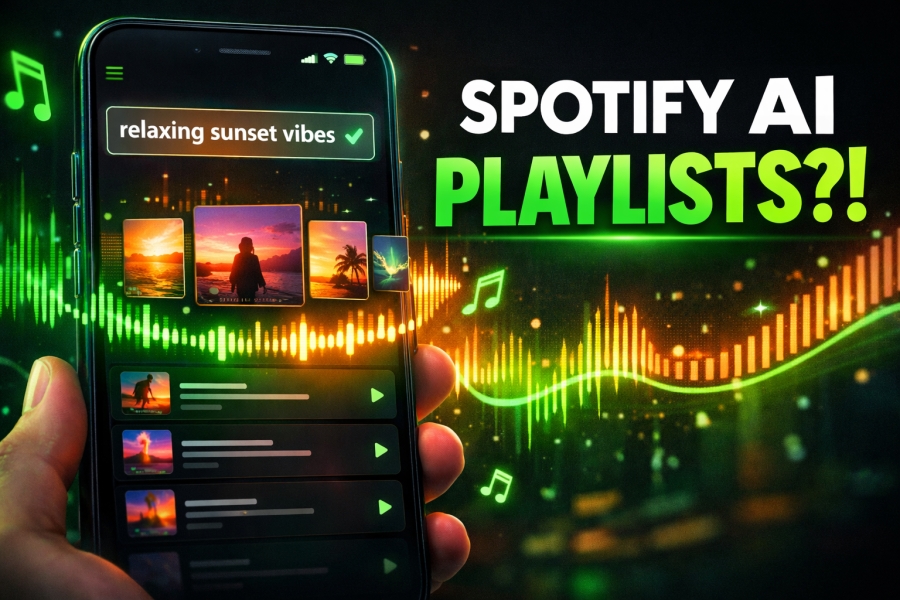
Spotify is once again redefining how people discover music. The streaming giant is currently testing a new AI-powered “Prompted Playlist” feature, allowing Premium users to generate playlists simply by typing a mood, emotion, or idea — such as “relaxing sunset vibes”, “late-night drive through the city”, or “dark techno energy.”
If rolled out globally, this feature could dramatically change how listeners interact with music, shifting discovery from manual searching and algorithmic guessing to direct, conversational creativity powered by artificial intelligence.
In this article, we’ll explore what Spotify’s Prompted Playlist feature is, how it works, why it matters, and what it means for listeners, artists, and the future of music personalization.
What Is Spotify’s AI-Powered Prompted Playlist Feature?
Spotify’s Prompted Playlist feature introduces a text-based input system where users describe what they want to hear, and Spotify’s AI curates a playlist based on that prompt.
Instead of browsing genres, searching artists, or relying on pre-made playlists, users can simply type something like:
-
“Chill beats for studying at night”
-
“Emotional indie songs for heartbreak”
-
“High-energy gym music with heavy bass”
-
“Relaxing sunset vibes by the beach”
Spotify’s AI then instantly generates a custom playlist that matches the prompt.
This marks a significant evolution in Spotify’s personalization strategy — moving from passive recommendation to active user-driven discovery.
Who Can Use the Prompted Playlist Feature?
At the moment, Spotify is testing the feature with select Premium users. This limited rollout suggests Spotify is gathering real-world data, refining results, and measuring engagement before a broader launch.
Key points:
-
Available only to Spotify Premium users
-
Currently in trial or beta testing
-
Likely rolling out gradually by region
Spotify has a long history of testing features quietly before launching them globally, so wider availability is likely if feedback remains positive.
How the AI Prompted Playlist Feature Works
While Spotify hasn’t revealed all technical details, the core workflow is intuitive and user-friendly.
Text Prompts Drive Music Discovery
Users simply type a prompt describing:
-
Mood
-
Emotion
-
Scenario
-
Energy level
-
Genre blend
The AI interprets these inputs and builds a playlist using Spotify’s massive music catalog.
AI + Spotify’s Recommendation Engine
Spotify’s AI combines:
-
Natural language processing (NLP)
-
Listening history
-
Saved tracks and liked artists
-
Global listening trends
This allows playlists to feel both personal and contextually accurate, rather than random.
Dynamic and Editable Playlists
Generated playlists are not static. Users can:
-
Refresh results
-
Add or remove tracks
-
Save playlists to their library
Over time, Spotify’s AI learns from these interactions, improving future recommendations.
Why Spotify’s Prompted Playlist Feature Is a Big Deal
Spotify already excels at personalization — so why does this matter?
From Passive to Conversational Discovery
Traditional recommendations rely on algorithms predicting what you might like. Prompted playlists allow users to tell Spotify exactly what they want.
This makes discovery:
-
Faster
-
More intentional
-
More creative
It turns Spotify into a music assistant, not just a streaming app.
Perfect for Mood-Based Listening
Music is deeply emotional. Prompted playlists tap directly into how people actually use music — for moments, moods, and memories.
Whether it’s:
-
Studying
-
Working out
-
Driving
-
Relaxing
-
Feeling nostalgic
Users can generate playlists that match the moment perfectly.
How This Compares to Existing Spotify Features
Spotify already offers powerful discovery tools, but this feature goes further.
Spotify Wrapped and Daily Mixes
These reflect past listening behavior. Prompted playlists focus on present intent.
Discover Weekly and Release Radar
These are algorithmically curated but not user-directed. Prompted playlists are user-initiated and contextual.
AI DJ Feature
Spotify’s AI DJ narrates and recommends music. Prompted playlists allow users to control the direction of recommendations.
Together, these features show Spotify’s deep commitment to AI-driven personalization.
The Role of AI in Music Streaming’s Future
Spotify’s move is part of a broader trend.
Conversational Interfaces Are Taking Over
Users now expect to interact with technology using natural language. From search engines to virtual assistants, typing or speaking intentions is becoming the norm.
Music discovery is no exception.
AI Understands Emotion Better Than Ever
Modern AI systems are increasingly capable of interpreting:
-
Emotional language
-
Contextual nuance
-
Abstract ideas
This allows Spotify to map words like “dreamy, “dark,” or “uplifting” to specific musical traits.
What This Means for Listeners
For listeners, the benefits are huge.
Faster Discovery
No more endless scrolling. Type what you feel, press enter, and start listening.
More Personal Experiences
Two users typing the same prompt may receive different playlists based on their taste, making the experience feel uniquely personal.
Reduced Decision Fatigue
Choosing what to listen to can be overwhelming. Prompted playlists simplify that process dramatically.
What This Means for Artists and Labels
AI-driven discovery doesn’t just affect listeners — it reshapes the industry.
More Opportunities for Niche Artists
Mood-based prompts can surface songs that don’t fit mainstream playlists but perfectly match specific vibes or emotions.
Metadata and Context Matter More Than Ever
Artists and labels may need to focus more on:
-
Mood tagging
-
Genre accuracy
-
Emotional descriptors
Songs that align well with prompts could gain more visibility.
Algorithmic Transparency Questions
As AI takes a larger role, artists will want clarity on how songs are selected and ranked within AI-generated playlists.
Potential Concerns and Criticism
While exciting, the feature raises important questions.
Echo Chambers and Repetition
If AI relies too heavily on listening history, users may receive playlists that feel repetitive rather than exploratory.
Spotify will need to balance familiarity and discovery.
Data Privacy
AI-driven personalization relies on user data. Transparency around how prompts and preferences are used will be crucial.
Impact on Human Curators
Spotify employs human editors for many playlists. AI tools may change how human curation fits into the ecosystem.
How This Could Change Music Consumption Habits
Prompted playlists could subtly reshape listening behavior.
-
Less searching, more prompting
-
More moment-based listening
-
Shorter time between intent and playback
Music becomes something you ask for, not something you hunt for.
When Will Prompted Playlists Launch Globally?
Spotify has not announced an official release date.
However, based on:
-
Current Premium testing
-
Previous feature rollouts
-
Rapid AI investment
A wider rollout in 2026 is highly likely.
Spotify often expands successful tests quickly, especially features that boost engagement.
How Spotify Stays Ahead of Competitors
Streaming competition is fierce, with Apple Music, YouTube Music, and Amazon Music all investing in AI.
Spotify’s advantage lies in:
-
Massive user data
-
Advanced recommendation systems
-
Willingness to experiment early
Prompted playlists reinforce Spotify’s reputation as the most innovative music streaming platform.
The Bigger Picture: AI and the Personalization Economy
Spotify’s AI-Prompted Playlist feature isn’t just about music — it reflects a larger shift toward hyper-personalized digital experiences.
Users want:
-
Control
-
Speed
-
Relevance
AI makes that possible at scale.
Final Thoughts
Spotify’s AI-powered Prompted Playlist feature represents a major leap forward in music discovery. By allowing users to describe emotions and ideas in their own words, Spotify is transforming playlists from static collections into dynamic, conversational experiences.
For listeners, it means better music, faster.
For artists, it means new discovery paths.
For Spotify, it strengthens its position as the leader in AI-driven streaming innovation.
Music discovery is no longer about searching — it’s about expressing how you feel and letting AI do the rest.
