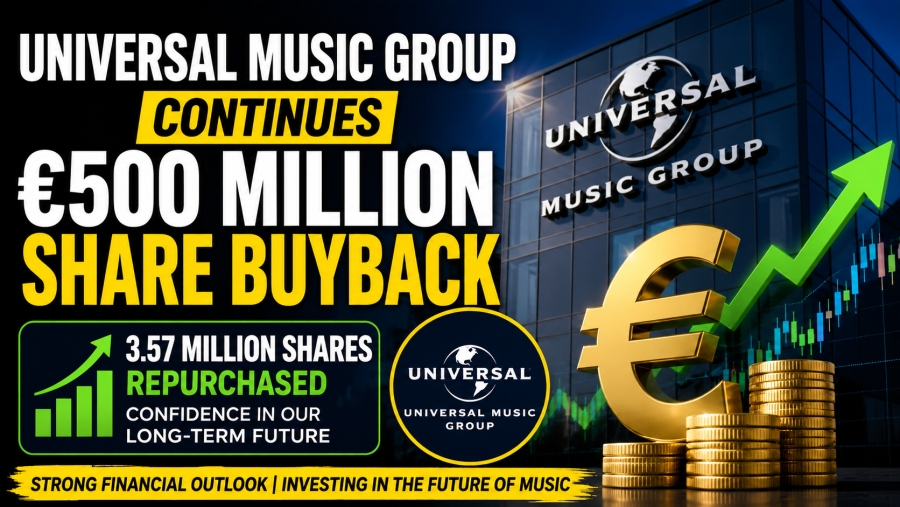
Universal Music Group Continues €500 Million Share Buyback, Signaling Strong Confidence in the Future of the Music Industry
The global music business continues to demonstrate remarkable financial strength, and one of the clearest examples is Universal Music Group's ongoing €500 million share buyback program. The company has announced that it has repurchased an additional 3.57 million shares, reinforcing its commitment to delivering long-term value to shareholders while highlighting confidence in its future growth strategy.
The announcement arrives during a period of continued expansion for the global music industry. Streaming subscriptions continue to rise, publishing revenues remain healthy, licensing opportunities are expanding, and artificial intelligence is opening entirely new discussions surrounding music creation and rights management. Against this backdrop, Universal Music Group (UMG) is sending a strong message to investors: the company believes its future remains exceptionally bright.
For artists, investors, music executives, and independent labels alike, the buyback program represents much more than a financial transaction. It provides valuable insight into how one of the world's largest entertainment companies views its own future.
What Is Universal Music Group's Share Buyback Program?
A share buyback, also known as a stock repurchase, occurs when a company purchases its own shares from the public market.
Rather than issuing additional shares, the company reduces the total number of outstanding shares available. This often increases each remaining shareholder's ownership percentage while potentially improving earnings per share (EPS).
Universal Music Group previously announced a €500 million share repurchase program, and the latest update confirms that another 3.57 million shares have now been bought back.
This demonstrates that the company continues to execute its long-term capital allocation strategy while maintaining confidence in its financial position.
Why Companies Buy Back Their Own Shares
Share buybacks are one of the most common financial strategies among successful global corporations.
Companies typically launch buyback programs for several reasons:
-
Returning excess capital to shareholders
-
Increasing earnings per share
-
Improving shareholder value
-
Demonstrating confidence in future growth
-
Offsetting dilution from employee stock compensation
-
Optimizing capital structure
Rather than allowing excess cash to remain unused, companies often prefer investing back into themselves when management believes their shares are undervalued.
For investors, this can often be interpreted as a positive signal regarding management's expectations for future performance.
Universal Music Group's Strong Financial Position
Universal Music Group remains the largest music company in the world, representing thousands of artists across virtually every genre.
Its business extends far beyond simply releasing music.
UMG generates revenue through multiple divisions, including:
Recorded Music
This remains the company's largest source of revenue, driven by streaming services, physical music sales, digital downloads, synchronization licensing, and other commercial partnerships.
Music Publishing
Universal Music Publishing Group represents songwriters and composers whose work generates royalties from streaming, radio, television, film, advertising, gaming, and live performances.
Merchandising
Through artist merchandise, branding partnerships, and direct-to-consumer initiatives, UMG continues expanding revenue beyond traditional music sales.
Licensing
Licensing music for movies, television, commercials, video games, social media platforms, and user-generated content has become increasingly valuable.
Artist Services
Universal has significantly expanded artist development, marketing, data analytics, branding, and global promotional services.
This diversified business model helps provide consistent revenue even during changing market conditions.
Streaming Continues to Fuel Growth
One of the biggest reasons behind Universal Music Group's financial confidence is the continued expansion of music streaming worldwide.
Subscription streaming has become the dominant method of music consumption.
Millions of new listeners continue joining streaming platforms every year, creating recurring monthly revenue that provides greater financial predictability than previous business models.
Streaming also allows older catalog music to continue generating revenue decades after its original release.
Classic albums from legendary artists now earn millions of streams annually alongside today's biggest hits.
This long-tail revenue model has fundamentally transformed the economics of the music business.
The Power of Music Catalogs
Universal Music Group owns or controls one of the largest collections of music rights in history.
These catalogs generate revenue every day through:
-
Spotify streams
-
Apple Music plays
-
YouTube usage
-
TikTok content
-
Instagram Reels
-
Facebook videos
-
Television broadcasts
-
Movie soundtracks
-
Commercial advertisements
-
Live performances
-
Public venues
-
Gaming integrations
Every licensed use contributes to long-term recurring income.
Unlike many industries where products quickly lose value, successful songs can remain commercially valuable for generations.
This makes music rights some of the entertainment industry's most attractive long-term assets.
Investor Confidence Remains High
The continuation of the buyback program reflects management's belief that Universal Music Group remains well-positioned for sustained growth.
Investors often view ongoing repurchase programs as a sign that executives believe their company's shares represent good value.
While no investment is without risk, consistent buybacks generally indicate confidence rather than caution.
The latest repurchase reinforces UMG's commitment to balancing shareholder returns with continued investment in artists and innovation.
Artificial Intelligence Is Creating New Opportunities
Although AI has introduced new copyright challenges throughout the music industry, it has also created opportunities.
Universal Music Group has taken an active role in discussions surrounding responsible AI development.
The company continues working with technology companies to establish licensing frameworks that fairly compensate artists, songwriters, and rights holders.
As AI-generated content becomes more common, companies controlling large music catalogs may find additional licensing opportunities emerging across new digital platforms.
Rather than resisting innovation entirely, Universal appears focused on ensuring creators remain protected while embracing technological advancement.
Continued Investment in Artists
Financial strength enables Universal Music Group to continue investing heavily in artist development.
Major investments include:
-
Global marketing campaigns
-
International expansion
-
Social media promotion
-
Data-driven audience analytics
-
Touring support
-
Brand partnerships
-
Creative services
-
Recording infrastructure
-
Producer collaborations
-
Songwriting development
Strong cash flow allows Universal to support both established superstars and emerging talent.
This creates a cycle where successful artists generate revenue that helps fund the discovery of future stars.
Why This Matters for Independent Artists
Although Universal Music Group is one of the world's largest record companies, its financial performance often reflects the overall health of the music industry.
When major labels continue investing confidently, independent artists can also benefit.
Healthy industry growth typically leads to:
-
Increased streaming investment
-
Better licensing opportunities
-
More technology innovation
-
Improved marketing tools
-
Expanded distribution services
-
Greater competition among music platforms
Independent musicians now have access to many of the same global distribution channels previously reserved for major labels.
As the industry expands, opportunities continue to grow for creators at every level.
Challenges Still Remain
Despite Universal's positive financial outlook, the music industry continues facing important challenges.
These include:
AI Copyright Protection
Determining how AI companies should license copyrighted music remains one of the industry's biggest debates.
Royalty Distribution
Artists continue advocating for more transparent and equitable royalty systems.
Streaming Economics
Although streaming has transformed the business, discussions continue regarding artist compensation.
Market Competition
Major labels compete not only with each other but also with independent distributors, creator platforms, and direct-to-fan business models.
Successfully navigating these challenges will be essential for sustaining long-term growth.
Looking Ahead
Universal Music Group's continued execution of its €500 million share buyback program demonstrates confidence in both its own financial position and the broader future of the global music industry.
With streaming revenues remaining strong, music publishing continuing to expand, licensing opportunities increasing, and new technologies creating fresh commercial possibilities, the company appears well-positioned for continued growth.
The repurchase of another 3.57 million shares is more than simply a financial headline—it reflects management's belief that Universal Music Group's long-term strategy remains on solid footing.
For investors, it represents confidence.
For artists, it signals continued investment in creative talent.
For the music industry, it reinforces the idea that music rights remain among the world's most valuable entertainment assets.
As consumer demand for music continues growing across streaming services, social media, gaming, film, and emerging digital experiences, Universal Music Group is positioning itself to remain at the center of the global music ecosystem.
While challenges surrounding AI, copyright, and evolving business models will continue shaping the industry, Universal's latest move suggests the company expects the future of music to be every bit as profitable—and perhaps even more innovative—than its past.
The €500 million share buyback program is therefore more than a financial initiative. It is a statement of confidence in the enduring value of music, the resilience of the entertainment industry, and the company's belief that investing in itself today will continue generating returns well into the future.
