


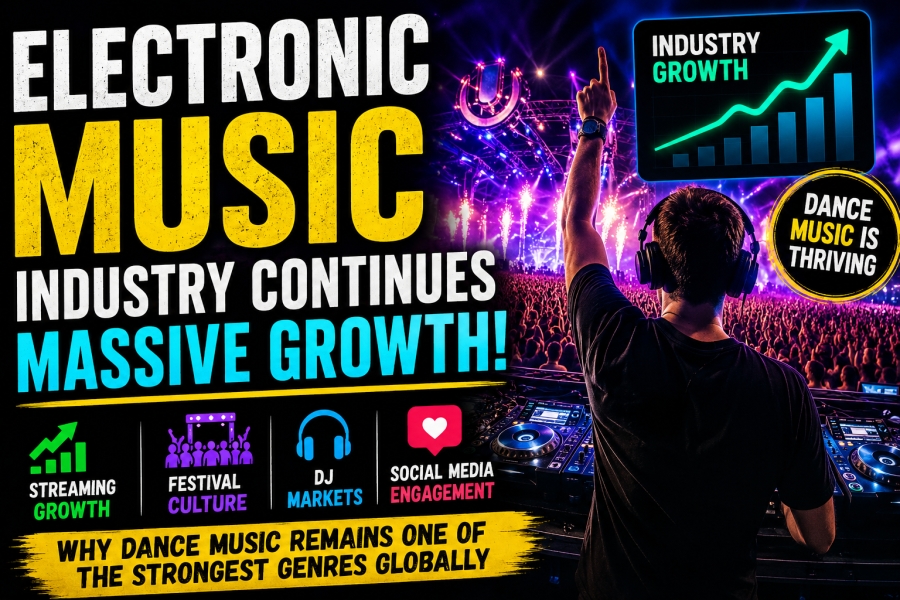
Electronic Music Industry Continues Massive Global Growth in 2026
The global electronic music industry is showing no signs of slowing down. According to the latest IMS Business Report, electronic music continues experiencing massive worldwide growth driven by streaming expansion, festival culture, DJ markets, social media engagement, gaming integration, and the increasing globalization of dance music culture.
What was once considered a niche underground movement has now evolved into one of the most commercially powerful genres in the modern music industry. From massive festivals and sold-out stadium tours to TikTok trends and streaming domination, electronic music has become a global entertainment force.
Industry analysts now say dance music remains one of the strongest genres commercially, with millions of fans consuming electronic music daily across streaming platforms, social media apps, clubs, festivals, gaming environments, and live events worldwide.
The electronic music boom is no longer simply a trend. It has become one of the defining movements shaping the future of the music business.
The IMS Business Report Highlights Massive Industry Expansion
The annual IMS Business Report has become one of the most respected sources for tracking electronic music industry growth worldwide. The latest report paints a picture of a rapidly expanding global ecosystem fueled by digital innovation, streaming technology, youth culture, and international audience growth.
According to analysts, electronic music revenue continues increasing across multiple sectors simultaneously, including:
- Music streaming
- Live events and festivals
- DJ performances
- Music production software
- Social media engagement
- Gaming collaborations
- Brand sponsorships
- Creator economies
- Independent artist distribution
This multi-platform expansion has helped electronic music evolve far beyond traditional club culture.
Electronic music now influences nearly every part of mainstream entertainment.
Streaming Platforms Are Driving Electronic Music Growth
Streaming has become one of the biggest reasons electronic music continues growing globally.
Platforms like Spotify, Apple Music, YouTube, and SoundCloud have transformed how listeners discover dance music.
Unlike traditional radio formats, streaming platforms allow fans to instantly explore countless subgenres including:
- House
- Techno
- Drum & Bass
- Trance
- Dubstep
- Afro House
- Melodic Techno
- Future Bass
- Progressive House
- Hardstyle
- Lo-fi electronic
- EDM crossover music
Playlist culture has been especially important.
Electronic music performs extremely well in algorithm-based playlists because the genre naturally fits:
- Workout playlists
- Party playlists
- Study playlists
- Gaming playlists
- Relaxation playlists
- Festival playlists
- Travel playlists
This constant integration into daily listening habits helps electronic tracks generate massive streaming numbers worldwide.
Festival Culture Continues Exploding Worldwide
One of the biggest drivers behind electronic music’s commercial success is global festival culture.
Electronic dance music festivals have evolved into massive entertainment experiences attracting millions of fans every year. Events now combine music, social media culture, immersive visuals, fashion, influencer marketing, and digital engagement into one global ecosystem.
Major festivals continue dominating international tourism and entertainment markets, including:
- Tomorrowland
- Ultra Music Festival
- EDC Las Vegas
- Creamfields
- Awakenings
- Untold Festival
- Coachella
- Burning Man
These events generate enormous revenue not only for the music industry but also for:
- Hotels
- Airlines
- Restaurants
- Tourism sectors
- Fashion brands
- Technology companies
- Beverage sponsors
Festival culture has become deeply connected to youth identity and social media behavior.
For many fans, attending major electronic music festivals is no longer simply about the music. It is about the full experience.
DJs Are Becoming Global Superstars
Another major reason for electronic music’s growth is the rise of DJs as mainstream celebrities.
Years ago, DJs often remained behind the scenes while singers and bands dominated public attention. Today, electronic music producers and DJs headline stadiums, festivals, and global tours while building massive personal brands.
Artists like:
- Martin Garrix
- David Guetta
- Calvin Harris
- Charlotte de Witte
- Peggy Gou
- Fred again..
- Skrillex
- Tiësto
- Armin van Buuren
- Fisher
have become globally recognized entertainment figures.
Many DJs now earn millions annually through:
- Touring
- Streaming royalties
- Brand deals
- Merchandise
- Sponsorships
- Social media partnerships
The DJ market itself has become a massive business sector within the global music industry.
TikTok and Social Media Are Fueling Dance Music Virality
Social media platforms continue playing a massive role in electronic music’s rise.
Apps like TikTok, Instagram, and YouTube have become essential tools for electronic music discovery.
Dance music naturally performs well on short-form video platforms because of its:
- High energy
- Strong drops
- Emotional build-ups
- Viral remix potential
- Dance challenge compatibility
TikTok has especially become a major force in breaking electronic records globally.
Songs can now explode overnight through:
- Viral dance trends
- Festival clips
- DJ performance videos
- Meme edits
- Lifestyle content
- Gym videos
- Travel content
This social-first environment allows electronic music to spread faster than ever before.
Electronic Music Is Becoming More Global Than Ever
One of the most important trends highlighted in the IMS Business Report is the globalization of electronic music.
Electronic music is no longer dominated solely by Europe and North America. Emerging markets are now becoming major contributors to the genre’s growth.
Regions experiencing rapid electronic music expansion include:
- Latin America
- Asia
- Africa
- The Middle East
- India
- Eastern Europe
Local electronic scenes are blending regional influences with international dance music styles, creating entirely new sounds and subgenres.
For example:
- Afro House continues to explode globally.
- Latin electronic crossover music is expanding rapidly.
- Indian electronic producers are gaining international recognition.
- Middle Eastern melodic house sounds are becoming increasingly popular.
Streaming platforms allow artists from virtually anywhere in the world to reach global audiences instantly.
Gaming and Electronic Music Are Becoming Closely Connected
Gaming culture has also become heavily linked to electronic music.
Electronic tracks are now widely used in:
- Esports broadcasts
- Video game soundtracks
- Livestreams
- Twitch content
- Online multiplayer experiences
- Virtual concerts
The energetic and immersive nature of dance music makes it particularly effective for gaming environments.
Games like Fortnite have already hosted virtual music events featuring electronic artists, while streaming creators regularly use EDM and electronic instrumentals during gameplay broadcasts.
This crossover between gaming and electronic music is helping introduce younger audiences to the genre at earlier ages.
Music Production Technology Is More Accessible Than Ever
Technology has dramatically lowered barriers for aspiring electronic music producers.
Modern software platforms like:
- FL Studio
- Ableton Live
- Logic Pro
- Cubase
- Studio One
allow creators to produce professional-quality music from home studios.
This accessibility has created an explosion of independent electronic artists worldwide.
Unlike traditional band-based genres that often require expensive studio setups, electronic music can now be produced with relatively affordable equipment.
As a result:
- More producers are entering the industry
- Independent releases are increasing
- Online collaboration is expanding
- Genre experimentation is accelerating
The democratization of music production has become one of electronic music’s greatest strengths.
Independent Artists Are Thriving in Electronic Music
Electronic music has historically been more open to independent artists compared to some mainstream genres.
Many electronic producers build careers without major label backing through:
- Streaming platforms
- Social media growth
- DJ performances
- Independent distribution
- YouTube channels
- Patreon communities
- Sample pack sales
- Online fan engagement
Platforms like Beatport and Bandcamp continue helping independent electronic artists monetize their work directly.
This independence is especially attractive for younger creators who want more creative control over their careers.
Dance Music Remains One of the Strongest Commercial Genres
Industry analysts continue emphasizing that electronic music remains one of the strongest commercial genres globally.
The genre performs exceptionally well because it integrates naturally into multiple entertainment industries simultaneously:
- Fitness
- Fashion
- Gaming
- Social media
- Nightlife
- Advertising
- Streaming
- Festivals
- Travel culture
Electronic music also adapts quickly to changing audience trends.
Unlike some genres that rely heavily on traditional album cycles, electronic music thrives in singles culture, remix culture, playlist culture, and live performance environments.
This flexibility gives electronic music strong long-term commercial sustainability.
Challenges Facing the Electronic Music Industry
Despite massive growth, the electronic music industry still faces challenges.
Some concerns include:
- Festival oversaturation
- Rising ticket prices
- Mental health issues among touring DJs
- Streaming royalty concerns
- AI-generated music competition
- Event safety regulations
- Social media dependency
As electronic music becomes more commercialized, some fans also worry about underground scenes losing authenticity.
However, the genre has repeatedly proven its ability to evolve and reinvent itself over time.
The Future of Electronic Music Looks Extremely Strong
Looking ahead, industry experts expect electronic music to continue growing globally throughout the next decade.
Several trends are expected to drive future expansion:
- Virtual reality concerts
- AI-assisted music production
- Global streaming growth
- Gaming integration
- International collaborations
- Creator economy expansion
- Social media discovery
- Immersive festival technology
Electronic music’s adaptability remains one of its biggest strengths.
The genre continuously evolves alongside technology, internet culture, fashion, gaming, and youth trends. This allows it to remain highly relevant in rapidly changing digital environments.
Final Thoughts
The latest IMS Business Report confirms what many fans and industry insiders already suspected: electronic music is stronger globally than ever before.
Driven by streaming growth, festival culture, social media engagement, gaming integration, DJ superstardom, and international expansion, the electronic music industry continues evolving into one of the world’s most powerful entertainment sectors.
What began decades ago in underground clubs has transformed into a massive global movement influencing mainstream culture across nearly every platform imaginable.
And based on current trends, the future of electronic music may only be getting started.
