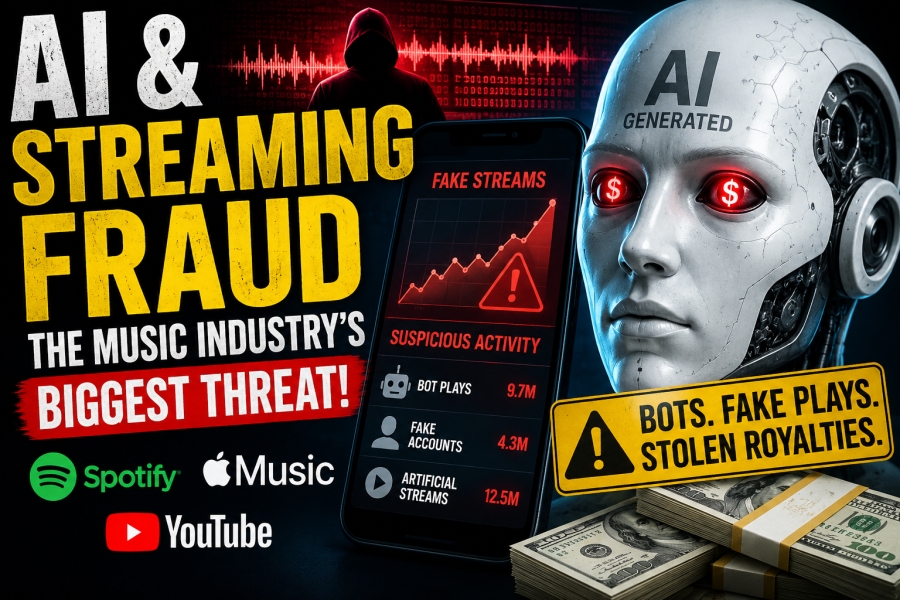
AI and Streaming Fraud Remain Major Concerns for the Music Industry in 2026
The modern music industry is facing one of the biggest technological challenges in its history. As artificial intelligence continues transforming how music is created, distributed, and consumed, streaming platforms and record labels are now fighting a growing wave of streaming fraud, fake plays, bot manipulation, and AI-generated content flooding digital services.
Companies like Spotify, Apple Music, YouTube, and major record labels are reportedly investing heavily in advanced detection systems designed to identify fraudulent activity and protect legitimate artist royalties.
What was once a relatively simple streaming ecosystem has evolved into a highly complex digital battlefield where algorithms, bots, AI-generated songs, fake listeners, and automated engagement systems are creating serious problems across the music business.
For artists, labels, and streaming platforms alike, the stakes are enormous.
The Growing Problem of Streaming Fraud
Streaming fraud has become one of the music industry’s most urgent problems.
At its core, streaming fraud involves artificially inflating streaming numbers through unethical or illegal methods. This can include:
- Automated bots generating fake plays
- Click farms repeatedly stream songs
- Purchased playlist placements
- Artificial listener manipulation
- Fake accounts are inflating engagement metrics
- Organized streaming farms
The goal is usually financial gain, chart manipulation, algorithm boosting, or increased visibility on streaming platforms.
Because streaming revenue is directly tied to play counts, fraudulent streams can distort royalty payments and unfairly redirect money away from legitimate artists.
For years, industry insiders have warned that fake streams are quietly draining millions of dollars from the music ecosystem.
Now, with AI technology accelerating rapidly, the problem is becoming even more difficult to control.
How AI Is Changing the Music Industry
Artificial intelligence is transforming music creation faster than many experts predicted.
AI tools can now:
- Generate songs
- Clone voices
- Produce instrumentals
- Write lyrics
- Master tracks
- Create cover art
- Simulate artists
- Generate entire albums automatically
Some AI music tools are designed to help artists work more efficiently and creatively. However, others are being used to mass-produce low-quality content specifically designed to exploit streaming algorithms.
This creates a dangerous situation for streaming platforms.
Thousands of AI-generated tracks can now be uploaded quickly and cheaply, overwhelming recommendation systems and potentially diverting royalties away from real musicians.
Industry experts fear that without stronger protections, streaming platforms could become flooded with algorithmically generated “content spam.”
Why Fake Streams Hurt Real Artists
Many casual listeners underestimate how damaging streaming fraud can be.
Streaming revenue works through a shared royalty pool system. This means that fraudulent streams can effectively steal money from legitimate artists by taking a larger portion of available payouts.
For independent musicians already struggling to earn a sustainable income, this issue is especially serious.
When bots generate fake streams:
- Royalties become distorted
- Charts become unreliable
- Discovery algorithms become manipulated
- Real artists lose visibility
- Listener trust decreases
Smaller artists often suffer the most because they lack the financial power and industry influence needed to compete against artificially inflated numbers.
Meanwhile, some fraudulent operators profit by exploiting loopholes in streaming systems.
Spotify and Apple Music Fight Back
Streaming companies are becoming increasingly aggressive in their fight against fraud.
Spotify has reportedly expanded its fraud detection systems using machine learning and behavioral analysis tools capable of identifying suspicious activity patterns.
These systems monitor:
- Unusual streaming spikes
- Repetitive listening behavior
- Geographic inconsistencies
- Fake account activity
- Bot-driven engagement
- Abnormal playlist traffic
Similarly, Apple Music and other platforms are reportedly strengthening verification processes and internal monitoring systems designed to detect manipulation attempts before fraudulent streams impact payouts.
Record labels are also investing heavily in anti-fraud technology partnerships and analytics systems.
The goal is not just protecting revenue, but also maintaining trust in the streaming ecosystem itself.
The Rise of AI-Generated Music Spam
One of the music industry’s newest fears is the rise of AI-generated “music spam.”
This refers to massive amounts of automatically generated songs uploaded primarily to exploit algorithms rather than provide meaningful artistic value.
Some operators reportedly use AI tools to create:
- Ambient tracks
- Lo-fi music
- Sleep sounds
- Fake instrumental albums
- Generic mood playlists
- AI-generated vocals
These tracks are often uploaded at massive scales across streaming services.
Because AI dramatically reduces production costs, bad actors can generate hundreds or thousands of tracks quickly. Even if each track earns only small amounts of streaming revenue, the combined scale can create significant profits.
Industry executives worry that this trend could:
- Flood recommendation systems
- Reduce visibility for human artists
- Lower content quality overall
- Damage listener trust
- Create oversaturation problems
As AI tools improve, distinguishing human-created music from machine-generated content may become increasingly difficult.
The Debate Around AI Music
Not all AI-generated music is viewed negatively.
Many artists and producers are embracing AI as a creative tool rather than a replacement for human artistry.
AI can help musicians:
- Brainstorm ideas
- Speed up workflows
- Enhance production quality
- Generate creative inspiration
- Improve mastering
- Create demos faster
Some producers compare AI tools to previous technological revolutions like synthesizers, digital audio workstations, or autotune.
However, the biggest concerns arise when AI is used deceptively or exploitatively.
Problems emerge when:
- AI clones artist voices without permission
- Fake songs impersonate real musicians
- AI content floods streaming services
- Fraudulent uploads manipulate royalties
- Bots artificially inflate AI-generated tracks
The debate is no longer simply about technology. It is about ethics, ownership, transparency, and fairness.
Voice Cloning Raises Serious Questions
One of the most controversial developments in AI music involves voice cloning technology.
AI systems can now recreate artist voices with remarkable realism. This has already led to viral fake songs that imitate famous musicians without their consent.
Several AI-generated tracks using cloned celebrity voices have already spread across the internet, generating millions of plays before being removed.
This creates enormous legal and ethical concerns.
Artists are increasingly worried about:
- Unauthorized voice replication
- Identity theft
- Copyright violations
- Brand damage
- Lost income
- Fake collaborations
Record labels are pushing for stronger regulations surrounding voice likeness rights and AI-generated impersonations.
As technology improves, these concerns are expected to grow dramatically.
Why Streaming Platforms Face a Difficult Challenge
Streaming companies are in an extremely difficult position.
On one hand, platforms want to encourage innovation and allow artists to experiment with AI creatively. On the other hand, they must prevent abuse, fraud, and manipulation.
This balancing act is becoming increasingly complex because AI-generated content is not always easy to identify.
Unlike obvious spam or fake accounts, advanced AI music can sometimes sound surprisingly convincing.
Platforms must now determine:
- What qualifies as authentic artistry
- How AI-generated music should be labeled
- Whether AI tracks deserve royalties
- How to detect fraudulent uploads
- How to protect human creators
These questions are shaping the future of digital music distribution.
The Financial Stakes Are Massive
The streaming economy is worth billions of dollars annually.
Music streaming now dominates global music consumption, making royalty systems critically important for artists, labels, publishers, and platforms alike.
Any large-scale fraud or manipulation threatens the financial stability of the industry.
Industry analysts believe fake streaming operations may already account for substantial percentages of total platform activity in certain genres or regions.
If left unchecked, streaming fraud could:
- Reduce advertiser trust
- Harm subscription growth
- Damage chart credibility
- Undermine artist's confidence
- Create unfair market conditions
This is why streaming platforms are investing heavily in detection systems, moderation teams, and AI-based fraud prevention technologies.
Independent Artists Face the Biggest Risks
Independent musicians are particularly vulnerable in this evolving landscape.
Unlike major labels with large marketing budgets and direct platform relationships, independent artists often rely entirely on algorithmic discovery to reach audiences.
If algorithms become flooded with fake engagement and AI-generated spam, smaller artists may struggle even more to gain visibility.
Many independent creators already feel frustrated by:
- Low royalty payouts
- Oversaturated platforms
- Playlist gatekeeping
- Discovery challenges
- Fake engagement competition
The rise of AI-generated music and streaming fraud adds another obstacle to an already difficult industry environment.
Governments and Regulators May Step In
As AI music technology continues evolving, governments and legal authorities may eventually introduce stricter regulations.
Possible future regulations could include:
- Mandatory AI labeling
- Voice likeness protections
- Stronger copyright enforcement
- Anti-bot legislation
- Streaming transparency requirements
- Platform accountability rules
Some industry experts believe regulation is inevitable as AI-generated content becomes increasingly widespread.
However, implementing global standards may prove difficult because streaming platforms operate internationally across different legal systems.
The Future of Music in the AI Era
Despite growing concerns, many experts believe AI itself is not the enemy.
The real issue is how the technology is used.
AI has the potential to become an incredible creative tool that empowers artists, enhances production, and expands musical possibilities. But without ethical safeguards and strong anti-fraud protections, the technology could also create serious economic and artistic problems.
The music industry is now entering a critical transitional period where platforms, labels, artists, and lawmakers must work together to establish new standards.
The outcome could shape the future of music for decades.
Final Thoughts
The battle against streaming fraud and AI-generated manipulation has become one of the defining challenges of the modern music industry.
As platforms like Spotify, Apple Music, and YouTube continue investing in advanced detection systems, the industry is attempting to protect artist royalties, maintain listener trust, and preserve the integrity of streaming itself.
At the same time, artificial intelligence continues reshaping music creation at an astonishing pace.
The challenge moving forward will be finding the right balance between innovation and protection.
AI is already changing music forever. The question now is whether the industry can adapt quickly enough to prevent fraud, protect artists, and maintain fairness in an increasingly automated digital landscape.
