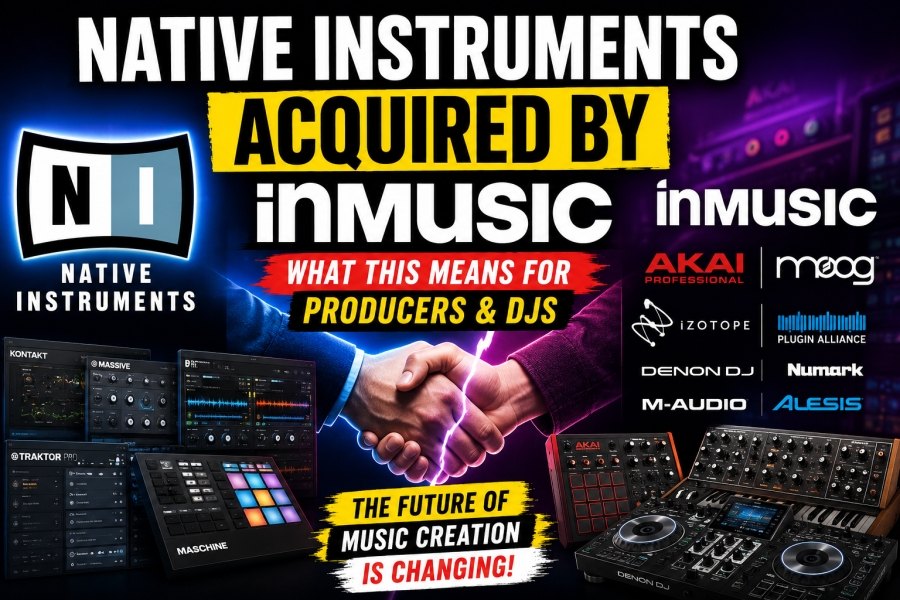
🎹 Native Instruments Acquired by inMusic: What This Means for the Future of Music Production in 2026
🎵 Introduction: One of the Biggest Music Tech Acquisitions of the Year
The music production industry has just experienced one of its most significant shakeups in recent years.
Native Instruments — one of the most influential companies in modern music production — has officially been acquired by inMusic.
This massive acquisition instantly reshapes the music technology landscape and brings some of the industry’s biggest brands under one powerful ecosystem.
For producers, DJs, engineers, and artists around the world, this move could influence:
- Music production software
- Hardware development
- Plugin ecosystems
- AI music tools
- DJ technology
- Creative workflows
The acquisition also places legendary brands such as:
- Akai Professional
- Moog Music
- iZotope
- Plugin Alliance
under the same corporate umbrella.
This is not just another business acquisition.
👉 It could redefine the future of music production itself.
🎛️ Who Are Native Instruments?
Founded in 1996, Native Instruments became one of the most respected brands in the music industry.
The company revolutionized digital music production through iconic products such as:
- Kontakt
- Massive
- Komplete
- Traktor
- Maschine
For millions of producers, NI products became industry standards.
🎹 The Rise of Kontakt and Virtual Instruments
One of NI’s biggest innovations was Kontakt.
Kontakt transformed music production by allowing producers to access:
- Orchestral libraries
- Cinematic sounds
- Realistic instruments
- Experimental sound design tools
Today, thousands of developers build products specifically for the Kontakt ecosystem.
This made Native Instruments one of the most influential software companies in modern music history.
🚀 Who Is inMusic?
While some casual music fans may not recognize the name inMusic, the company already owns many of the biggest brands in music technology.
Its portfolio includes:
- Akai Professional
- M-Audio
- Numark
- Denon DJ
- Moog Music
- Alesis
With the acquisition of Native Instruments, inMusic has significantly expanded its influence across:
- Software
- Hardware
- DJ systems
- Synthesizers
- AI-driven music technology
🔥 Why This Acquisition Matters So Much
This acquisition is far bigger than a simple ownership change.
It represents the merging of:
🎹 Professional music production software
🎛️ Hardware ecosystems
🤖 AI audio innovation
🎧 DJ technology
🎼 Virtual instruments
Under one corporate structure.
The potential impact could be enormous.
🎵 A New Music Production Ecosystem Is Emerging
The biggest advantage of this acquisition is integration.
Imagine:
- Akai MPC hardware deeply integrated with Kontakt
- Maschine synced seamlessly with Denon DJ systems
- AI-powered mastering from iZotope built directly into NI workflows
- Unified cloud ecosystems for producers and DJs
This creates the possibility of a fully connected music production environment.
🤖 AI Music Production Could Accelerate Rapidly
One of the most interesting aspects of this deal is the AI potential.
iZotope has already been heavily investing in AI-assisted audio tools.
Their technologies include:
- Intelligent mixing
- Automated mastering
- Audio repair
- Machine learning processing
Combined with Native Instruments’ massive software ecosystem, AI development could move much faster.
⚡ The Future May Include:
- AI-assisted sound design
- Intelligent plugin chains
- Automated workflow optimization
- Smart sample recommendations
- Real-time production assistance
This could dramatically change how producers create music in the coming years.
🎧 What Happens to Traktor and DJ Technology?
Many DJs are especially interested in what this means for Traktor.
For years, Traktor was considered one of the most innovative DJ platforms on the market.
However, competition intensified with brands like:
- Pioneer DJ
- Serato
- Rekordbox
Now that inMusic owns both Denon DJ and Native Instruments, there’s huge speculation about future DJ integration.
🔥 Possible Future Developments
We could see:
- Traktor integration with Denon hardware
- New hybrid DJ-production workflows
- Advanced AI-assisted live performance tools
- Unified ecosystems for performers and producers
This could reignite innovation in the DJ space.
🎹 The Massive Potential for Producers
Music producers could benefit significantly from this merger.
🎼 Unified Creative Workflows
Producers increasingly want:
- Faster workflows
- Better integration
- Less technical frustration
This acquisition may allow:
- Plugins to communicate better
- Hardware/software synchronization
- Simplified creative environments
For creators, this means:
✅ Faster production
✅ Better performance
✅ Streamlined creativity
💰 The Business Side of the Acquisition
The acquisition also highlights a much bigger trend happening in music technology:
👉 Consolidation.
Large companies are rapidly acquiring:
- Software developers
- Plugin companies
- Hardware brands
- AI startups
The goal is to build complete ecosystems that keep users inside one environment.
Similar strategies are already used by:
- Apple
- Adobe
- Avid Technology
The music industry is now following the same direction.
⚠️ Concerns From the Music Community
While many producers are excited, some are also concerned.
🎛️ Fear of Reduced Competition
When major companies merge, some users worry about:
- Less innovation
- Higher prices
- Reduced competition
- Closed ecosystems
Native Instruments has always had a strong independent identity.
Some fans fear that corporate consolidation could change the company’s direction.
🎵 Will Existing Products Still Be Supported?
One of the biggest questions from users is simple:
“What happens to my software?”
Fortunately, inMusic has publicly stated that:
- Existing tools will continue being developed
- User workflows will remain supported
- Future products are actively in development
This is reassuring for millions of users who rely on NI software daily.
🌍 The Music Production Industry Is Entering a New Era
This acquisition represents something much bigger than two companies joining forces.
It reflects the evolution of music creation itself.
Modern music production is becoming:
- Faster
- More AI-driven
- More connected
- More ecosystem-focused
The future studio may no longer consist of isolated tools.
Instead, creators may work inside fully integrated creative environments powered by AI and cloud technology.
🎯 What This Means for Independent Artists
Independent artists could benefit enormously from these developments.
Why?
Because better tools lower barriers to entry.
Artists can now:
- Produce professional music from home
- Access advanced AI tools
- Create cinematic-quality productions
- Release music globally
Without massive budgets.
This continues the larger trend of creator empowerment happening across the music industry.
🤝 The Growing Importance of Ecosystems
The modern creator economy is increasingly about ecosystems.
Artists now want:
- Integrated workflows
- Multi-platform connectivity
- AI-assisted creation
- Faster content production
Companies that can provide all-in-one solutions may dominate the future.
That’s exactly what this acquisition is positioning inMusic to become.
🚀 What Could Happen Next?
The possibilities are massive.
Potential future developments may include:
- AI-native production software
- Cloud collaboration platforms
- Hardware/software subscriptions
- Cross-brand ecosystems
- Real-time AI production assistants
This acquisition could become one of the defining moments of the next generation of music technology.
🎧 Why This Matters Beyond Producers
Even casual listeners may eventually feel the impact of this merger.
Better tools can lead to:
- Faster music releases
- More experimental sounds
- Higher production quality
- New genres and creative styles
Technology has always shaped music history.
From analog tape to digital production, every major innovation changed how music was created.
AI and ecosystem integration may become the next major chapter.
🧠 Final Thoughts: The Future of Music Tech Is Changing Fast
The acquisition of Native Instruments by inMusic is more than industry news.
It’s a glimpse into where music production is heading.
The future will likely revolve around:
- AI-assisted creativity
- Integrated ecosystems
- Faster workflows
- Cross-platform compatibility
- Creator empowerment
For producers, DJs, and independent artists, the music technology world is entering a completely new phase.
And this acquisition may only be the beginning.
