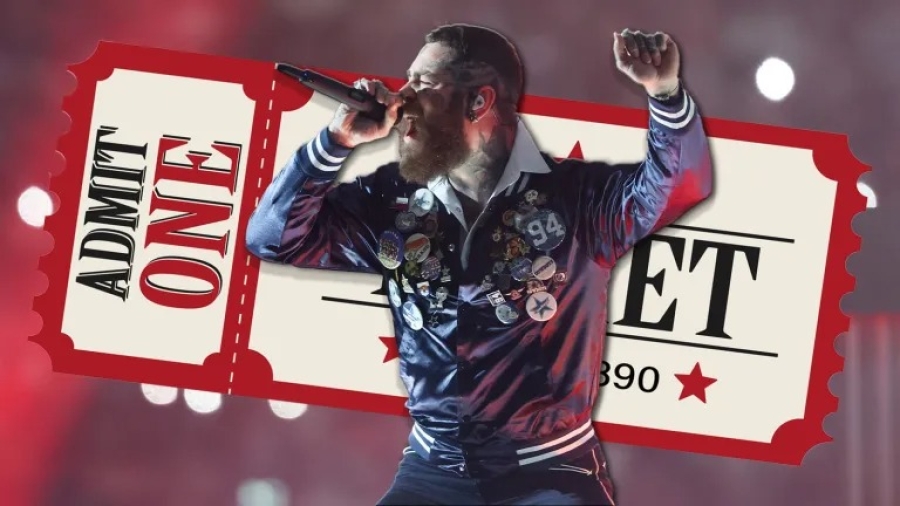
Post Malone’s Stadium Tour Struggles: Why Tickets Aren’t Selling and What It Means for the Music Industry
The live music industry is facing a surprising reality in 2026: even global superstars are no longer guaranteed to sell out stadium tours.
Recent reports suggest that Post Malone is struggling to sell tickets for his upcoming stadium tour with Jelly Roll, with some venues reportedly sitting as much as 75% empty.
For an artist who has dominated charts for years, this raises a serious question:
👉 Has the live music industry reached a breaking point?
In this article, we break down what’s happening, why ticket sales are struggling, and what this could mean for the future of touring.
The “Big Ass Stadium Tour Part 2”: What We Know
The 2026 tour — officially titled “The Big Ass Stadium Tour Part 2” — is a continuation of the duo’s successful 2025 run.
The tour features:
- Major U.S. stadium venues
- A mix of hip-hop, country, and pop influences
- Support from rising artist Carter Faith
The shows are scheduled across large venues, including college football stadiums and NFL arenas, with capacities ranging from 40,000 to 80,000+ attendees.
On paper, this should be a guaranteed success.
But reality is telling a different story.
Reports of Low Ticket Sales and Empty Stadiums
According to recent reports, ticket sales for the tour have been significantly slower than expected.
- Some venues are reportedly up to 75% unsold
- Thousands of seats remain available weeks before show dates
- Demand appears inconsistent across cities
While exact numbers vary by location, the trend is clear:
👉 This tour is not selling like a typical stadium blockbuster.
The Price Problem: Fans Are Pushing Back
One of the biggest reasons being discussed is ticket pricing.
Fans have pointed out that:
- Ticket prices are often too high for younger audiences
- Additional fees significantly increase final costs
- Dynamic pricing makes tickets unpredictable
Reports suggest that many fans feel priced out of the experience entirely.
This reflects a wider issue across the industry:
Concerts are becoming a luxury experience.
For an artist like Post Malone, whose fanbase includes a large younger demographic, this pricing mismatch could be a major factor in declining ticket sales.
Stadium Tours: Too Big to Sustain?
Another major factor is the scale of the tour itself.
Stadium tours are:
- Extremely expensive to produce
- Dependent on high attendance to be profitable
- Riskier than arena tours
While artists like Taylor Swift and Beyoncé have successfully filled stadiums, not every artist can maintain that level of demand.
The issue here may not be Post Malone’s popularity — but rather the size of the venues.
👉 Selling out arenas is one thing. Filling 70,000-seat stadiums consistently is another.
Changing Audience Behavior in 2026
The music industry has changed dramatically in recent years, and audience behavior has shifted with it.
Today’s fans:
- Are more selective about live events
- Prefer festivals or multi-artist experiences
- Spend more time consuming music digitally
Streaming has made music more accessible, but it has also reduced the urgency to see artists live.
This shift means that:
👉 Not every artist can convert streaming success into ticket sales.
The Genre Shift: Has Post Malone’s Audience Changed?
Another factor worth considering is Post Malone’s musical direction.
Over the past few years, he has leaned heavily into:
- Country influences
- Cross-genre collaborations
- A different sonic identity compared to his earlier work
While this has expanded his reach, it may also have:
- Alienated some original fans
- Confused audience expectations
- Split his core demographic
Touring with Jelly Roll, a country-leaning artist, reinforces this shift.
But it also raises a key question:
👉 Is the audience for this hybrid sound large enough to fill stadiums?
Competition in the Live Music Market
The live music industry in 2026 is more competitive than ever.
Artists are constantly touring, and fans are overwhelmed with choices.
Major competitors include:
- Global pop tours
- Festival circuits
- Legacy acts returning to the stage
Even highly successful artists are competing for the same audience.
In this environment:
👉 Oversaturation becomes a real problem.
The Role of Ticket Platforms
Ticketing platforms like Ticketmaster have also come under scrutiny.
Common complaints include:
- High service fees
- Dynamic pricing models
- Limited transparency
Fans often blame these platforms rather than the artists themselves.
In fact, some reports suggest that fans are pointing directly at ticketing systems as the main reason for low attendance.
Is This a PR Narrative or a Real Crisis?
It’s important to approach this story carefully.
While reports highlight empty seats and slow sales, there are a few things to consider:
- Tours often sell more tickets closer to the event date
- Secondary markets can distort perception
- Not all venues are equally affected
However, even with these factors, the conversation itself is significant.
👉 The perception of low demand can impact future sales.
What This Means for the Future of Touring
This situation could have major implications for the music industry.
1. Smaller Venues May Make a Comeback
Artists may choose:
- Arena tours instead of stadiums
- More intimate shows
- Higher sell-out rates over bigger capacities
2. Pricing Models May Change
If fans continue to resist high prices, we may see:
- More affordable ticket tiers
- Transparent pricing structures
- Reduced fees
3. Touring Strategies Will Evolve
Artists may shift toward:
- Fewer dates
- Higher demand per show
- More curated experiences
The Bigger Picture: A Wake-Up Call for the Industry
The struggles of Post Malone’s tour are not just about one artist.
They highlight deeper issues within the live music ecosystem:
- Rising ticket prices
- Oversized venues
- Changing fan behavior
- Market saturation
If even a global star like Post Malone faces challenges, it signals a broader shift.
Could This Be the End of Stadium Dominance?
Stadium tours have long been seen as the pinnacle of success.
But in 2026, that model may be under pressure.
The industry may move toward:
- Quality over scale
- Experience over capacity
- Connection over spectacle
This doesn’t mean stadium tours will disappear — but they may become more selective.
Final Thoughts: Not Failure, But Transition
It’s easy to frame this situation as a failure.
But in reality, it may be something else entirely:
👉 A transition.
The music industry is evolving, and live events are changing with it.
Post Malone’s tour struggles may simply be the first visible sign of a new era — one where:
- Fans are more selective
- Artists are more strategic
- The industry becomes more balanced
