


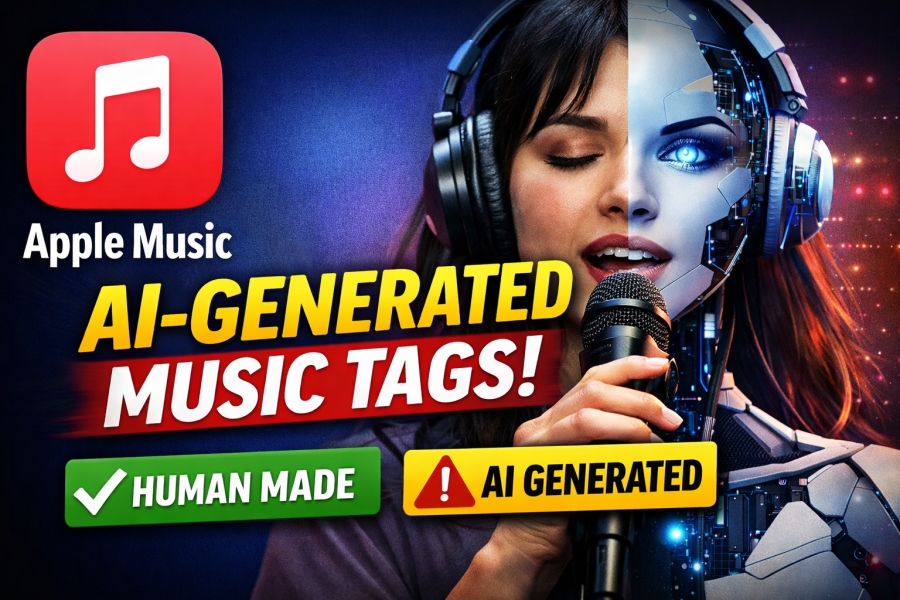
Apple Music Introduces AI Transparency Labels: A Major Step Toward Regulating AI-Generated Music
Artificial intelligence is rapidly transforming the music industry. From AI-generated vocals to fully automated songwriting tools, the technology is becoming deeply embedded in the creative process. Now, one of the world’s biggest streaming platforms is taking a major step to address the growing debate around transparency in AI-assisted music.
Apple Music has reportedly begun introducing AI transparency labels, allowing labels and distributors to mark songs that involve artificial intelligence in their creation. The move is being framed as an effort to give listeners greater clarity about how music is produced in an era where the line between human creativity and machine generation is becoming increasingly blurred.
While many see the initiative as a positive step toward transparency, critics say the system may not go far enough. Because the disclosure is optional, some industry professionals worry that AI-generated songs could still be uploaded without proper labeling.
The development highlights a much larger issue facing the music industry today: how to regulate AI in music while preserving innovation and protecting artists.
The Rise of AI in Music Creation
Artificial intelligence has quickly become one of the most disruptive technologies in modern music production. AI tools can now perform tasks that once required entire teams of producers, songwriters, and musicians.
Some of the most common AI uses in music today include:
-
AI-generated vocals that mimic human singers
-
Automated songwriting and lyric generation
-
AI-composed instrumental tracks
-
AI-generated album artwork
-
AI music videos and visualizers
Platforms like Suno AI music generator and Udio AI music generator allow users to generate entire songs simply by typing a text prompt. In some cases, the results include fully produced tracks with vocals, melodies, and lyrics.
This rapid technological growth has created both excitement and controversy within the music industry. While some artists see AI as a creative tool, others worry that it could flood streaming platforms with automated content and devalue human creativity.
As AI music becomes more common, streaming services are facing increasing pressure to provide greater transparency about how songs are made.
What Are Apple Music AI Transparency Tags?
The new AI transparency labels introduced by Apple Music are designed to indicate when artificial intelligence played a role in the creation of a piece of music.
These tags can be applied by labels, distributors, or rights holders when submitting music to the platform.
The labeling system can cover several different aspects of AI usage, including:
AI-Generated Vocals
One of the most controversial uses of AI in music is the generation of realistic vocal performances. AI models can now replicate human singing voices with remarkable accuracy.
Transparency tags could indicate when:
-
AI created the entire vocal performance
-
AI cloned an existing voice
-
AI-enhanced or modified human vocals
AI-Generated Lyrics
AI language models are now capable of generating song lyrics in seconds. In some cases, artists use AI tools to brainstorm ideas, while in others the entire lyric sheet may be machine-generated.
Transparency tags could help clarify whether:
-
Lyrics were written entirely by AI
-
AI assisted in the songwriting process
-
Lyrics were written by human songwriters
AI-Generated Artwork
AI tools have also become popular for creating album covers, promotional visuals, and artwork. With generative image technology becoming widespread, many artists and labels are experimenting with AI-created visuals.
Apple’s labeling system may allow users to see if album artwork was created using AI tools rather than human designers.
AI-Generated Music Videos
AI video generators are becoming increasingly capable of producing animated music videos and visualizers. Some artists are already using AI to generate surreal or futuristic visuals that would be difficult to create using traditional animation techniques.
The new transparency tags could apply to these AI-generated visuals as well.
Why Apple Is Introducing AI Labels
According to Apple, the goal of the transparency labels is to help listeners understand how music is made.
As AI becomes more prevalent in creative industries, audiences are increasingly asking important questions:
-
Was this song written by a human or an AI system?
-
Did the artist actually sing the vocals?
-
Is the artwork created by a real designer?
By introducing AI transparency tags, Apple aims to provide clearer information about the creative process behind each track.
The company’s approach reflects a broader trend in technology and media: consumers are demanding more visibility into how digital content is produced.
A First Step Toward AI Regulation
Many experts believe Apple’s transparency labels could represent the first major step toward regulating AI-generated music on streaming platforms.
Currently, there are very few standardized rules governing AI content in the music industry. This has led to a wide range of concerns, including:
-
AI models trained on copyrighted songs
-
Unauthorized voice cloning of artists
-
Massive volumes of AI-generated music are flooding streaming services
-
Royalty dilution for human musicians
By introducing a labeling system, Apple is helping establish a framework that could eventually evolve into broader industry standards.
Other streaming platforms, such as Spotify and YouTube Music, may eventually follow with their own AI disclosure policies.
If that happens, AI transparency tags could become a common feature across the entire music streaming ecosystem.
The Controversy: Why Critics Are Concerned
Despite the positive intentions behind the new labels, the system has already sparked debate among artists and industry professionals.
The biggest point of criticism is simple: the labeling system is optional.
This means that labels and distributors are not required to disclose whether AI was used in the creation of a track.
Critics argue that this approach could create several problems.
AI Songs Could Go Unlabeled
Because disclosure is voluntary, some AI-generated tracks could still be uploaded without transparency tags.
This raises concerns that listeners may not always know whether a song was created by humans or machines.
Incentives to Hide AI Usage
Some artists or producers may avoid labeling AI involvement because they fear backlash from fans who prefer human-made music.
Without mandatory rules, there may be little incentive for creators to disclose AI usage honestly.
Difficulty Defining “AI Use”
Another challenge is determining what actually counts as AI involvement.
For example:
-
Does using AI mastering software count?
-
What about AI-assisted mixing tools?
-
What if AI helped brainstorm lyrics but a human rewrote them?
These gray areas make it difficult to create a clear and consistent labeling system.
The Bigger Issue: AI Music Flooding Streaming Platforms
The debate around transparency is also tied to a larger concern facing the music industry: AI music spam.
AI generators can produce songs extremely quickly. In some cases, users can create hundreds of tracks in a single day.
If those songs are uploaded to streaming services, it could lead to:
-
Massive increases in music catalog sizes
-
Difficulty discovering human artists
-
Royalty payouts are being split across more tracks
Some industry groups have warned that AI music could flood streaming platforms with low-quality content, making it harder for human musicians to compete.
Transparency labels could help mitigate this problem by allowing platforms and listeners to identify AI-generated material.
Artists Are Divided on AI in Music
The reaction to AI tools within the music community has been mixed.
Some artists believe AI represents an exciting new creative frontier.
They argue that AI can help:
-
Speed up the songwriting process
-
Generate new musical ideas
-
Create experimental sounds that humans might not imagine
Others, however, see AI as a threat to the livelihood of musicians.
Concerns include:
-
Unauthorized voice cloning
-
AI models trained on copyrighted songs
-
Loss of job opportunities for composers and producers
Transparency measures like Apple’s AI labels may help address some of these concerns by giving audiences a clearer picture of how music is made.
How Transparency Could Benefit Listeners
From a listener’s perspective, AI transparency labels could provide several advantages.
More Informed Listening
Fans will have more information about the music they consume and the creative process behind it.
Support for Human Artists
Some listeners prefer music created primarily by human artists. Transparency labels allow them to make informed decisions about what they support.
Greater Industry Accountability
Disclosure systems encourage companies and creators to be more transparent about their use of AI technologies.
This can help build trust between artists, platforms, and audiences.
What Happens Next for AI and Music Streaming
The introduction of AI transparency labels by Apple Music may only be the beginning of a much larger transformation in the music industry.
Over the next few years, several developments are likely:
Industry-Wide AI Labeling Standards
Streaming services may collaborate to create unified labeling systems that apply across multiple platforms.
Legal Frameworks for AI Music
Governments and regulatory bodies could introduce new laws governing AI training data, voice cloning, and copyright issues.
New Royalty Models
The industry may develop new royalty structures that account for AI-generated music and its relationship to human creators.
AI Detection Technology
Labels and tech companies are already exploring tools that can detect whether a song was generated by AI.
These technologies could play a key role in enforcing transparency policies in the future.
Conclusion
Artificial intelligence is rapidly reshaping how music is created, distributed, and consumed. As AI tools become more powerful, the need for transparency and accountability in the music industry is becoming increasingly clear.
By introducing AI transparency labels, Apple Music is taking an important first step toward addressing these challenges. The new tags allow labels and distributors to disclose when AI played a role in the creation of a song, covering elements such as vocals, lyrics, artwork, and music videos.
However, because the system is currently optional, critics argue that it may not fully solve the problem of undisclosed AI-generated music. Without mandatory labeling, some AI tracks could still appear on streaming platforms without clear identification.
Despite these concerns, Apple’s initiative signals a major shift in how the industry approaches artificial intelligence. As AI continues to evolve, transparency measures like these may become essential tools for maintaining trust between artists, platforms, and listeners.
Whether these labels eventually become mandatory or evolve into broader regulations remains to be seen. But one thing is clear: the era of AI in music has arrived, and the industry is only beginning to figure out how to manage it.
