


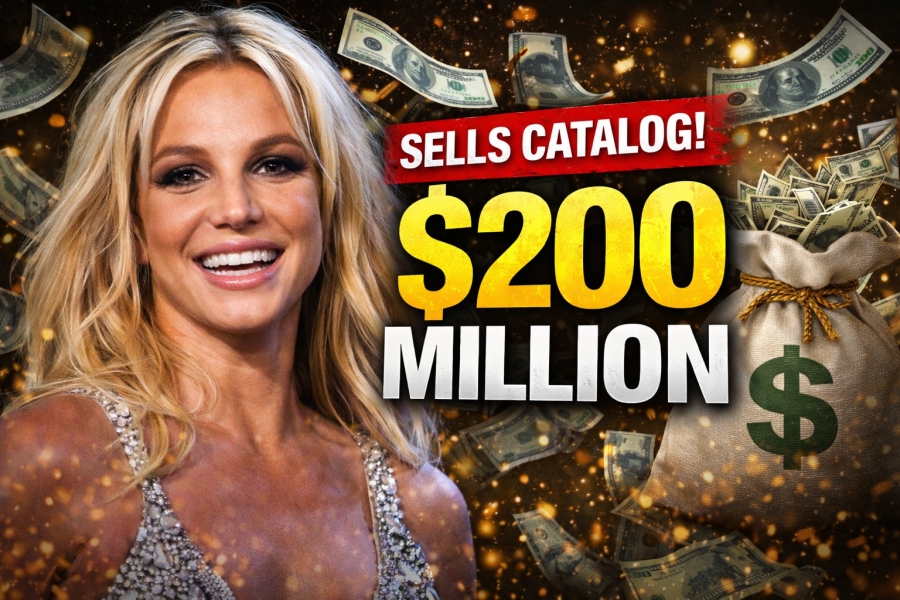
Britney Spears Sells Her Music Catalog in Landmark ~$200 Million Deal
Britney Spears — the pop icon whose rise from suburban Louisiana to global superstardom defined the late 1990s and early 2000s — has just made one of the most significant business moves of her career. In a blockbuster deal finalized on December 30, 2025, Spears sold the rights to her music catalog to music publisher Primary Wave, in a transaction believed to be worth around $200 million. This move places Spears alongside other major artists who have monetized their legacies in the streaming era and reflects the evolving economics of music ownership in the 21st century.
For fans and industry watchers alike, this isn’t just a financial transaction — it’s a chapter in the ongoing story of how artists navigate control, legacy, and value in today’s music business.
The Deal: What Exactly Did Britney Sell?
Britney Spears’ catalog sale includes her ownership share of her published music and royalty rights — meaning the portion of revenue she would have received from streams, synchronization deals (TV, film, ads), and other licensing opportunities.
The catalog spans Spears’ most influential hits, including:
-
“…Baby One More Time”
-
“Oops!… I Did It Again”
-
“Toxic”
-
“Gimme More”
-
“Circus”
-
“Womanizer”
and many others that helped define pop music at the turn of the millennium.
While Sony Music reportedly retains ownership of the original master recordings, Britney’s right to collect revenue from these songs has now transferred to Primary Wave under the terms of the agreement.
This type of transaction — where an artist sells publishing and royalty stakes while the label keeps the master recordings — is increasingly common among legacy artists in the current music economy.
How Much Is the Deal Worth?
Although neither Spears nor Primary Wave has publicly confirmed the exact sales price, multiple sources estimate the deal to be in the vicinity of $200 million USD.
While the legal filings don’t specify a precise figure, industry insiders have compared the valuation to similar high-profile sales, like Justin Bieber’s catalog deal in 2023 — which was also reported at roughly $200 million.
Some analysts consider this a “low nine-figure” deal — meaning Spears likely negotiated a payout commensurate with her vast influence and enduring popularity over multiple decades.
Why This Sale Matters For Spears and the Industry
A Strategic Financial Move
For Spears, this deal provides a substantial immediate payout that compensates for decades of income from her music. It also allows her to pass financial assets to her family and secure long-term stability without relying solely on streaming royalties, which can fluctuate over time.
Many legacy artists have taken similar paths, monetizing their catalogs at peak value rather than continuing to collect smaller periodic royalty checks.
The Broader Industry Trend
Britney’s catalog sale places her among a growing list of artists who are capitalizing on the explosion in demand for music rights. With streaming now the dominant mode of music consumption, catalogs have become valuable assets:
-
Bruce Springsteen, Bob Dylan, and Shakira have all recently sold portions of their catalogs for substantial sums.
-
Music publishers and investors see these rights as long-term revenue machines that can be monetized via movies, ads, and global playlists.
Primary Wave, the acquiring company, has become one of the most active players in this space, with a catalog that includes music from Prince, Bob Marley, Stevie Nicks, and Whitney Houston.
What Spears’ Fans Are Saying
News of the sale quickly reverberated across social media and fan forums. Many fans celebrated Spears’ financial windfall, while others expressed mixed emotions about her selling such personal, culturally significant work.
Some fans pointed to the historical context of her career — particularly her highly publicized conservatorship, which ended in 2021 — as a rationale for Spears securing financial autonomy through strategic deals.
Others debated whether selling her catalog would affect her legacy or the future use of her music in popular culture, especially if licensing decisions are made without her direct input.
What This Means for Britney’s Legacy
Britney Spears isn’t just selling songs — she’s monetizing a cultural legacy that helped define a generation. Songs like “…Baby One More Time” and “Toxic” aren’t just commercial hits — they’re woven into the fabric of pop culture worldwide.
By selling her catalog now, Spears taps into a booming market where investors forecast steady long-term returns from music rights. Her hits will continue to be licensed for commercials, movies, and shows, probably gaining new audiences for decades to come — even as she chooses to step back from recording and performing.
For Spears personally, this move could mark a shift in focus from performance to legacy management and personal life, giving her greater control over how she engages with her artistry going forward.
The Post-Conservatorship Chapter
Britney’s journey has been intensely public, especially the 13-year conservatorship she was under until 2021. That period saw her professional and personal affairs controlled by court mandates — and its end has given Spears new agency over her career and finances.
Selling her catalog now — on her own terms — is a stark contrast to earlier limitations imposed upon her autonomy. It’s seen by many fans and commentators as a symbolic moment of empowerment, where Spears finally profits from the art that made her a global star.
The Role of Primary Wave
Primary Wave — the buyer — has built a reputation for acquiring influential music catalogs and generating renewed interest (and revenue) through strategic licensing and marketing.
The company has worked with rights from:
-
Prince
-
Bob Marley
-
Whitney Houston
-
Stevie Nicks
Their philosophy often involves revitalizing older catalogs for modern audiences, placing songs in films, commercials, and curated streaming placements — and maximizing their earnings potential.
By bringing Britney’s catalog into that fold, Primary Wave is signaling its belief in the enduring value of her work.
Artists and Catalog Sales: A Growing Pattern
Britney’s deal is part of a larger trend in the music industry:
-
Justin Bieber secured a reported $200 million catalog deal in 2023.
-
Bruce Springsteen and Bob Dylan have sold portions of their music rights for nine-figure deals.
-
Other artists like Shakira, KISS, Phil Collins, and Neil Young have also entered the catalog sale market in recent years.
These deals reflect how music rights have become a premium asset class in the digital age, combining nostalgia, streaming longevity, and cross-media licensing opportunities.
What Happens Next?
With Primary Wave now in control of Spears’ catalog rights, her music could see:
-
New licensing deals for TV shows, films, commercials, and video games
-
Potential remixes or reinterpretations of classic hits
-
Broader global exposure through curated streaming placements
Fans and industry watchers will be curious to see how her music is utilized — and how much Spears will benefit financially in the long run.
Final Thoughts: A Legacy Monetized at Peak Value
Britney Spears’ sale of her music catalog isn’t just a headline — it’s a defining moment in how modern artists negotiate the value of their creative work.
At approximately $200 million, this deal represents not only a significant financial achievement for Spears, but also a marker of how the music industry has shifted. In the streaming era, catalogs have become gold mines — not just relics of past success, but living assets that generate revenue across media formats and generations.
For fans of the “Princess of Pop,” this milestone is a reminder that Spears’ impact on global music culture continues long after the peak of her recording career. Her songs still matter. Her brand still commands attention. And her legacy is now backed by one of the most substantial business deals in recent music history.
Whether you love, critique, or simply grew up on her music, Britney Spears’ catalog sale is a story that resonates far beyond industry balance sheets — it’s about artistry, ownership, and the evolving power of pop music in the digital age.
