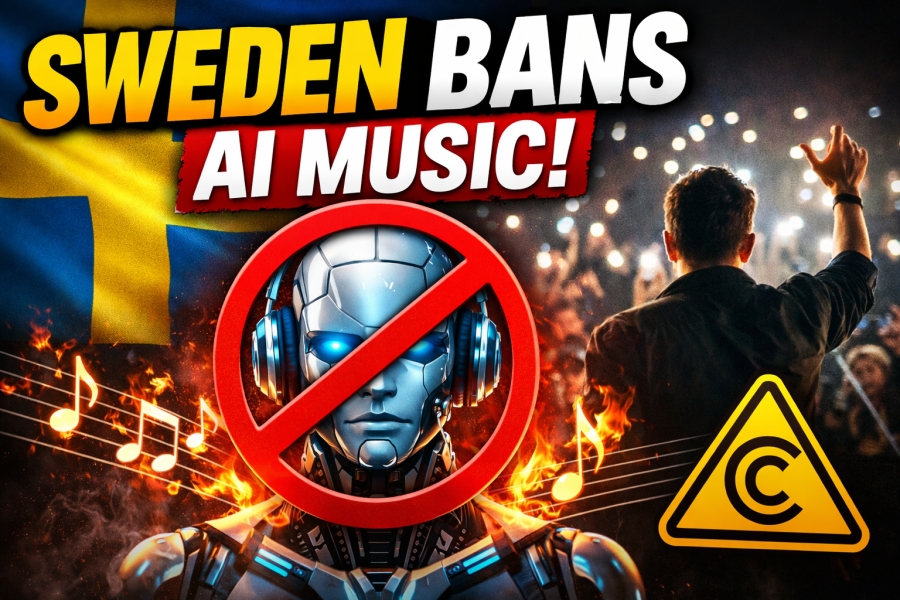
Sweden Bans AI Music: What It Means for the Future of Music
In a move that has shaken the global music industry, Sweden has effectively banned AI-generated music from its official music charts. This landmark decision has sparked intense debate among artists, streaming platforms, fans, and tech companies around the world — raising fundamental questions about creativity, copyright, and the future role of artificial intelligence in music.
In this article, we’ll break down what happened, why Sweden acted, the controversies and industry responses, and what this could mean for the global music ecosystem.
What Happened? Sweden Rejects AI Music From Its Charts
In January 2026, Sweden’s music industry body IFPI Sweden removed a viral track from its official national music charts after discovering the song was primarily created using artificial intelligence.
The song in question — “I Know, You’re Not Mine” (Jag vet, du är inte min) — credited to a supposed artist named Jacub, amassed millions of streams on Spotify and appeared at the top of Sweden’s streaming charts.
Despite its streaming success, IFPI Sweden ruled that because the song was mainly AI-generated, it did not qualify for inclusion on Sverigetopplistan — Sweden’s official music chart.
According to IFPI Sweden’s chief, Ludvig Werner:
“If it is a song that is mainly AI-generated, it does not have the right to be on the top list.”
This effectively amounts to a ban on AI music from national recognition, at least in terms of official chart placement.
Why the Ban? Protecting Human Creativity and Fair Recognition
Sweden’s decision wasn’t arbitrary. It reflects growing concerns about the impact of AI on creative industries.
1. Maintaining Artistic Integrity
Traditional music charts have always reflected human-created art — music written, performed, and emotionally expressed by real artists. Critics of AI-generated music argue that AI lacks genuine human emotion, experience, and creativity, which are core components of culture and art.
As one musician told media outlets:
“The song is missing one of the most important ingredients — emotion.”
2. Preventing Chart Manipulation
AI-generated tracks can be produced at scale, potentially saturating streaming platforms and skewing chart outcomes. Some worry that, without controls, automated processes could undermine the merit-based ranking system that charts aim to represent.
3. Protecting Artist Income
Sweden has also taken proactive steps in regulating AI use to protect artists’ rights and income. Prior to this incident, music rights group STIM launched a collective AI music license designed to compensate songwriters and composers when AI models use their work for training.
These efforts show that concerns about AI are not limited to charts but also extend to royalties and fair compensation.
The Song at the Center of It All
The track that sparked the controversy quickly became one of Sweden’s most-played songs on Spotify, racking up millions of streams and attracting attention from listeners and journalists alike.
However, journalists found that the credited “artist” Jacub lacked any real biography, social media presence, or public identity — a strong indicator that the artist was a virtual creation, not a real person.
The team behind the project, known as Team Jacub, defended their work by stating that AI was used as a tool in a human-controlled creative process, and that experienced musicians and producers were involved in the project.
Still, IFPI Sweden’s strict interpretation of their rules led to disqualification from official rankings.
How Streaming Platforms Fit Into the Picture
Spotify’s Role
It’s important to note that Spotify itself did not remove the song from its platform — the track is still available to stream and remains on Spotify’s internal popularity lists.
Spotify has been dealing with AI-generated music for some time and has said it will work to identify and label AI-created content, while also removing spam-style tracks.
However, Spotify’s stance is more permissive compared to Sweden’s chart rules — AI-generated songs can still exist on the platform even if they are banned from official national rankings.
Differing Platform Policies
Other platforms are also responding differently. For example, Bandcamp has implemented a ban on music “generated wholly or in substantial part by AI,” arguing that music should remain expressly tied to human creators.
Meanwhile, major streaming services like Apple Music and Spotify allow AI-generated tracks but may require clear disclosure and moderation policies.
International Responses: No Unified Global Rule… Yet
Sweden’s move is significant, but it doesn’t currently represent a global legal standard. Other countries and music institutions are watching closely.
Billboard and Other Charts
Unlike Sweden, Billboard in the United States has not banned AI-generated tracks from appearing on its charts — though it tracks songs based on measurable metrics like sales and streams regardless of origin.
This divergence highlights a broader industry debate:
-
Should charts reflect what listeners actually stream, regardless of how the music was made?
-
Or should charts only include music that meets specific human-authorship criteria?
No unified global policy currently exists, but Sweden’s stance throws down a marker that could inspire others.
Legal and Copyright Implications
Beyond charts and streaming, AI music raises pressing issues around copyright and ownership.
Lawsuits and Rights Challenges
In other regions, music rights organizations are taking legal action against AI systems that allegedly use protected works without authorization. For example, a Danish rights group sued an AI music service for copying Danish songs without permission, arguing that this undermines artists’ copyrights.
Such cases could set legal precedents around whether AI can legally produce music based on copyrighted material, and they may affect future rulings on AI music bans.
Creative Community Reaction
The reaction from artists, fans, and industry professionals has been mixed:
Supporters of the Ban
Some musicians and critics applaud Sweden’s stance, arguing that letting AI flood charts could devalue human artistry and lead to job losses in creative fields.
Social media responses ranged from “Sweden is leading the way” to calls for similar bans internationally.
Critics of the Ban
Others argue that if listeners genuinely enjoy a track, charts should reflect that preference — regardless of how the music was made. Critics also question how AI music can be reliably detected and authenticated.
Some say the decision may stifle innovation, while others believe the industry should embrace AI as a creative tool rather than reject it outright.
What This Means for the Future of Music
Sweden’s ban on AI music from official charts is more than just a rule change — it’s a litmus test for how the music world will adapt to artificial intelligence.
Potential Outcomes
1. More Regulatory Action
Other countries could adopt similar policies, especially where chart rankings play a significant cultural role.
2. New Legal Frameworks
Rights organizations might push for clearer copyright laws to govern AI’s use of human-created works.
3. Industry Self-Regulation
Platforms and labels might develop their own classification systems for human vs. AI works.
4. Hybrid Music Models
Some artists may combine AI tools with human creativity — but such collaborations might require transparent labeling and fair rights practices.
Conclusion: Sweden’s Ban Is Just the Beginning
Sweden’s decision to ban AI-generated music from official charts marks a pivotal moment in the evolution of music, technology, and culture. By prioritizing human creativity and redefining how success is measured in music, Sweden has reignited a global conversation about AI’s role in the arts.
Whether you’re an artist, a fan, a tech enthusiast, or just curious about the future of creativity, one thing is clear:
The music industry is undergoing a transformation — and the rules we took for granted are changing.
Watch this space — as AI and human artists continue to shape the next chapter of music history.
