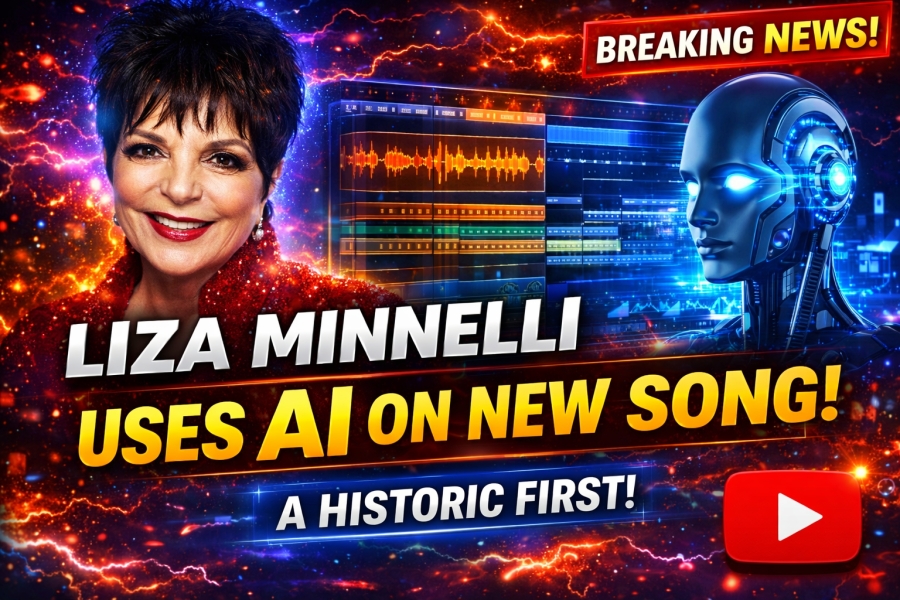
Liza Minnelli Used AI Arrangements on Her Latest Song: A Historic Moment for Music and Technology
Legendary performer Liza Minnelli has once again found herself at the center of a cultural conversation — but this time, it’s not about Broadway, Hollywood, or classic pop standards. Instead, Minnelli’s latest song features AI-assisted musical arrangements, marking a groundbreaking moment where one of the most iconic voices in entertainment history intersects with modern artificial intelligence technology.
The use of AI in music production has been steadily growing, but seeing a figure as historically significant as Liza Minnelli embrace AI arrangements sends a powerful message: artificial intelligence is no longer just for experimental producers or tech-forward pop stars — it’s entering the legacy space of music itself.
In this article, we explore what AI arrangements mean, how Liza Minnelli used them, why this matters for the future of music, and what it signals for artists, producers, and fans alike.
Who Is Liza Minnelli and Why This Matters
Liza Minnelli is more than just a singer — she’s a cultural institution. As the daughter of Judy Garland, Minnelli built a legendary career across film, theatre, and music, winning an Academy Award, multiple Tonys, Emmys, and Grammys.
Her music is deeply associated with:
-
Live orchestration
-
Human-driven arrangements
-
Emotional, performance-led storytelling
That’s exactly why the use of AI arrangements on her latest song is so significant. This isn’t a pop artist chasing trends — it’s a living legend exploring new creative tools late into her career.
When artists of Minnelli’s stature adopt new technology, it often marks a turning point in industry perception.
What Are AI Arrangements in Music?
Before diving deeper into Minnelli’s release, it’s important to clarify what AI arrangements actually are — and what they are not.
AI Arrangements Explained
AI arrangements use machine-learning models to assist with:
-
Instrument selection
-
Harmonic structure
-
Chord voicing
-
Orchestration patterns
-
Rhythmic placement
Rather than replacing the artist or composer, AI typically functions as a creative assistant, generating arrangement ideas that humans refine, approve, and perform.
In Minnelli’s case, AI was reportedly used to help shape and enhance the musical arrangement, not to recreate her voice or replace musicians entirely.
How Liza Minnelli Used AI on Her Latest Song
While full technical details have not been disclosed publicly, reports indicate that AI tools were used during the arrangement phase of Minnelli’s new release. This includes helping structure the instrumental backing and offering orchestral and harmonic suggestions aligned with her vocal style.
Human + AI Collaboration
Crucially, the song was still:
-
Vocally performed by Liza Minnelli
-
Overseen by human producers and musicians
-
Artistically directed by Minnelli and her creative team
The AI did not “write” the song on its own. Instead, it acted as a support system, accelerating decisions and offering creative options that might otherwise take weeks of experimentation.
Why This Is a Major Moment for AI in Music
AI in music has often been associated with controversy — concerns over authenticity, job displacement, and artistic integrity. Liza Minnelli’s involvement reframes that conversation.
From Experimentation to Acceptance
When a respected legacy artist uses AI:
-
It validates AI as a legitimate creative tool
-
It reduces stigma around AI-assisted music
-
It encourages broader adoption across genres
This moment suggests that AI is transitioning from novelty to industry-standard support technology, much like digital audio workstations once did.
AI in Music Is Not New — But This Is Different
AI tools have already been used by:
-
Electronic music producers
-
Film composers
-
Pop and hip-hop artists
However, most examples come from younger or experimental artists. Minnelli’s use of AI arrangements is different because it represents cross-generational adoption.
A Parallel to Past Technology Shifts
This moment mirrors earlier transitions in music history:
-
Analog to digital recording
-
Live orchestras to sampled instruments
-
Tape editing to DAWs
Each shift faced resistance — until legendary artists embraced it.
Does AI Take Away from Musical Authenticity?
One of the biggest questions surrounding AI in music is authenticity. Can music still feel “human” if AI is involved?
Minnelli’s Song Suggests Yes
Liza Minnelli’s voice remains unmistakably human, emotional, and expressive. The AI-assisted arrangement does not remove soul — it supports it.
This reinforces an important truth:
Technology doesn’t erase emotion — it depends on how it’s used.
AI arrangements, when guided by experienced artists, can actually enhance musical storytelling rather than dilute it.
What This Means for Producers and Arrangers
Minnelli’s adoption of AI sends a clear signal to the production community.
AI as a Creative Assistant, Not a Replacement
For producers, AI can:
-
Speed up arrangement drafts
-
Offer fresh harmonic ideas
-
Reduce creative blocks
-
Assist with orchestration for different styles
Rather than eliminating jobs, AI has the potential to free creatives from technical bottlenecks, allowing them to focus more on emotion, performance, and storytelling.
Implications for Legacy Artists and the Music Industry
AI tools are often marketed toward modern producers, but Minnelli’s release proves they can also be valuable for legacy artists.
Preserving Artistic Identity
AI can help:
-
Adapt classic vocal styles to modern production
-
Preserve artistic intent when physical performance limitations exist
-
Extend creative output later into an artist’s life
This opens the door for many iconic artists to continue releasing new material without compromising quality.
Fan Reactions and Cultural Impact
Reactions to Minnelli’s AI-assisted song have been mixed — but largely curious rather than hostile.
Key Themes in Fan Response
-
Fascination with technology meeting tradition
-
Appreciation for Minnelli’s willingness to evolve
-
Debate around how much AI is “too much.”
Importantly, the discussion is happening — and that dialogue is healthy for the future of music.
Ethical Questions Around AI in Music
Minnelli’s use of AI also reignites ethical debates that the industry must address.
Key Concerns
-
Transparency around AI usage
-
Ownership of AI-generated arrangements
-
Fair compensation for human musicians
So far, Minnelli’s project appears to follow ethical best practices by keeping humans firmly in control of the final product.
The Future of AI-Assisted Music After This Release
Liza Minnelli’s song may not be remembered solely for its chart performance, but it will likely be remembered for what it represents.
A Cultural Turning Point
This release signals:
-
AI is no longer genre-specific
-
Legacy artists can adopt new tools without losing credibility
-
The future of music is collaborative, not competitive, between humans and machines
AI Will Not Replace Artists — It Will Redefine Creativity
One of the most important lessons from Minnelli’s AI-assisted song is that creativity remains human-led.
AI doesn’t feel emotion.
AI doesn’t have live experience.
AI doesn’t perform.
What it does is support the creative process, much like instruments, software, and studios always have.
Final Thoughts: Liza Minnelli and the Next Chapter of Music
By using AI arrangements on her latest song, Liza Minnelli has quietly made history. Not by abandoning tradition — but by expanding it.
Her choice sends a powerful message:
Music can evolve without losing its soul.
As AI continues to shape the future of production, Minnelli’s project stands as a reminder that technology is only as meaningful as the artist guiding it.
For producers, musicians, and fans alike, this moment marks not the end of human creativity — but the beginning of a new chapter where experience, emotion, and innovation coexist.
